



Exploring Disney’s Revolutionary Olaf Robot: A Technological Marvel
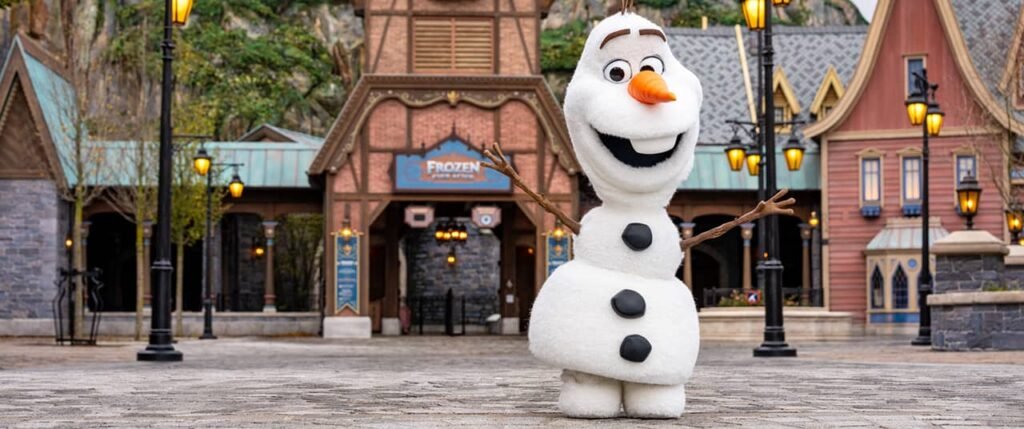
Disney’s latest innovation, a walking Audio Animatronic of Olaf from the Frozen franchise, has captivated audiences worldwide. The research behind this enchanting creation is encapsulated in a newly published paper by Disney Research Hub, the R&D department of Walt Disney Imagineering. Unveiled to the press last month in Paris, this Olaf is a groundbreaking leap in robotics, showcasing an intricate blend of art and engineering. Read the full research paper here.
The Design Concept
The Olaf animatronic isn’t just a simple replica; it has been designed to mirror the character’s proportions and personality from the Frozen films. Standing at knee-height to an average adult, this highly articulate figure embodies Olaf’s quirks and charm. According to the research, traditional walking robots often struggle with aesthetic and functional discrepancies. This project sets a new standard by utilizing mechanical innovations alongside stylized motion controls to bridge that gap. The paper emphasizes that the challenge lies in creating a robot that not only moves realistically but also resonates emotionally with audiences—something that’s crucial for theme park attractions.
Innovative Motion Control
One of the standout features of the Olaf robot is its ability to walk, blink, and talk convincingly. This level of realism is achieved through advanced reinforcement learning techniques, which guide the robot’s movements based on animation references. To maintain the illusion of movement, Disney cleverly conceals two asymmetric legs beneath a soft foam skirt, providing a seamless visual experience. This innovative approach not only enhances the character’s believability but also addresses the engineering challenges of animatronics. As the paper outlines, this method allows for more expressive motion without compromising design integrity.
Overcoming Technical Challenges
Turning a beloved animated character into a physical entity brings with it a host of challenges. In the paper, researchers elaborate on handling harsh contact sounds produced during the walking cycle. To mitigate this, they introduced tailored rewards within their reinforcement learning framework to reduce noise, improving the overall experience for visitors. Additionally, the large head of the Olaf animatronic posed a risk of overheating, especially given the compact interior of the character. To prevent such issues, the team integrated temperature monitoring into their design, using this data to guide the animatronic’s movements.
Validation in Simulation
The team didn’t just stop at theoretical constructs; they validated their modeling through simulations and hardware testing. This rigorous testing phase confirmed the robot’s ability to achieve an unprecedented level of believability for a costumed character. As outlined in the research, the intricate design and control methodologies emphasize Disney’s commitment to quality and innovation. It’s this relentless pursuit of excellence that enables Disney to maintain its status as a leader in the realm of entertainment technology.
Experiencing Olaf in Action
Fans eager to interact with this incredible creation won’t have to wait long. The walking Olaf animatronic is set to make its debut in two parks: the World of Frozen land at Hong Kong Disneyland and Disney Adventure World at Disneyland Paris when it opens on March 29, 2026. The introduction of this lifelike figure not only enhances the Frozen experience but also demonstrates Disney’s ongoing investment in state-of-the-art technology to create immersive storytelling experiences. Be sure to keep an eye out for Olaf on your next visit!
By intertwining advanced robotics with storytelling, Disney’s new Olaf animatronic exemplifies the magic of innovation in entertainment. For more exciting information on Disney’s technological advancements, explore the Disney Research Hub.
This article is based on reporting from www.themeparkinsider.com.
The original version of the story can be found on their website.
Original Source:
www.themeparkinsider.com
Image Credit: www.themeparkinsider.com ·
View image


