






Middle East Flight Disruptions: What Travelers Need to Know Following US-Israel Attack on Iran
In a dramatic escalation of tensions, the airspace across the Middle East has been closed, leading to significant flight disruptions after a US-Israel attack on Iran was confirmed by President Donald Trump. As a consequence of these military operations, various governments have issued urgent travel advisories, urging citizens to evacuate from Iran, Israel, and surrounding regions. Below, we delve into the recent developments affecting air travel across the Middle East and how affected travelers can navigate this tumultuous time.
Airspace Closures Across the Region
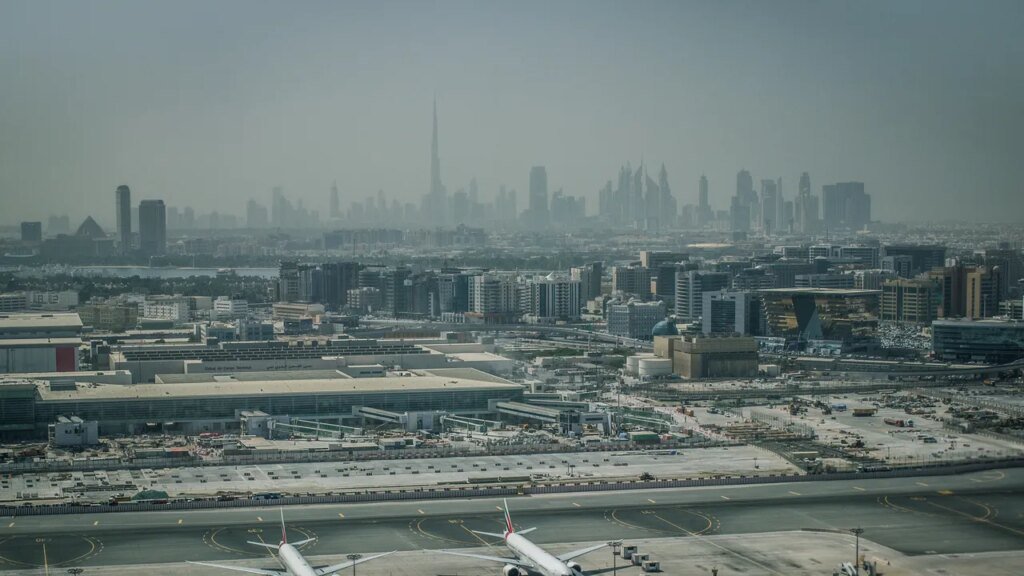
The United Arab Emirates (UAE) has taken swift action, closing its airspace as a precautionary measure to protect flights and aircrews amidst rising security concerns. The General Civil Aviation Authority (GCAA) stated this decision aims to ensure the safety of both travelers and employees in the aviation sector. Notably, all flight operations at Dubai International Airport (DXB) and Dubai World Central (DWC) are currently suspended until further notice. Similar actions have been reported in Kuwait, where airspace has been closed following a drone attack that resulted in minor injuries and limited damage to its main airport terminal. For further updates on air travel advisories, visit Flight Aware.
Airlines Adjusting Operations
The ongoing conflict has led major airlines to suspend or modify their flight operations in response to the changing landscape. Emirates has grounded all flights from Dubai and is urging customers to stay informed about the situation as it evolves. According to a company statement, they are consulting with relevant authorities and adapting their operations in line with federal guidance. Similarly, Etihad Airways has acknowledged that cancellations are prevalent due to the rapidly unfolding circumstances, emphasizing that passenger safety remains their top priority. Travelers are encouraged to contact their respective airlines for the latest updates.
Impact on Flight Schedules
Flight disruptions are not limited to just Emirates and Etihad Airways; multiple carriers operating in the Middle East are facing significant changes. Airlines such as Qatar Airways have temporarily suspended flights in and out of Doha due to airspace closures. As operations resume, travelers might encounter delays and are advised to check directly with their airlines for the most up-to-date schedule information. Ground staff at major hubs like Hamad International Airport are on standby to assist passengers, emphasizing the need for travelers to stay informed.
Government Travel Advisories for the Middle East
In light of the escalating situation, many governments are issuing travel advisories urging citizens to reconsider non-essential travel to the region. Countries such as the UK, USA, and Canada have issued advisories related to security threats and potential for further military actions. Travelers are encouraged to stay informed by consulting their government’s travel pages or platforms such as the U.S. Department of State for real-time updates on safety and security concerns in the Middle East.
Recommended Actions for Affected Travelers
For those with upcoming flights booked in the Middle East, it is crucial to stay proactive in managing travel plans. First and foremost, passengers should avoid heading to the airport unless they receive specific confirmation from their airline regarding departures. Checking airline websites or customer service lines can provide insights on rescheduling or cancellation options. Utilizing travel apps can also assist in tracking flights in real-time and receiving immediate updates.
Conclusion: Navigating Uncertain Times in Middle Eastern Air Travel
The recent military actions in the region have created uncertainty for air travel across the Middle East. With widespread airspace closures and numerous airline suspensions, travelers must stay alert and adaptable during this fluid situation. As the geopolitical landscape continues to evolve, staying informed through reliable resources, such as direct airline communications and government advisories, will be vital for safe travel in the coming days. For ongoing updates and resources, travelers can refer to the International Air Transport Association (IATA), which provides valuable information on air travel across the globe.
This article is based on reporting from www.cntraveler.com.
The original version of the story can be found on their website.
Original Source:
www.cntraveler.com
Image Credit: www.cntraveler.com ·
View image


