



Preserving Knowledge: A Look at the Monastery Library of San Lorenzo de El Escorial and Janggyeong Panjeon
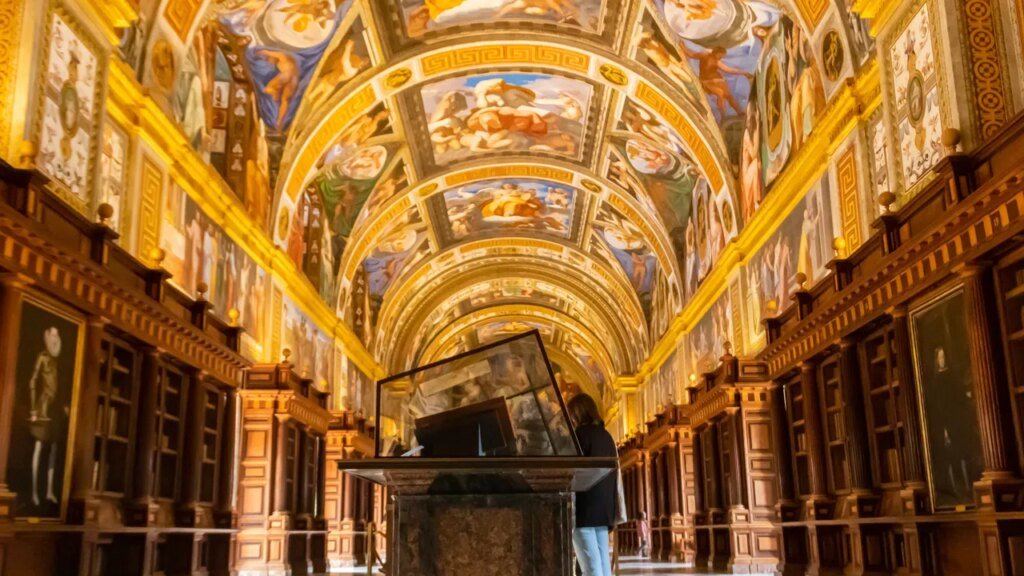
The Monastery Library of San Lorenzo de El Escorial, part of the UNESCO-listed Royal Site in Spain, stands as a testament to humanist learning and architectural brilliance. Established in the late 16th century under King Philip II, this library was designed as a repository for the vast knowledge of the time. Its grandeur is largely attributed to the architect Juan de Herrera, who completed the long barrel-vaulted hall that embodies a sober classical style, fitting perfectly within the expansive complex.
At its heart, the library houses more than 40,000 volumes, including a treasure trove of Greek and Arabic manuscripts, early cartographic works, and rare scientific treatises. The collection reflects the rich intellectual heritage of the Iberian world and is arranged using an innovative "wall system," enabling books to be stored upright along the perimeter. This forward-thinking approach not only maintains a regular airflow but also ensures the longevity of these invaluable texts.
Visitors to the library are captivated by frescoes painted by Pellegrino Tibaldi, depicting the liberal arts and the four faculties of medieval knowledge. These artworks situate the library within the broader intellectual landscape of its era, highlighting its importance as a center for learning. However, access to the hall is meticulously controlled, and only a selection of manuscripts can be viewed at a time through rotating displays, underscoring the need for preservation.
Transitioning to Asia, we find a similarly reverent dedication to preservation at the Haeinsa Temple Janggyeong Panjeon in South Korea’s Gayasan National Park. This 9th-century Buddhist temple houses the Tripitaka Koreana, a remarkable collection of over 80,000 woodblocks dating back to the 13th century. These woodblocks contain one of the most accurate editions of Buddhist scriptures in existence, making their preservation critical.
The Janggyeong Panjeon is a pristine example of architecture specifically designed for preservation, demonstrating extraordinary foresight in climate control. Dating back to the 15th century, the buildings feature elevated floors and open slatted windows, allowing natural humidity and airflow regulation. This unique design has enabled the Tripitaka Koreana to survive through numerous wars, fires, and relentless monsoons with minimal deterioration.
While visitors to Haeinsa cannot enter the repositories, they can admire the austere wooden structures and their distinctive clay-and-charcoal foundations from external walkways. This setup allows for an intimate connection with both the architectural significance of the Janggyeong Panjeon and the broader functioning of the temple as an active monastic community.
The Importance of Preservation in Cultural Heritage
The libraries and depositories of both San Lorenzo de El Escorial and Haeinsa Temple illustrate the crucial role architecture plays in preserving knowledge and cultural heritage. These sites not only safeguard physical texts but also protect the ideas and ideologies that shaped civilizations. By incorporating climate control in their designs, both libraries demonstrate a deep understanding of the environmental factors that threaten the integrity of their collections.
Engaging with Cultural Treasures
For those who wish to explore these sites further, both libraries offer unique opportunities. The San Lorenzo de El Escorial library can be visited as part of a broader tour of the Royal Site, where visitors can marvel at its architectural beauty and scholarly legacy. Meanwhile, Haeinsa Temple invites visitors to experience its serene environment and vibrant monastic life, reaffirming the significance of the Janggyeong Panjeon within the living tradition of Buddhism.
Conclusion
In a world where cultural artifacts face constant threats from environmental factors and human actions, the observational practices exhibited in both the Monastery Library of San Lorenzo de El Escorial and the Janggyeong Panjeon are invaluable. They serve as models for future preservation efforts, ensuring that the knowledge contained within these walls can be passed down through generations. Visitors and scholars alike are encouraged to appreciate these sanctuaries of knowledge, as they provide crucial insights into human thought and achievement throughout history.
In-depth exploration and appreciation of such sites can further enhance our understanding of human history. For more insights, refer to UNESCO’s World Heritage Centre or delve deeper into the history of the Tripitaka Koreana.
By preserving our world’s intellectual treasures, we not only protect our past but also enrich our future.
This article is based on reporting from www.cntraveler.com.
The original version of the story can be found on their website.
Original Source:
www.cntraveler.com
Image Credit: www.cntraveler.com ·
View image


