



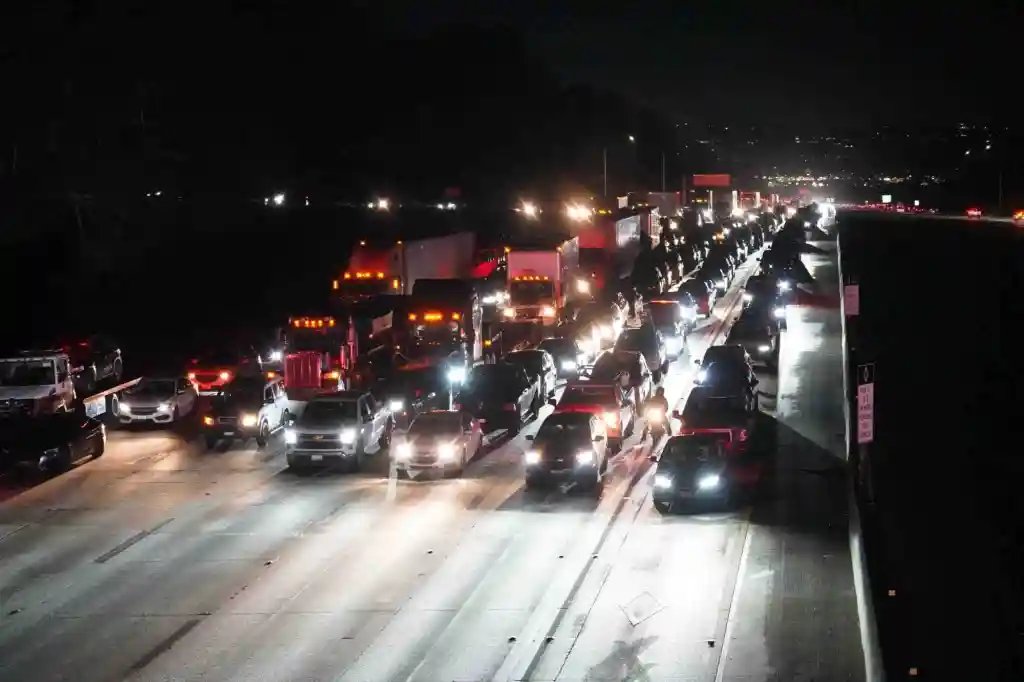
Epic Interstate Gridlock: Lessons from the San Diego Standstill
The recent incident on Interstate 5 at Del Mar Heights Road in San Diego remains etched in the memories of countless commuters. This chaotic event began on a Friday when a man, perched precariously on a bridge, attempted to take his own life. Law enforcement officials ultimately spent eight grueling hours on the scene attempting to negotiate his safety, but as the sun set on the day, thousands of motorists were left stranded in a monumental traffic jam that disrupted the entire region.
The Toll on Commuters
The repercussions of this standoff were felt widely, affecting not only the individuals directly involved but impacting the vast network of traffic in and around nearby communities. Social media echoed the sentiments of exasperated drivers. Images and posts highlighted the desperation of some people who attempted to ease their discomfort in ways that many found unsavory. Parents faced daunting choices, with one father citing a plastic bag in the car as a makeshift toilet for his children. Many voiced anger on platforms like X and Reddit, criticizing both the police and traffic management for their handling of the situation.
Residents expressed concern over the lack of ground communication and traffic control during this crisis. Kristoffer Kelly, a resident of Solana Beach, expressed his frustration. “There was no plan to support the thousands of people who were trapped for hours,” he lamented. This oversight drew attention to a critical gap in emergency response protocols, specifically the urgent need for timely communication to divert traffic and mitigate the spread of gridlock in such circumstances.
The Response Strategy
As authorities navigated the delicate situation on the bridge, they aimed not just to save the man’s life but to maintain public safety. While police officials appreciated the complexity of the matter, they defended their actions as standard protocols for similar incidents. According to Police spokesperson Cesar Jimenez, the timing and location of the standoff coincided with peak hours, leading to a “perfect storm” that made diverting traffic exceedingly challenging.
However, the lack of robust traffic management plans during a crisis situation came under intense scrutiny. Despite the California Highway Patrol being tasked with controlling traffic, a critical gap in collaboration was evident. A spokesperson from the North Coastal Sheriff’s Station stated that they had not been requested to assist, revealing a disconnect in communication between different law enforcement agencies.
The Nature of Negotiations
The emotional and psychological aspects of the negotiations also came into focus. Thankfully, police negotiators trained to handle such sensitive matters managed to engage with the distressed individual. They aimed to lead him away from harm through conversation and de-escalation. The crew utilized different resources, including Spanish-speaking negotiators and a rescue air cushion set up by the San Diego Fire-Rescue Department. However, after many hours, the intended rescue strategy did not yield immediate results.
Lt. Dan Sayasane, who leads the emergency negotiation team, emphasized the importance of conduct during negotiations: “Getting the person off safely is the main goal,” he explained. Unfortunately, the prolonged time on the ledge heightened frustrations among communities, leading to a lack of understanding about the complexities faced by police negotiators in such crisis situations.
Ripple Effects and Public Sentiment
The fallout from this significant backup sparked rich conversations regarding mental health, public safety, and traffic management. Attorney Daniel Kaplan, caught in the delayed traffic, expressed empathy for the man on the bridge but also revealed concerns about the vulnerability that such traffic jams create. Limited access could have posed threats in emergencies requiring rapid responses from first responders.
Moreover, commuters reported heightened stress and emotional turmoil due to the congestion, noting that the situation turned their regular commutes into a veritable nightmare. Many found themselves feeling trapped and anxious, exacerbated by the uncertainty regarding when they could continue their travels. As questioned by Kari Beucke, a Carmel Valley resident stuck in the gridlock, “What happens if there’s an urgent need for emergency services during this?”
Future of Traffic Management Solutions
The Del Mar Heights incident opened up a crucial dialogue concerning the effectiveness of emergency protocols and traffic management in urban settings. City officials and law enforcement need to adopt a more integrated approach where traffic control during emergencies is prioritized, especially when public safety is at stake. Solutions could involve establishing clear communication channels between agencies, closing on-ramps quickly to avert traffic buildup, and employing real-time traffic updates across various public platforms.
Furthermore, law enforcement must work closely with mental health experts to provide immediate assistance to individuals in crisis, demonstrating not just a commitment to public safety but also a duty to address mental health risks. While the immediate focus remains on negotiation and safety, understanding the ripple effects and broader implications of such incidents on community members is equally vital.
Conclusion: A Call for Thoughtful Planning
The chaos resulting from an individual crisis incident such as the one on I-5 highlights the intricacy of managing public safety while ensuring minimal disruption to the community. As frustration among commuters increased, the Distraught situation painted a picture of the need for resilience and adaptability in crisis management strategies. Today’s lessons call for forward-thinking adaptive solutions, ensuring all entities involved can collaborate effectively during emergencies—because, ultimately, the safety and well-being of the community relies on well-coordinated responses during moments of crisis.
This article is based on reporting from www.ocregister.com.
The original version of the story can be found on their website.
Original Source:
www.ocregister.com
Image Credit: www.ocregister.com ·
View image


