



Teen Activist’s Assault Highlights Concerns Over Immigration Enforcement and Disability Rights
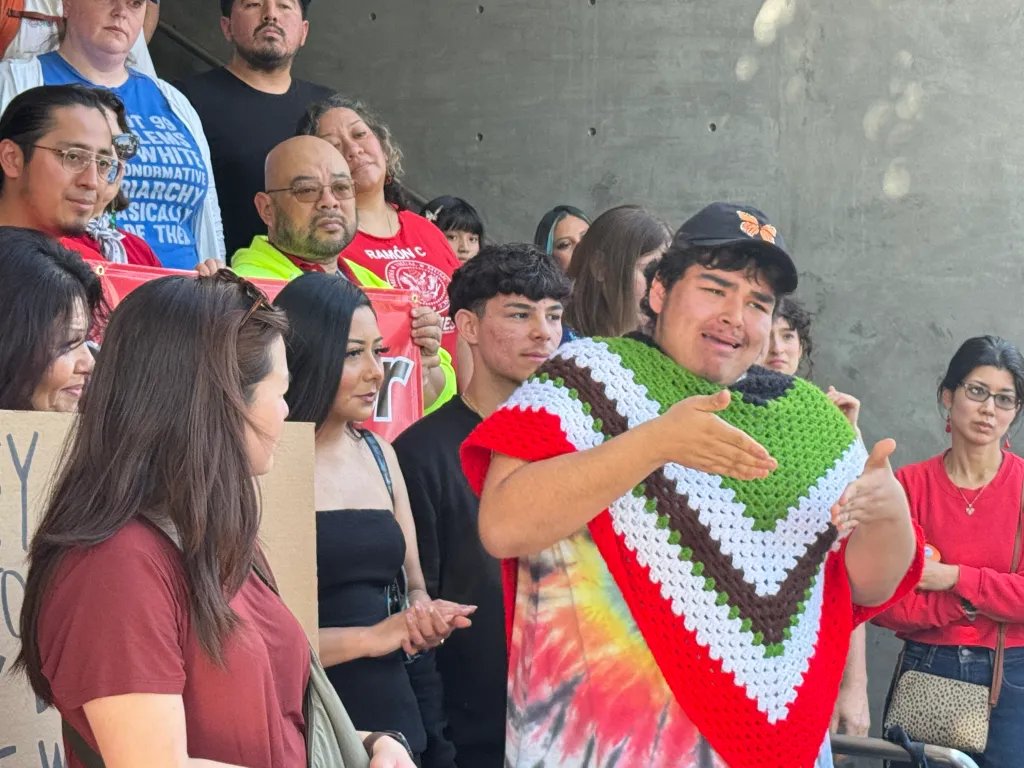
In recent events, 18-year-old Anthony Paredes, a deaf teenager from Los Angeles, was allegedly assaulted by federal immigration officers during a protest against immigration enforcement. The incident raised serious concerns about the treatment of individuals with disabilities by law enforcement agencies. Paredes’s experience underscores significant issues within our immigration system, particularly for marginalized communities who often face heightened risks and discrimination. The video of the incident, shared on social media, shows armed agents in U.S. Department of Homeland Security uniforms tackling Paredes to the ground, despite onlookers repeatedly vocalizing his deafness. This situation has sparked outrage and a broader discussion on civil rights within the context of immigration enforcement.
Paredes described the chaos leading up to the confrontation, indicating that officers mistakenly pursued him instead of another individual. “Because I’m disabled; they took advantage of that,” he stated, highlighting the vulnerability experienced by individuals with disabilities in high-stress situations. This sentiment was echoed during a rally held on January 31, 2026, where educators and activists stood in solidarity with Paredes, condemning the federal agents’ actions as a direct violation of his civil rights. It is crucial to address how law enforcement handles individuals with disabilities during encounters, a point raised by activists who demand better training and understanding for officers in these situations.
The rally, attended by around 60 educators and advocates, further emphasized the importance of community support in the wake of such incidents. Ron Gochez, an LAUSD teacher, spoke passionately about the need for educators to not only teach in the classroom but also defend students outside of it. The community’s collective voice in advocating for Paredes serves as a powerful reminder of the need for solidarity when fighting for justice. Paredes’s legal encounter and the rally reflect broader issues surrounding the treatment of immigrant communities and people with disabilities, dealing with systemic inequities in many walks of life.
Paredes attended the protest to honor the memories of individuals he felt were wrongfully victimized by federal immigration policies. His case emphasizes the emotional weight of using one’s voice in social movements—particularly for young people who face not just physical risks but also societal challenges. “Peaceful protest is an important way for people to ask for change and to protect civil rights,” he noted, emphasizing the necessity of safe spaces for marginalized groups to express their dissent. The use of peaceful learning platforms can foster resilience and inspire others to join the fight against injustices related to immigration enforcement.
His calls for justice extend beyond his individual experience to include broader demands for systemic change. Paredes’s statements on social media reflect a desire for the Latinx community and advocates for the deaf and hard-of-hearing to unite in support of one another. This message of solidarity is critical in the fight for universal rights and dignity, as activists push for a world where everyone is treated equitably. Paredes’s situation serves as a rallying point for discourse around accessibility and resources for students with disabilities within educational systems, highlighting the need for more comprehensive support.
Looking ahead, Paredes and his supporters plan to file legal claims against the government to seek justice for the incident and demand that the charges against him be dropped. A court date set for April 1st looms as supporters prepare to show up in numbers for Paredes. With ongoing discussions about federal immigration policy and its impacts on vulnerable populations, Paredes’s story exemplifies the intersectionality of disability rights and immigrant rights in today’s socio-political landscape. United by the goal of creating an equitable society for all, activists like Paredes inspire hope for change.
In summary, the events surrounding Anthony Paredes illustrate the urgent need for continued advocacy, awareness, and support for individuals with disabilities, particularly within marginalized communities facing immigration enforcement. His story acts as a poignant reminder of the ongoing struggles for civil rights and justice, emphasizing the importance of collective action in pushing for social change. As Paredes bravely voices his experience and calls for unity, he exemplifies the power of activism—reminding us that proactive engagement can yield impactful transformations in the quest for equality and justice for everyone.
This article is based on reporting from www.ocregister.com.
The original version of the story can be found on their website.
Original Source:
www.ocregister.com
Image Credit: www.ocregister.com ·
View image


