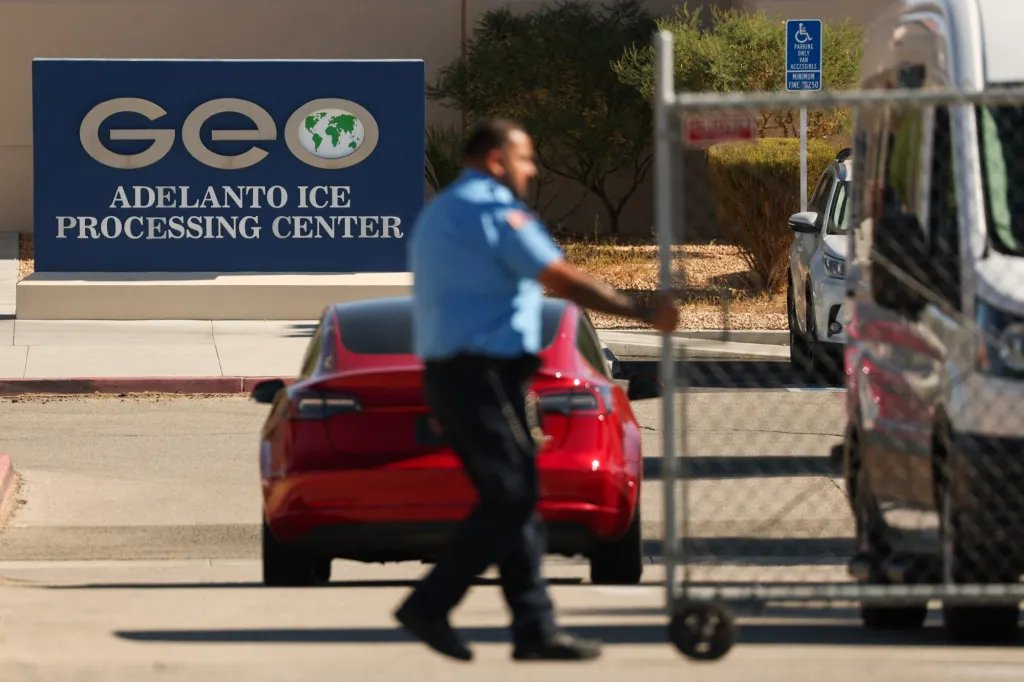
The Complex Reality of the Adelanto ICE Processing Center: Insights from the Desert
Introduction
Nestled in the expansive Mojave Desert, the Adelanto ICE Processing Center starkly illustrates the complexities surrounding America’s immigration enforcement. Located approximately 85 miles northeast of Los Angeles, this facility serves as a detention center for thousands of individuals caught in the web of federal immigration policies. The journey to visit loved ones within its confines is fraught with challenges, from logistical issues to oppressive regulations. This article delves into the experiences of families affected by these policies, the numbers behind detainment, and the uncertain atmosphere that pervades the center.
Struggles of Family Visits
For families like Melanie Lesage’s, the emotional and physical toll of visiting incarcerated loved ones is significant. Lesage, a 21-year-old mother of three, has traveled to Adelanto multiple times since her husband, Jairo Palma, was detained during a routine check-in. With no car, she relies on the goodwill of friends and family to traverse the rugged roads littered with potholes, often enduring long waits that can extend over seven hours. The facility’s strict dress code compounds her challenges, as even minor infractions can result in visits being denied entirely. Such hurdles highlight the broader struggle of families striving to maintain connections in the face of an increasingly punitive immigration system.
Rising Numbers in Detention
The circumstances surrounding detentions at the Adelanto center are alarming. While President Trump’s administration has emphasized the need to target “the worst of the worst” among undocumented immigrants, statistics reveal a different reality. Recent data shows that nearly 71% of individuals in ICE custody do not have any criminal convictions. Despite categorizing over half of its detainees as “criminals,” ICE fails to specify the parameters for this classification. Strikingly, about 60% of those at Adelanto hold no threat level designation, indicating the arbitrary nature of many detentions and raising concerns about the ethical implications of such mass incarcerations.
Allegations of Abuse and Neglect
The treatment of detainees at Adelanto has come under scrutiny, raising alarms about health and safety conditions. Reports indicate that at least 15 individuals have died in ICE custody this year alone, including Ismael Ayala-Uribe, who reportedly did not receive necessary medical care while detained. Such incidents foster fear and anxiety among detainees and their families, as Melanie Lesage poignantly expressed her concerns for her husband’s well-being, given the facility’s troubling history. Additionally, a report by Disability Rights California highlights the systemic abuse and neglect many detainees endure, including insufficient medical care and unsatisfactory living conditions.
The Role of Private Prisons
Underlining the grim realities at Adelanto is its management by the GEO Group, a private prison company that operates numerous immigration detention facilities nationwide. The GEO Group enforces strict visitation policies, including a dress code that borders on the absurd, forbidding items such as jewelry and sweatpants. These regulations create a cold environment for family interactions, diminishing the humanity of visits to mere logistical hurdles. Moreover, many families are deterred from visiting due to fears of repercussions, particularly among those who lack documentation themselves. The impact of private prison management raises fundamental ethical questions about the commercialization of detention and the inherent inadequacies in the care of detainees.
Lives on Hold
The experiences of detainees like Aaron illustrate the emotional toll of confinement amid uncertainty. Detained for months, Aaron longs for the freedom to engage in meaningful activities, like playing soccer, which once offered respite from the weight of his situation. He shared the indignities he faces, including inadequate sleeping conditions and a constant sense of fear. His story reflects broader narratives of despair and hopelessness that many detainees confront daily. As families endure the pain of separation, they grapple with the uncertainty of their loved ones’ futures while navigating a system that prioritizes deportation over compassion.
Conclusion
The harsh realities faced by individuals at the Adelanto ICE Processing Center underscore the urgent need for reform within America’s immigration system. Personal stories from families navigating the complex web of detention reveal the emotional and physical challenges exacerbated by designated standards of care, or lack thereof. As public discourse evolves around immigration enforcement, the experiences shared by those affected serve as reminders of the human cost associated with policies that prioritize punitive measures over humane treatment. Only through sustained advocacy and awareness can we hope to effect meaningful change that honors the dignity of all individuals, regardless of their immigration status.
This article is based on reporting from www.ocregister.com.
The original version of the story can be found on their website.
Original Source:
www.ocregister.com
Image Credit: www.ocregister.com ·
View image