



Protest Against ICE: A Response to Violence
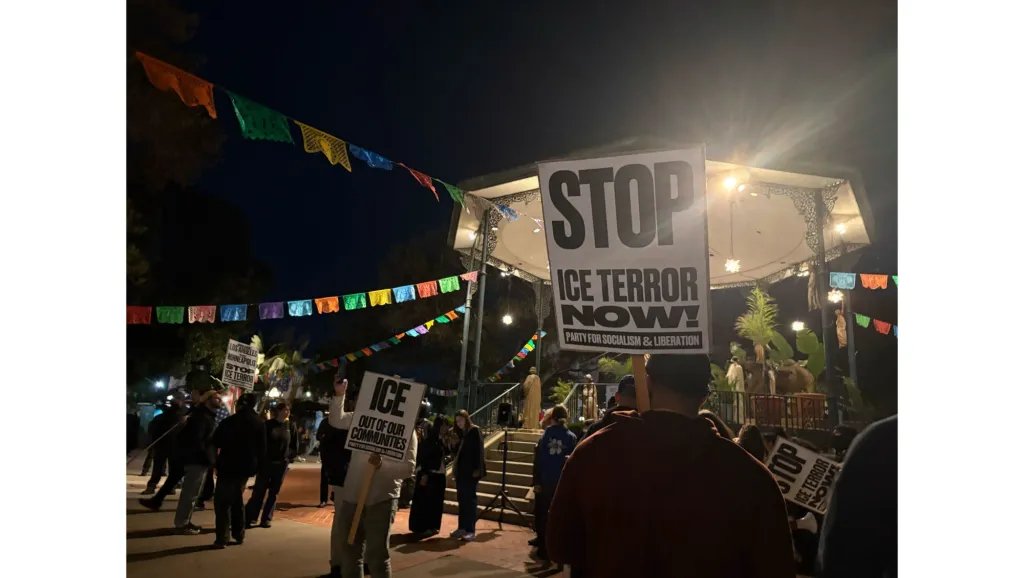
On January 7, 2023, around 80 demonstrators gathered at Placita Olvera in downtown Los Angeles to protest against the actions of Immigration and Customs Enforcement (ICE) following the tragic shooting of a 37-year-old woman, Renee Nicole Good, by a federal immigration officer in Minneapolis that same day. This gathering, organized by the Party for Socialism & Liberation, served as a platform for activists to voice their outrage, demanding accountability and justice for Good and reinforcing their opposition to ICE’s presence in their communities. Carrying signs that read, “Stop ICE terror now!” and “ICE out of our communities,” attendees expressed solidarity for those affected by ICE policies and actions.
The protesters aimed to amplify their message of grief and anger not only in Los Angeles but also to the people of Minneapolis, emphasizing that they are not isolated in their struggles. Maria and Mike, two attendees who preferred not to disclose their last names, articulated their sentiments, stressing the importance of standing together against systemic violence. Mike raised concerns over the normalization of immigration raids in Southern California, highlighting the risks of desensitization in the face of ongoing governmental oppression. Maria, who is expecting a child later in the year, voiced hope for change, advocating for other branches of government to challenge the Trump administration’s aggressive immigration policies.
The event also marked a somber reflection on the one-year anniversary of the Eaton and Palisades fires, which resulted in 31 deaths and devastating destruction. Community leaders pointed out the irony of ICE operations in areas where immigrant workers significantly contributed to recovery efforts post-wildfires. This juxtaposition served to underline the disconnect between the communities that welcome immigrant labor and the federal policies that target those very same individuals.
Recent incidents involving ICE have drawn considerable public attention and outrage. These include shootings that have raised questions about accountability for federal officers. One striking case involved an off-duty ICE officer who fatally shot a resident in Northridge, California, amid a confrontation. Another incident involved Carlos Jimenez, who was shot during an encounter with federal officers; his legal representation claims he was responding to police commands and not posing a threat. Similarly, TikTok star Carlitos Ricardo Parias was shot during a traffic stop and remains in custody, highlighting the dangers and complexities surrounding ICE actions.
Aida Ashouri, an attorney and candidate for L.A. City Attorney, emphasized the absence of accountability in the recent shootings involving ICE officers. She criticized local officials for their inaction and called for a protective response to safeguard residents instead of merely attributing blame to the federal government. The collective sentiment among the protesters is that a transformation is needed, urging local authorities to take a stronger stance against the aggressive tactics employed by ICE in communities across Southern California.
In Minneapolis, officials have contested claims made by Homeland Security Secretary Kristi Noem that labeled the situation as “domestic terrorism.” Mayor Jacob Frey observed that the shooting was not defensively justified and called for federal officials to withdraw from the city, particularly following President Trump’s recent immigration enforcement initiatives. This divergence of views illustrates the growing tensions between local leaders and federal immigration authorities, emphasizing the urgent need for dialogue and reform in the context of immigration enforcement.
Protests are set to continue in the days following the Minneapolis shooting, with additional gatherings scheduled in Los Angeles. Activists are mobilizing to express unified resistance against ICE and to push for justice concerning Renee Nicole Good. The movement against ICE emphasizes not just the need for immediate accountability for their actions but also a broader reevaluation of immigration policies that disproportionately affect marginalized communities.
As these protests unfold, they signify more than just reactions to specific incidents; they represent a growing movement advocating for the rights of immigrants and demanding systemic change. With community voices rising, there is hope that the spotlight on ICE’s controversial practices will encourage broader support for reform, pressing local and federal entities to create safer, more just environments for all. The coming days present an opportunity for collective mobilization that may alter the trajectory of immigration enforcement and its impact on communities across the United States.
This article is based on reporting from www.ocregister.com.
The original version of the story can be found on their website.
Original Source:
www.ocregister.com
Image Credit: www.ocregister.com ·
View image


