






Fullerton Police Beanbag Incident: An Analysis of Justified Force
In a troubling incident that occurred nearly two years ago, a Fullerton police corporal’s use of five beanbag rounds against Alejandro Campos Rios has come under scrutiny. Following an extensive investigation, the Orange County District Attorney’s Office released a report on February 26, 2024, concluding that the corporal’s actions were justified given the circumstances. This analysis aims to provide a thorough understanding of the situation, the events leading up to it, and the implications for law enforcement protocols, ultimately advocating for safer policing methods.
Incident Overview
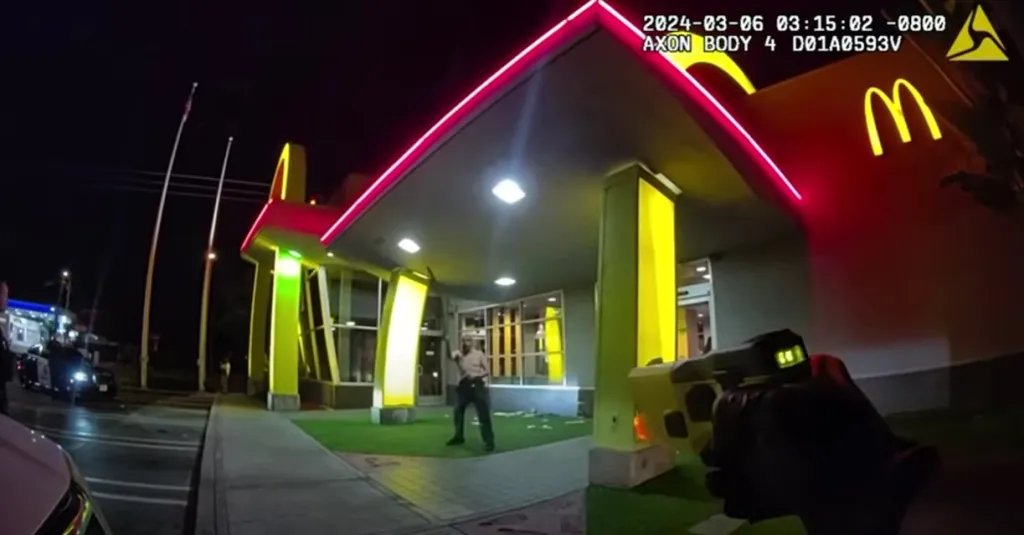
The events unfolded on March 6, 2024, when the Fullerton police received a distress call from the manager of a McDonald’s located at 1341 S. Brookhurst Rd. The manager reported two men acting erratically near the restaurant’s entrance, exhibiting behavior that suggested possible intoxication. The call raised immediate concerns for the safety of both the employees and other potential bystanders. Upon arrival, officers found Campos Rios, a 50-year-old man from Buena Park, shirtless and wielding a belt while displaying unpredictable behavior—swinging the belt, yelling, and even singing.
The alarming nature of this situation was not lost on the responding officers. The managerial call indicated a level of stress, which guided the corporal’s approach and decision-making process when dealing with Campos Rios. The investigation reveals that the corporal felt an acute sense of urgency based on the distress communicated to them. Understanding the immediate risk posed to the McDonald’s employees and to Campos Rios himself was crucial in assessing the necessity of the use of force.
Justification of Force
The Orange County District Attorney’s report emphasized that the corporal had a reasonable belief that Campos Rios was a threat to himself and others. Given the erratic behavior displayed, it was deemed essential for law enforcement to intervene. The corporal’s use of five beanbag rounds was characterized as a calculated decision aimed at de-escalating a potentially dangerous situation. The report acknowledges substantial evidence pointing to the reasonability and justification of the corporal’s actions, particularly in a high-stress environment.
In examining the use of beanbag rounds, it’s essential to note that they are considered less-lethal alternatives intended to incapacitate a subject without causing permanent harm. However, the unfortunate outcome—Campos Rios suffering fatal injuries from the fifth beanbag round—raises critical questions about the protocols surrounding less-lethal force. The corporal’s intention to minimize harm contrasts sharply with the tragic results of this intervention.
Attempts at De-Escalation
Before resorting to beanbag rounds, officers attempted various de-escalation tactics. The initial approach included verbal commands for Campos Rios to drop the belt, which he disregarded. When he advanced toward one officer, a Taser was deployed twice but proved ineffective. This context is vital in understanding the dynamics of the situation and the officer’s escalating concerns for safety as Campos Rios continued to exhibit aggressive behavior.
The report details how after the beanbag rounds were deployed, the officers immediately attempted to stabilize Campos Rios. Their response included applying a chest seal and using a defibrillator in an effort to revive him. Unfortunately, the defibrillator indicated no shock was necessary, further underscoring the grim outcome of the encounter. These attempts illustrate the officers’ commitment to assist despite the turmoil of the situation.
Implications for Law Enforcement Protocols
This incident serves as a critical case study in the ongoing discourse surrounding law enforcement’s use of force, particularly how police departments utilize less-lethal methods. While the DA’s report validates the corporal’s actions based on immediacy, it also casts a spotlight on the potential risks associated with them. The use of beanbag rounds, while designed to minimize lethal outcomes, also requires stringent training and situational assessments to mitigate unintended consequences.
The findings raise pertinent questions about current police training practices and the balance between effective response and safety. As such incidents fuel community discourse on police reform, the emphasis on de-escalation tactics and effective communication cannot be overstated. Ensuring that officers are equipped with both the tools and strategies to manage volatile situations is paramount in preserving life during confrontations.
Conclusion
In conclusion, the Fullerton incident presents a complex intersection of law enforcement decision-making and the unfortunate realities of policing. The Orange County District Attorney’s investigation supports the corporal’s decision as justified under the circumstances, but it also beckons a broader examination of the protocols in place. Future discussions should center around enhancing training for officers in less-lethal methods, improving communication skills, and refining the assessment process in high-stress scenarios. The ultimate goal of such initiatives is to foster safer environments for both law enforcement officials and the communities they serve, promoting outcomes that prioritize life preservation over the application of force.
This article is based on reporting from www.ocregister.com.
The original version of the story can be found on their website.
Original Source:
www.ocregister.com
Image Credit: www.ocregister.com ·
View image


