



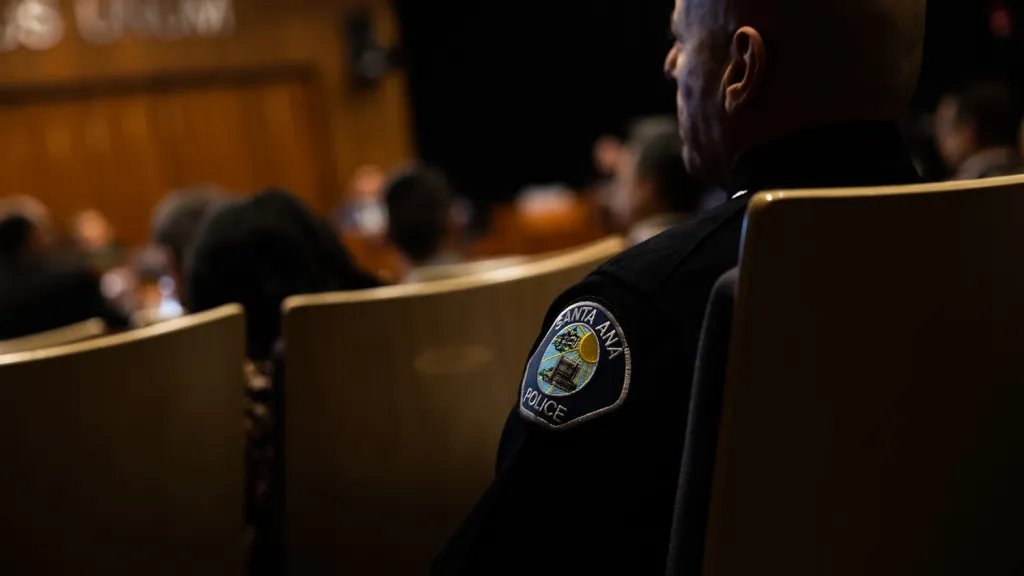
Santa Ana Police Clash with Federal Agents Over Protest Incident
In a significant departure from their previous stance on last June’s protests, Santa Ana police have publicly contradicted claims made by federal agents regarding an alleged attack during a recent downtown demonstration. This shift highlights the evolving dynamics between local law enforcement and federal agencies, especially in the context of mounting public scrutiny over policing practices.
Changing Responses to Protests
Last summer, the Santa Ana police faced intense criticism during a series of protests that erupted in response to racial injustice and police brutality. At that time, local authorities took a more defensive position in the face of substantial public outcry. However, in the recent incident, the police department took a firm stand, disputing federal claims of violence directed toward them. This pivot reflects a growing confidence among local law enforcement officials as they navigate the complexities of community relations and federal oversight.
Federal Agents’ Claims Under Scrutiny
During the protest last month, federal agents alleged that they were attacked while attempting to manage the demonstration. These claims, which suggested a hostile environment toward law enforcement, were met with disbelief and criticism from Santa Ana police officials. The local police department expressed that the narrative presented by federal agents did not align with their account of events, suggesting a discrepancy that raises questions about the accuracy of federal reports in such tense situations.
Impact on Community Relations
The contradicting accounts between local and federal law enforcement could potentially strain community relations further. Santa Ana, like many cities across the United States, has seen a significant push for police reform and transparency. By publicly rebuffing federal claims, the local police may be attempting to reinforce their commitment to the community. This could be vital in rebuilding trust with residents who are wary of authoritarian policing methods.
The Need for Clear Communication
In light of the contrasting narratives, there is a pressing need for clear communication and transparency from law enforcement agencies. Both local and federal authorities must consider how their public statements impact community perceptions and the overall atmosphere of trust. Clarity in communication can help prevent misunderstandings that may escalate tensions further, both between law enforcement and the community, and among different law enforcement agencies.
The Role of Community Engagement
Engaging with the community has become vital as local police departments address public concerns following protests. Effective engagement strategies can promote dialogue, foster understanding, and potentially mitigate the risks of misrepresentation during chaotic events. Community forums, active social media communication, and partnerships with local organizations can serve as platforms for open discussions about policing practices and community needs.
Moving Forward Together
As this new chapter unfolds in Santa Ana’s law enforcement landscape, it is crucial for all parties involved to work collaboratively. Acknowledging the community’s concerns while ensuring public safety is a delicate balance that requires thoughtful dialogue and responsive action. Both local and federal agencies must strive for a harmonious relationship that prioritizes accountability, openness, and the well-being of the citizens they serve.
In conclusion, the recent shift in Santa Ana police’s response to protests signals a potential new era in local law enforcement’s approach to community relations. Open dialogue and transparency will be essential in navigating future interactions between law enforcement bodies and the communities they serve. Engaging constructively with residents can pave the way for lasting positive change in the criminal justice landscape.
This article is based on reporting from voiceofoc.org.
The original version of the story can be found on their website.
Original Source:
voiceofoc.org
Image Credit: voiceofoc.org ·
View image


