






Stuck in Shelters: The Crisis of Homelessness in Orange County
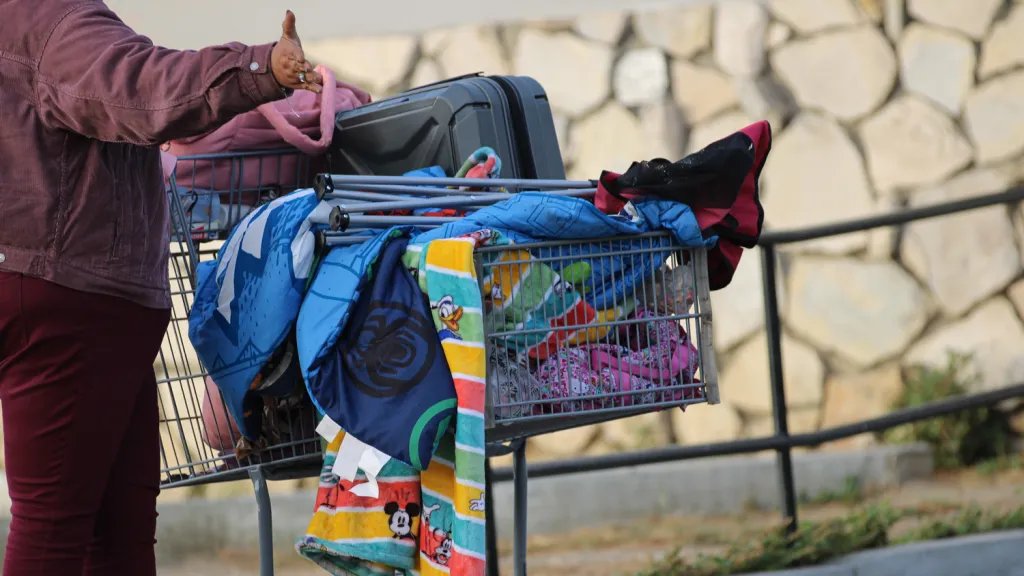
In the bustling streets of Stanton, California, the struggles of homelessness manifest in stark reality. A woman, clutching the few belongings she has in a rusted shopping cart, serves as a poignant reminder of the challenges facing thousands in Orange County. A rising chorus of voices emphasizes a critical issue: the community’s shelters, intended as transitional solutions, are becoming long-term residences for many.
A Temporary Fix for a Permanent Problem
Orange County Supervisors recently grappled with staggering statistics: over 4,000 homeless individuals were counted living on the streets, while more than 3,000 remained in various shelters across the county. Yet the contract for $45 million awarded to the nonprofit organization People Assisting the Homeless (PATH) indicates a troubling trend. The rhetoric of “temporary refuge” in shelters is increasingly at odds with reality, as individuals find themselves trapped in these facilities for years.
The Data Doesn’t Lie
“Shelters are meant to be a starting point to recovery, not a final destination,” says Dr. Lisa Carter, a sociologist specializing in urban studies at the University of California, Irvine. “The long-term stays in emergency shelters indicate a systemic failure in providing adequate affordable housing options.”
Despite the good intentions behind the $1 billion investment in homelessness solutions over the past decade, the Orange County Grand Jury recently called into question the efficacy of these measures, highlighting that outcomes have largely remained stagnant. Observers cite the following issues:
- High numbers of individuals remaining in shelters instead of transitioning to permanent housing.
- Lack of affordable housing options exacerbated by a competitive real estate market.
- Ineffective exit strategies and support systems within the shelter framework.
The Spiral of Shelter Stays
Many shelter residents face a paradox: despite being housed, they remain unstable. “It’s a long-term transitional environment,” states Supervisor Janet Nguyen. “But our reality is that we’re not transitioning people into permanent housing fast enough.” This predicament highlights a critical bottleneck: as the “front door” of homelessness remains wide open, the “back door” to stable housing is almost nonexistent.
Challenges in Transitioning to Permanent Housing
Doug Becht, director of the county’s Office of Care Coordination, echoes this sentiment as he acknowledges growing shelter populations. “The root issue is simple: we lack affordable housing. Our operators can only do so much within the constraints of the housing market,” he said. This marked discrepancy places an immense burden on service providers, who often prioritize urgent shelter services while lacking the resources or partnerships to secure long-term solutions for those in need.
With statistics indicating that a significant percentage of residents remain in shelters for over a year, the county must reconsider its strategy. “It’s not just about sheltering people; we need to focus on sustainable housing initiatives,” insists Dr. Mark Thompson, a housing policy expert at Cal State Fullerton. “We need a paradigm shift toward smaller, temporary housing units that can offer more immediate relief.”
Innovative Solutions on the Horizon
Amid these concerns, some supervisors are advocating for a more comprehensive approach. Supervisor Vicente Sarmiento has proposed exploring the creation of smaller housing units, suggesting that these could serve as interim solutions while individuals await stable, long-term placements. Innovations such as these could alleviate some of the bulging pressure from emergency shelters.
Additionally, recent pilot programs focused on homelessness prevention are being highlighted as a focal point for future efforts. Such programs could effectively divert potential new homeless individuals away from shelters altogether and support those at risk of losing their housing.
Reflecting on Social Responsibility
The discussion surrounding homelessness in Orange County is not merely a matter of statistics; it is a reflection of societal values and priorities. The voices of those like the woman in Stanton, embodying resilience against overwhelming odds, prompt a necessary examination of the social contract. “We owe it to our community members to listen, understand their challenges, and implement strategies that foster real change,” stresses Becht.
As the county prepares for its next count of homeless individuals, the urgency for transformative action resonates louder than ever. With the right framework and collaboration between government, nonprofits, and community members, Orange County has the potential to shift from a narrative of crisis to one of sustainable success.


