



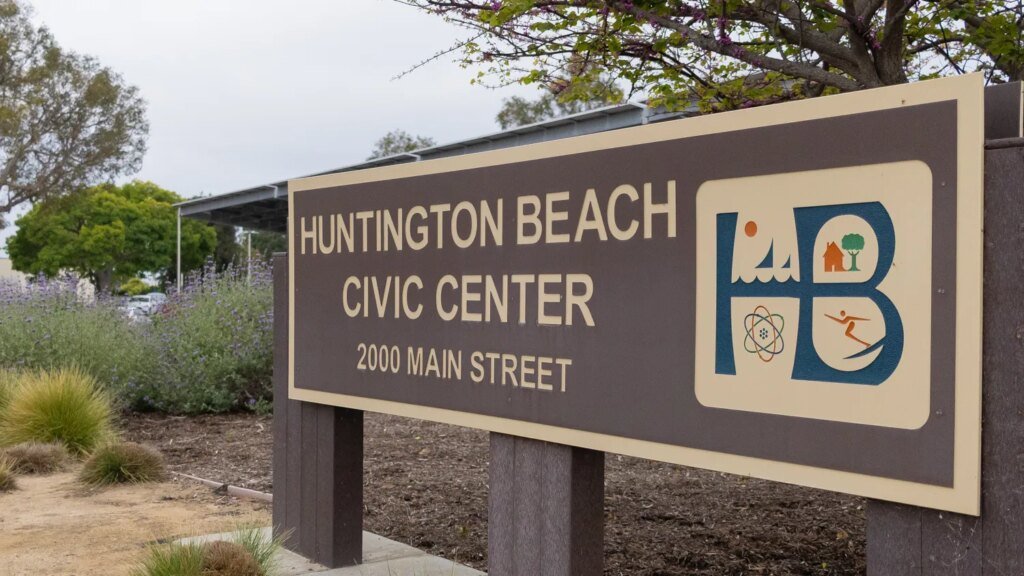
On a sun-drenched evening in Huntington Beach, residents packed into a local community center, eager for answers. Among the crowd, Mayor Casey McKeon spoke passionately about a mission he deemed vital: asserting local control against what he described as Sacramento’s overreach. Cheers erupted as he declared, “We’re not just a city; we’re a charter city!” But behind the slogans and spirited rallies lay a different story—one of legal struggle and uncertainty, as the city faced repeated courtroom losses over its interpretation of local governance.
Huntington Beach: A Legal Battle for Local Control
The Republican Majority’s Bold Mandate
When voters in Huntington Beach tilted the council in favor of a Republican majority in 2022, they did so with a clear mandate: to directly challenge state authority. The newly elected council, led by Mayor McKeon, wasted no time in setting a confrontational tone, instructing City Attorney Michael Gates to initiate lawsuits against the state over issues including housing mandates and immigration policies.
“What happens when we get that majority? We signed a contract, right here. The first thing we do is unleash Michael Gates,” proclaimed Tony Strickland, one of the newly elected council members. This phrase, emblematic of a defiant legal stance, energized supporters—yet to date, few victories have materialized. Instead, the city has witnessed a series of frustrating losses in court.
The Legal Landscape: Charter Cities and State Authority
The core of Huntington Beach’s legal battle hinges on its status as a charter city. According to Gates, this designation should afford the city greater autonomy over local governance. “When we assert our charter city authority, we’re not saying we’re an island,” he explained in a 2024 interview. “We’re simply trying to exercise the rights we have on local matters as defined by the California Constitution.” However, legal experts assert that this interpretation may be overly optimistic.
- The California Supreme Court consistently rules that state laws supersede local ordinances in areas where the state has a compelling interest.
- Over the last three years, Huntington Beach has lost major court battles, with judges emphasizing the need for compliance with state mandates on housing.
- Recent rulings have put legal constraints on the city’s zoning powers, dictating compliance with authorized housing plans.
Dr. Linda Vasquez, a constitutional law expert at the University of Southern California, stated, “Charter city laws have their limits. The courts appear firm in their stance that state welfare—like housing—must take precedence over local autonomy.” A recent study by the California Institute for Local Governance backs Dr. Vasquez’s claim, showing that cities with similar legal challenges often face uphill battles when contesting state law.
Losing Ground in Court: State Rulings and Local Reactions
Despite their initial fervor, Huntington Beach’s consistent defeats in court are raising questions about the city’s legal strategy. In March 2024, a pivotal ruling mandated that the city create a compliant housing plan within 120 days, following the California Supreme Court’s refusal to hear its appeal regarding the validity of state housing laws. The ruling stated that the city must approve proposed developments meeting minimum density requirements, essentially stripping local control over zoning, a key point of contention.
Council member Pat Burns reflected on the city’s situation, asserting, “We’ve won in terms of buying time.” While his optimism suggests they continue to fight, critics argue these legal battles have potential financial repercussions for local taxpayers. “How much more can the city afford?” pondered Dr. Eric Johnson, an economist at UC Berkeley, citing the earlier allocation of over $4 million to the city attorney’s office—a near doubling in just two years.
Implications for Local Taxpayers
The monetary implications of these legal maneuvers could be significant. The budget for the city attorney’s office has ballooned from $2.5 million to over $4.3 million, amid ongoing lawsuits and appeals. Amidst concerns about budget shortfalls, analysts warn that continuing these legal battles may lead to mandatory penalties or fines, particularly as the city risks losing zoning power entirely. As noted by Judge Katherine Bacal in a recent ruling, “The City shall not enforce its planning and zoning laws to disapprove… housing developments” until state approval is achieved.
Election Season Looms: Consequences for Future Strategy
With elections on the horizon, the stakes are higher than ever. The Republican majority has now expanded to all seven council seats, amplifying voices devoted to pursuing local control. Strickland has transitioned to a state senate position, while McKeon and other council members are vying for re-election amid critical scrutiny. McKeon remains steadfast, telling constituents, “We signed a contract with our voters that we’d fight the state. We’ve just got to continue to fight.”
The upcoming elections could further solidify or jeopardize the council’s ongoing legal strategy. As local leaders campaign, their narratives will focus heavily on preserving local autonomy, while critics will question the efficacy of their current approach given recent court failures.
As Huntington Beach stands at this crossroads, one thing is clear: the complexities of governance in California are likely to deepen. The city’s future remains uncertain as it battles state dynamics, leaving residents to wonder not only about their local regulations but also about the cost of this drawn-out legal struggle for their community.


