



Irvine’s Speed Limit Revolution: A Safer Path for Pedestrians and Drivers
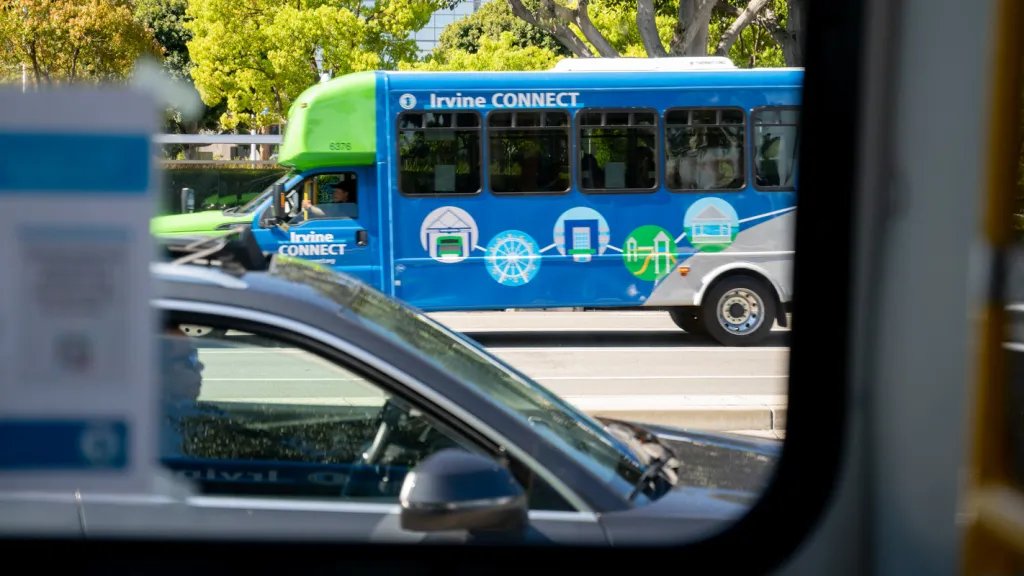
On an overcast morning in early April, the sound of a newly inaugurated Irvine Connect shuttle punctured the tranquility of the city. The bus ambled along Alton Parkway, a road that, just a week ago, bore witness to drivers darting by at alarming speeds. Now, however, its limits have been reduced, transforming it into a safer corridor for pedestrians and cyclists alike. This shift not only represents a transformative moment in local traffic management but also encapsulates a broader trend across California, where cities are reimagining road safety through legislative empowerment.
New Rules, New Reality
The recent decision by the Irvine City Council to lower speed limits on 56 roadways underscores a compelling commitment to traffic safety. In an era marked by increasing traffic accidents, the city’s proactive measures, supported by Assembly Bill 43 passed in 2022, are emblematic of a crucial shift in urban transport policy. Instead of dictating speed limits based solely on driver comfort—where the 85th percentile of speed often governed regulations—local officials now wield greater authority to enact changes aimed at enhancing public safety.
The Numbers Behind the Change
A thorough review led by the city’s traffic engineering department assessed 120 roadways, ultimately proposing a range of speed limit reductions. The specifics are illuminating:
- Speed limits on 45 roadways were decreased by 5 mph.
- 11 roadways saw speed limits lowered by 10 mph.
- 27 streets received new speed limits where none had existed previously.
Moreover, Mayor Larry Agran remarked, “If we can get people to reduce their speed of travel, I think we’ll make some headway in the period ahead.” His optimism resonates with research indicating that lower speed limits correlate directly with reduced accident rates. A study conducted by the Institute for Transportation and Development Policy found that cities adopting similar strategies saw a 20-30% reduction in traffic fatalities within two years.
Safety First: The Case for Slower Roads
Advocates for traffic reform cite numerous benefits tied to lowered speed limits. In urban environments where pedestrians and cyclists share the road with vehicles, the statistical correlation between speed and safety is troubling. According to data from the National Highway Traffic Safety Administration, the likelihood of a pedestrian dying in a crash increases dramatically when speed exceeds 30 mph. Indeed, an analysis by Dr. Maria Jensen, a traffic safety expert at the University of Southern California, emphasized, “Speed is a killer on the roads. The higher the speed, the smaller the margin for error. Lowering limits significantly can save lives.”
In light of these statistics, cities like Anaheim are also undergoing similar transformations, lowering speeds across 169 segments of their roadways as part of a broader push towards safer streets.
Why Change Matters Now
As traffic patterns fluctuate in a post-pandemic world, so too do urban policies need to adapt. The speed reductions coincide with a national reckoning on pedestrian safety, shown by growing advocacy for walkable cities. A notable sentiment shared by urban planners is that “streets are public spaces, not just conduits for cars.”
Wyatt Sing, the city’s traffic engineering administrator, stated at a recent council meeting, “With the new AB 43 language, we are seeing an opportunity to create some consistency along roadway segments or corridors.” The unified approach aims not only to improve safety but also to enhance community wellness by encouraging biking, walking, and public transport.
A Broader Perspective: Beyond Irvine
This movement extends beyond California; numerous cities globally are redefining speed limits. In Europe, cities such as Paris and Amsterdam have similarly cut speed limits, yielding substantial decreases in vehicular traffic and increases in walking and cycling. The shifts have not only promoted public safety but have also bolstered local economies by enhancing pedestrian foot traffic in commercial zones.
This comprehensive approach to road management is not merely about speed; it necessitates a cultural shift in how cities envision urban living. As Agran noted during the council meeting, “The goal is to make these lower limits enforceable. They aren’t just a suggestion—they are the law.”
The era of auto-centric planning is yielding to one that embraces diverse modes of transport—inciting discussions on urban architecture, infrastructure investment, and community involvement.
As the new speed limits take effect across Irvine, residents may find themselves navigating familiar streets at a different pace. With lowered limits comes not only the promise of reduced accidents but also the promise of a renewed community spirit—safer streets for families, children playing in neighborhoods, and a reimagined transportation network that prioritizes people over vehicles.
As we look forward, it seems that this pivotal moment in Irvine’s traffic policy could serve as a beacon for other municipalities yearning for change, as urban safety and sustainable transport become an increasingly pressing global agenda.


