






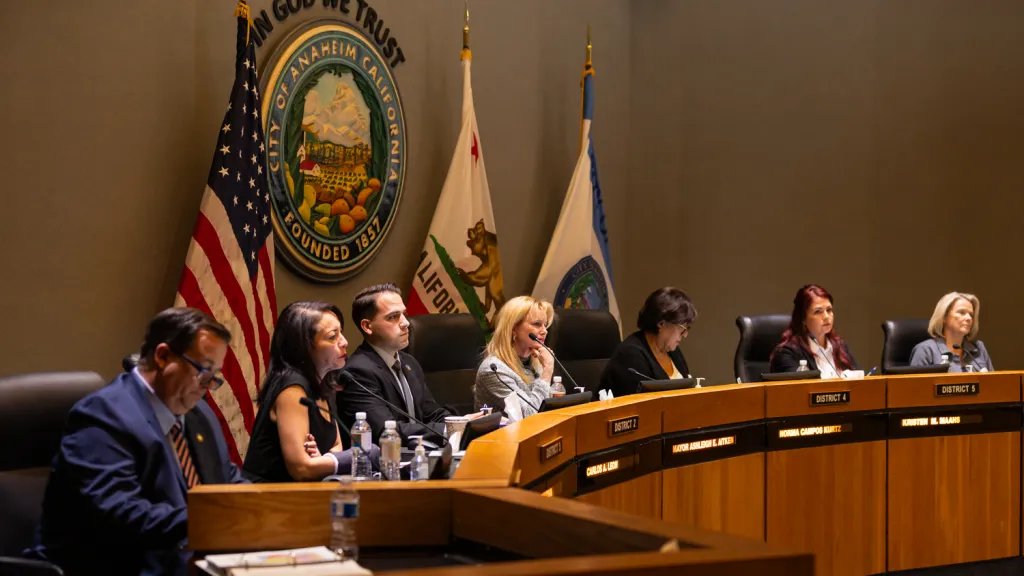
At a recent Anaheim City Council meeting, tension hung thick in the air as whispers of scandal threatened to overshadow plans for the city’s future. The city hall, a place meant for civic governance, became a battleground for political intrigue. Mayor Ashleigh Aitken’s attempt to dismiss City Manager Jim Vanderpool, revealed under the scrutiny of the public, teetered dangerously close to a breach of trust. What had begun as a procedural discussion turned into a flashpoint for debate about ethics in local governance.
Political Fallout in Anaheim: The Behind-the-Scenes Drama Unveiled
Closed-Door Concerns
Aitken’s closed session was ostensibly called to address Vanderpool’s failure to disclose a retreat sponsored by the Anaheim Chamber of Commerce. This gathering occurred in close proximity to the controversial Angel Stadium sale negotiations back in 2020. Despite the importance of transparency, Aitken’s objectives sparked backlash, particularly when the Log Cabin Republicans of Orange County leaked information about the meeting, suggesting that her agenda was politically motivated.
“This incident raises serious questions about the culture of communication within the city council,” stated Dr. Lydia Hargrove, a political ethics expert at the University of California, Irvine. “The Brown Act exists to protect the public’s right to access information related to governmental proceedings. Any breach can undermine not just trust, but the very foundation of democratic governance.”
The Brown Act and Its Implications
The Brown Act is a cornerstone of Californian legislative regulation, ensuring that elected officials conduct the public’s business openly. It mandates that:
- Closed sessions can only occur under specific circumstances, such as personnel issues or pending litigation.
- Any action decided in closed sessions must be disclosed publicly during an open meeting.
- Violation of these guidelines can lead to misdemeanors for those involved.
Despite the prohibition against disclosing discussions from closed sessions, Vanderpool remained under scrutiny. City Attorney Rob Fabela confirmed, “No reportable action was taken in the closed session,” yet questions lingered. How was it that a local Republican organization had access to this sensitive information?
The Backlash Against Transparency
Following the meeting, Mayor Aitken took to her Instagram story to express her outrage, questioning the motives behind the leak and emphasizing, “You couldn’t wait 24 hours before breaking ANOTHER law?” In a phone interview, Aitken emphasized the ramifications of such breaches, stating, “It erodes the public’s trust at a time when Anaheim is still recovering from significant corruption scandals.”
Political analysts view this incident not merely as a coincidence but as a symptom of broader governance issues within Anaheim. “The dynamics within local councils can be tumultuous, and this incident showcases a lack of unified vision among council members,” remarked Dr. Samuel Lasky, a political sociology expert from Rutgers University. “When factions prioritize political gain over ethical conduct, the repercussions can be dire.”
Calls for Reform
In the aftermath, Aitken has called for changes in how officials handle sensitive issues, requesting that city attorney Robert Fabela explore mechanisms for regulating officials’ communication, including potential oversight of emails and texts related to closed sessions. “We have to be held accountable,” she asserted. “Training is good, but adherence to law and ethics comes first.”
City Spokesman Mike Lyster’s refusal to comment further, alongside unresolved questions surrounding Vanderpool’s ethics, compounds the uncertainty in the council. Aitken’s insistence on transparency poses a provocative notion: Can Anaheim progress beyond its past if trust remains elusive?
Corruption Echoes
The city is still reeling from a significant corruption scandal involving former Mayor Harry Sidhu, who was imprisoned last year for lying to federal investigators during the Angel Stadium deal. The timing of this newest incident couldn’t be worse, as the city grapples with restoring public confidence.
In this politically charged atmosphere, the Fair Political Practices Commission is investigating Vanderpool for potential violations concerning economic interests disclosures, augmenting the cloud of mistrust shadowing the city hall. “This ongoing investigation could further complicate Vanderpool’s standings within the city, particularly in light of already compromised public opinion,” said political analyst Eliza Ramos.
As Aitken’s efforts to regulate the internal processes of the city unfold, a key concern remains: the ability of the council to rise above partisan tensions and focus on Anaheim’s burgeoning needs. “If the council can’t heal and prioritize the interests of its citizens, Anaheim could find itself back at square one,” cautioned Dr. Hargrove.
Indeed, in a city striving for renewal amidst past transgressions, the fate of its governance now depends on its leaders recognizing that above all, their allegiance must lie with the electorate. If Anaheim is to reclaim its narrative as a beacon of hope and progress, the political theater unfolding behind the dais must give way to a more transparent and collaborative approach to leadership.


