






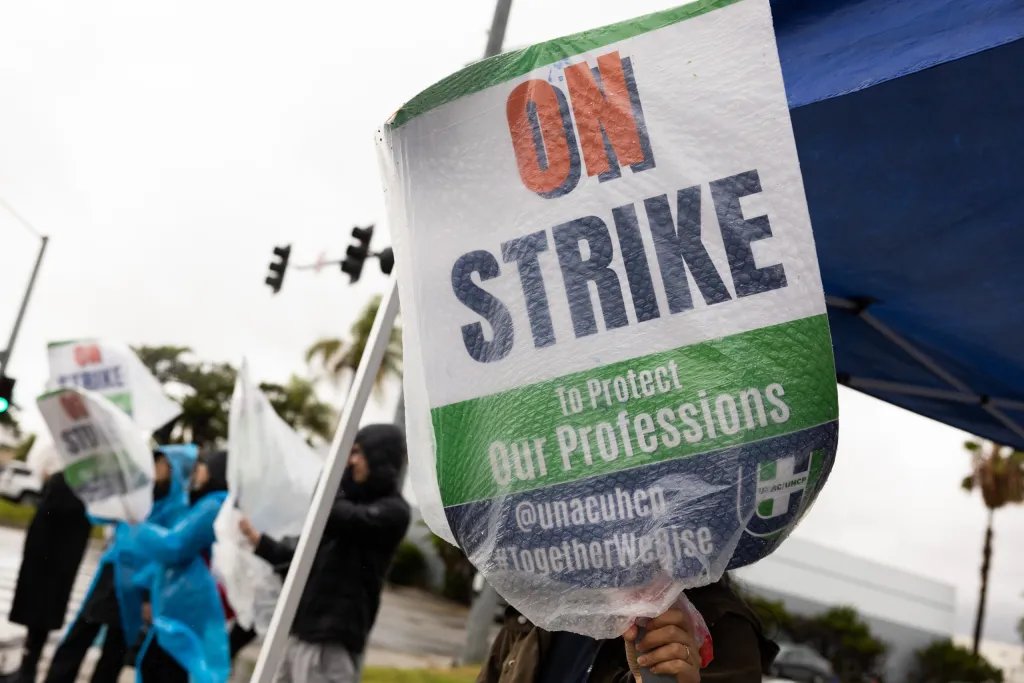
Amidst the backdrop of crumbling trust and rising frustration, over 30,000 healthcare workers rallied for change outside the Kaiser Permanente Medical Center in Anaheim. Signs fluttered in the autumn breeze, emblazoned with demands for higher pay and better staffing. This echo of discontent reverberated not only through Southern California but also throughout Hawaii, where the crisis in our healthcare system has become untenable. “We’re here for our patients, but we need to be heard,” shouted Vanessa Caballero, a registered nurse and representation director for the United Nurses Associations of California. Her impassioned plea reflected the growing urgency of the situation, as healthcare delivery hangs in the balance.
Kaiser Permanente Workers on Strike for Better Pay and Staffing
The ongoing strike, organized by the United Nurses Associations of California and the Union of Health Care Professionals (UNAC/UHCP), marks a critical juncture in the battle for fair treatment in healthcare. With demands for better wages and adequate staffing ratios echoing through picket lines, the actions of these unions serve as a flashpoint in the ongoing debate about healthcare equity in the United States.
A Built-Up Crisis
For many healthcare workers, this strike symbolizes more than just a disagreement over pay; it’s a culmination of years of growing discontent. In a recent study from the Institute for Health Policy, nearly 76% of healthcare professionals reported feeling overwhelmed by their workloads, leading to deteriorating patient care. “Healthcare workers are advocates on the frontlines, yet they are often overlooked in discussions about healthcare reform,” noted Dr. Eleanor Marks, a health economist affiliated with a prominent university. “This strike underscores an essential truth: when workers are undervalued, the entire system suffers.”
The Striken Workers and Their Demands
The striking workforce includes a diverse body of healthcare professionals: registered nurses, pharmacists, midwives, and rehabilitation therapists, among others. Their demands can be distilled into critical areas, as outlined below:
- Wage Increases: Workers are seeking pay adjustments that reflect the rising cost of living and the value of their skills.
- Staffing Ratios: The unions are advocating for enforceable staffing ratios to combat rising burnout and ensure patient safety.
- Healthcare for Workers: Comprehensive health benefits that account for the rigorous nature of their jobs are essential in the proposed contracts.
“The lack of appropriate wage proposals from Kaiser, particularly in light of the inflated costs of living, is disheartening,” Caballero explained. “We are simply asking for what’s right.” She pointedly referenced, “Instead of addressing our proposals, Kaiser has released misleading statements claiming that they’ve offered significant pay increases.”
Corporate Responses and the Intersection of Care
Kaiser Permanente has asserted that it values its workforce and seeks a fair resolution. Camille Applin-Jones, the senior vice president for the organization, emphasized, “Today, Kaiser Permanente nurses are among the best-paid caregivers in the country.” However, for many workers, such statements feel hollow. As Angelica Muro, a pharmacy technician, stated: “When the backbone of healthcare is treated as expendable, our patients face the consequences. Long waits, delayed prescriptions—all of this leads to compromised care.”
This sentiment is echoed by a recent report from the Labor Economics Review, which revealed that healthcare systems that invest in their staff see improved patient outcomes and satisfaction. “Without addressing systemic issues such as staffing and pay, we may be jeopardizing not only the welfare of workers but also the very health of our communities,” said Dr. Leonard Ji, a professor of Labor Relations.
The Broader Implications
As the strike continues, more healthcare professionals are expected to join the cause. The United Food and Commercial Workers (UFCW) indicates that pharmacy employees will begin picketing, adding pressure to a system already buckling under the strain. With patient care at stake, healthcare executives grapple with the ramifications of these labor actions.
Despite Kaiser’s assurances that hospitals will remain operational, the cascading effect of simultaneous strikes carries a heavy burden. Carol Soudah, a spokesperson for Kaiser Permanente Southern California, stated, “Patient safety and access to care remain our highest priorities.” Yet, anecdotal evidence from the frontlines suggests that the reality may fall short of such promises.
“Patients are waiting longer for care because the system is stretched too thin,” noted an emergency room nurse who preferred to remain anonymous. “The repercussions of this strike reach beyond us; they impact community health.”
This moment is not merely about compensation—it highlights the crucial intersection of labor rights and public health, where every delay, every misunderstanding, impacts lives. As healthcare workers hold the line in their fight for dignity and respect, communities watch closely, aware that the stakes have never been higher.
As the first week of the strike winds down, it is clear that this is not just a battle for better contracts but a pivotal moment in re-evaluating how the healthcare system values its workers. While negotiations may take time, the sentiment is unequivocal: the voices of healthcare workers must be elevated to secure a robust, equitable, and sustainable healthcare future.


