



Orange County Supervisors: The Architects of Their Own Inefficiency and Corruption
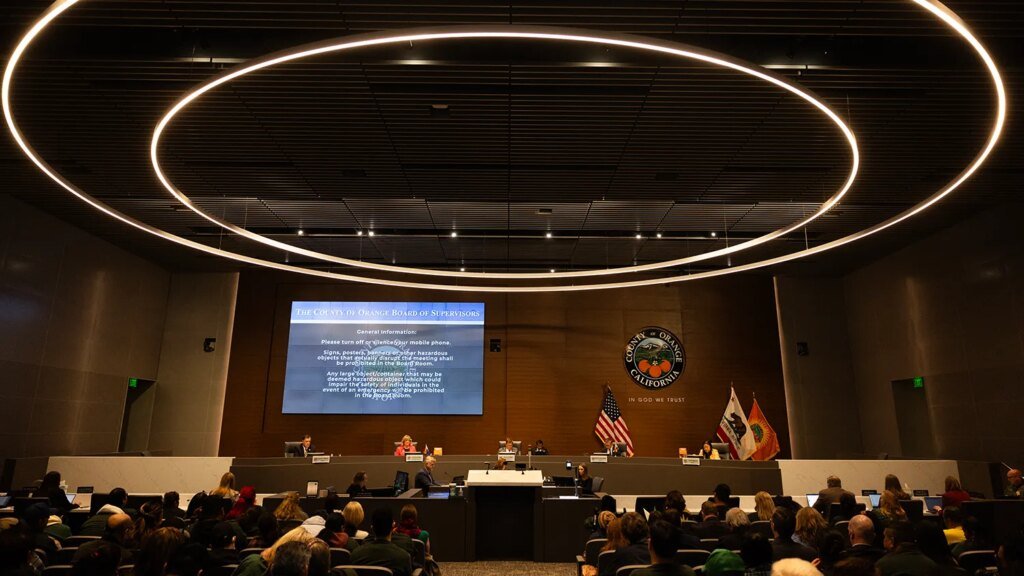
At a recent Orange County Board of Supervisors meeting, a palpable tension hung in the air as Supervisor Vicente Sarmiento delivered a stinging rebuke of the system. “The fatal flaw in our government is that supervisors can operate without sufficient oversight,” he declared, pointing to the very apparatus designed to protect public funds from misuse—the county executive. This stark warning came after a scathing audit revealed a culture of corruption stemming from former County Supervisor Andrew Do, exposing a vulnerability at the heart of Orange County government.
Systemic Failures: The Do Scandal and Its Implications
The audit, conducted by Weaver auditors and released last week, painted a troubling portrait of the misuse of taxpayer money during Do’s tenure. The observations were shocking but familiar: a lack of accountability, unchecked power, and a culture where questions were discouraged. “We found a backdrop where decisions related to District 1 contracts were not to be questioned,” the lead auditor reported, effectively translating the findings into a broader indictment of the supervisory structure itself.
For decades, the governance model in Orange County has been filled with systemic weaknesses that allowed Do and others to flourish. Emphasizing a complex network of influence over public resources, Sarmiento’s assertions shine a spotlight on a culture where supervisors exert control over county agencies and the CEO’s office alike. This scenario begs the question: how did we get here?
A Historical Context of Corruption and Oversight
The roots of this dysfunction stretch back to the late 19th century when public bureaucracy was designed in reaction to rampant political corruption, epitomized by instances like New York’s Tammany Hall. Reforms aimed at separating elected officials from direct management of public spending led to the creation of the county executive model—a buffer supposed to ensure that decision-making remained rooted in professional management rather than political whim. Yet, in Orange County, these protections have been compromised. “With the rise of discretionary spending from officials, the system has arguably regressed back to the dark ages of blatant misuse of power,” remarks Dr. Julia Hargrove, a political scientist focused on governance structures.
- Lack of Separation: Elected officials frequently bypass the executive layer.
- Discretionary Funds: Allocation mechanisms are ripe for abuse.
- Weakened Ethics Oversight: A largely toothless ethics commission has little investigative power.
A Call for Reform: The Path Forward
In the wake of the audit, calls for actionable reform are growing louder. Sarmiento’s candid suggestions resonate with many who argue for an overhaul of the current system. “We need an elected CEO who can truly be held accountable, unlike the weak executives we’ve had,” he urged. Such a move would not only restore integrity to the executive function but also mitigate the direct influence supervisors have over public agencies.
Professor Alan Morris, an expert on local governance, argues, “The current arrangement is a classic case of structural failure making individuals more prone to misconduct. An independent, elected CEO would wrest control from the political arena, instilling a sense of accountability.” The success seen in Los Angeles—where an elected CEO has reinvigorated trust in governance—offers a template for reform, despite resistance from incumbents fearing diluted power.
Reining in Discretionary Spending
Another core issue lies within the ambit of discretionary spending accounts, recently ratcheted up to staggering amounts during the COVID-19 pandemic. “The expansion of these slush funds has been outrageous,” states Dr. Elena Rivera, a public finance expert. “It allows politicians to distribute resources in ways that are politically advantageous rather than beneficial to the public.” Several incidents have already illustrated potential abuses, where funds are allocated just before critical elections…
To illustrate the extraordinary stakes at hand:
- At least $10 million was assigned to each supervisor as discretionary funds, raising ethical eyebrows.
- Funds used both for pandemic relief and dubious local organization donations just ahead of election cycles.
- Calls for a cap or complete removal of discretionary funds are gaining traction.
Strengthening Oversight Mechanisms
Alongside reforms for accountability, the ethics commission serves as another focal point for change. Sarmiento argued the commission is “toothless” by design, a critique that reveals how the very mechanisms intended to ensure ethical governance are insufficient. In recent years, Orange County has invested in an elaborate array of lobbying efforts, complicating transparency further.
Advocates propose that for the ethics commission to gain real functionality, it must be granted investigatory powers, allowing it to delve into issues that have traditionally been brushed aside. “If we are serious about reform,” notes Shirley Grindle, a seasoned campaign finance investigator, “we need to empower our ethics commission to not just educate but to enforce.”
Building Trust Through Transparency
Trust, a crucial pillar of effective governance, hinges on transparency. Sarmiento recently called for the publication of supervisors’ calendars—a simple yet potentially transformative step toward openness. Greater transparency could ensure that constituents are informed about who is influencing their representatives.
“Public trust is built through visibility,” argues Dr. Carter Wells, a scholar of public administration. “When constituents can see exactly who is lobbying their supervisors and when, it helps to illuminate the decision-making processes.”
If the Orange County Supervisors want to restore faith in local governance and stem the tide of graft and inefficiency, they must heed the warnings of both their constituents and the lessons learned from past failures. Small cracks have begun to show in the veneer of impunity, but true reform is the only way to ensure that history does not repeat itself.


