



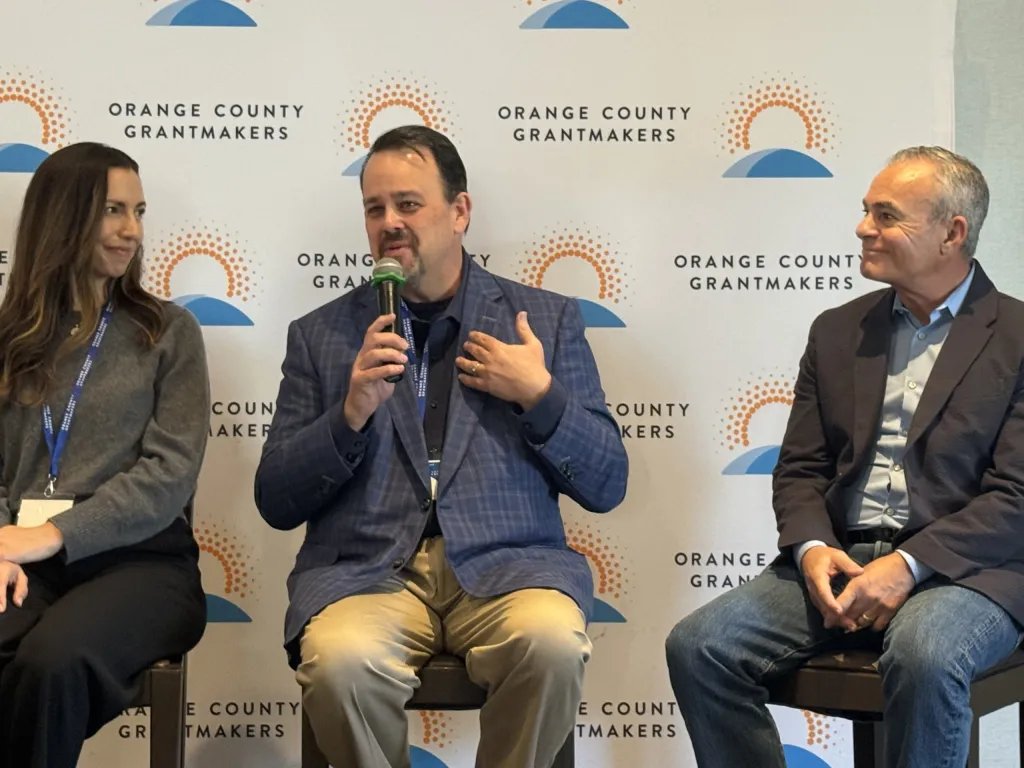
As the sun dipped below the horizon, casting an amber glow on downtown Irvine, three figures took to the stage at the OC Grantmakers panel, “Beyond the Headlines: Sustaining Local Journalism in Times of Change.” Their voices echoed a profound urgency, capturing the moment as both a crisis and an opportunity for local journalism in Orange County.
Beyond the Headlines: Sustaining Local Journalism in Times of Change
Leading editors from the LAist, Orange County Register, and Voice of OC assembled with funders and nonprofit leaders. The mood, charged with passion and concern, tackled the grim realities confronting local journalism. “News is a more essential service than ever before,” declared Alex Santamaria, President and CEO of LAist and co-moderator of the event.
The Erosion of Accountability
The three editors—Norberto Santana, Jr. of Voice of OC; Mary Plummer of LAist; and Todd Harmon of the Orange County Register—poignantly discussed the manifold challenges local newspapers are facing. Plummer noted the rising legal fees incurred over routine public records requests, framing it as not just a financial burden but a strategic tactic from officials who wish to stifle scrutiny.
“Politicians will wait you out at every level of government,” Santana countered, emphasizing the strategic advantage held by public officials when journalists lack sufficient resources to mount effective challenges. Harmon further added the tension surrounding Freedom of Information requests, echoing sentiments that were palpable in the room.
Public Trust: A Vital Currency
The panelists spoke of the intrinsic value of journalism as a tool for public accountability, particularly in a democracy. Santana remarked, “When they get public comments, they adjust. It’s the beauty of American democracy.” Such reflections underscore why local journalism remains pivotal in today’s socio-political landscape, where policy actions can be shrouded in secrecy.
- Legal barriers increasing costs for news organizations.
- Public officials often ignoring or delaying requests for information.
- Shifting funding opportunities and the role of philanthropy in journalism.
Innovation in Funding Journalism
As the panel progressed, conversations turned to potential funding avenues for local journalism. Priscilla Enriquez, President and CEO of the James B. McClatchy Foundation, challenged the misconception that only those within the media need to fund journalism. “Don’t think you have to be a journalism funder to fund journalism,” she insisted. “From funding a reporter’s salary to specific projects, there’s an array of opportunities to support transparency and reporting.”
Christina Shih, Associate Director of Press Forward, emphasized the pressing need for sustainability and infrastructure. “Press Forward has funded over 110 newsrooms across the country and created 44 chapters to strengthen community partnerships.” This sort of innovation exhibits how philanthropy can adapt in response to the changing media landscape.
A New Philosophy in Philanthropy
Crystal Page, Vice President of Communications for the Prebys Foundation, reinforced the importance of listening to community voices. “It’s crucial to focus on the issues that matter to them,” she noted. “We rely on trust-based philanthropy, engaging communities in discussions about what changed after we provided funding.” In a time where many people are losing faith in mainstream media, such community engagement is paramount.
Data on a Deteriorating Landscape
According to a recent study from the Media Research Foundation, local newspapers have faced a 50% reduction in staff over the past decade, further endangering their role as community watchdogs. This shrinking workforce often leads to inadequate coverage of pivotal local issues, with 63% of Americans stating they believe local news has suffered during this period.
“The crisis in journalism is not just about money; it’s deeply intertwined with public trust,” said Dr. Lisa Klein, a media scholar at the University of California, Irvine. “A smaller staff often means less thorough reporting, which can lead to communities feeling voiceless and disenfranchised.”
Collaboration and Community Engagement
The session concluded with hearty applause and palpable optimism as community leaders and journalists alike recognized the power of collaborative funding models for future sustainability. The essence of their conversation echoed across the room: strengthening local journalism is not only beneficial but essential for the democratic fabric of society. While challenges persist, the call for innovation in funding and community engagement illuminates the path forward.
As attendees filtered out of the auditorium, conversations continued, underscoring a profound willingness to adapt and innovate. Perhaps local journalism hasn’t reached the end of its road; instead, as the discussion revealed, it could be on the brink of a renaissance, fed by philanthropic vision, community trust, and the unwavering commitment of its practitioners.


