



The International Olympic Committee’s Stance on Transgender Athletes: A Delicate Balance
The International Olympic Committee (IOC) recently refuted claims that it would impose a ban on athletes born male from participating in women’s Olympic events. Instead, the IOC emphasized that “no decisions have been taken yet.” A report from The Times in London suggested that such a ban would be enacted by early 2026, pending a scientific review of the physical advantages conferred by being born male. This situation reflects the ongoing debate about gender and sport as the IOC navigates the complexities of inclusion while also safeguarding fairness in competition for female athletes.
Current Status of Transgender Participation in the Olympics
During a recent meeting in Lausanne, Switzerland, the IOC’s medical and scientific director, Dr. Jane Thornton, updated IOC members concerning the initial findings of a working group designated to study transgender participation in the Olympics. Despite the report stating a potential ban, an IOC spokesperson clarified that the working group’s discussions are ongoing, with no definitive conclusions reached yet. A final policy may emerge during the IOC’s session in February, coinciding with preparations for the Milan-Cortina Winter Olympics.
New Leadership and Direction
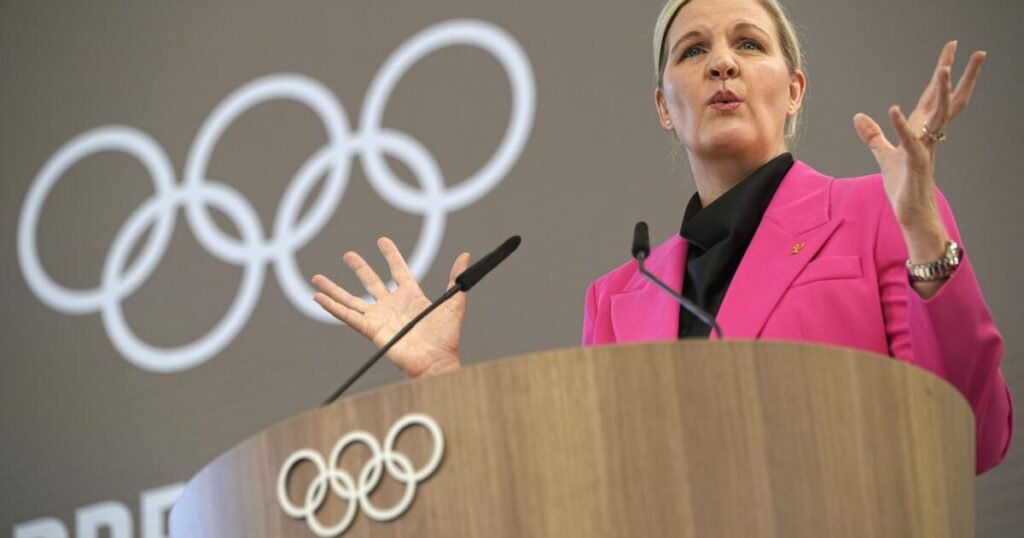
With the appointment of Kirsty Coventry as the new IOC president, significant changes in policy surrounding transgender athletes appear to be on the horizon. Coventry has advocated for a unified approach to transgender inclusion in Olympic sports, which diverges from the piecemeal efforts that have garnered criticism in the past. Her stance mirrors a desire to ensure fairness in female categories while also basing any decisions on scientific evidence. “We have to protect the female category, first and foremost to ensure fairness,” Coventry stated, underscoring the delicate balance the IOC must achieve.
Political Influences and U.S. Policies
The conversation surrounding transgender athletes is also amplified by political dynamics. Earlier this year, former President Trump issued an executive order prohibiting transgender athletes from competing in women’s sports at U.S. schools, a policy he intends to extend to the 2028 Los Angeles Olympics. However, local education officials resisted complying, leading to a change in rules from the U.S. Olympic and Paralympic Committee, which has now instituted its own restrictions. This external political influence complicates the IOC’s decision-making processes and reflects varying attitudes toward gender inclusion in sport worldwide.
Instances of Controversy in Recent Competitions
The most recent Olympic events have highlighted the complexities of gender eligibility. At the Paris Games, boxer Imane Khelif won a gold medal amid controversy, as she had been disqualified from a previous championship for failing a gender eligibility test. The IOC’s decision to allow Khelif and others—including Taiwan’s Lin Yu-ting—earlier identified as female illustrates the murky waters of defining gender in competitive sports. To address potential discrepancies, international boxing introduced mandatory genetic tests for female athletes to assess those with Differences of Sexual Development (DSD), reflecting a growing concern over fairness and inclusion.
Varied Approaches Across Sports
Different sports organizations are implementing diverse policies regarding transgender athletes. World Athletics prohibits transgender athletes who have experienced male puberty from competing in women’s events, while World Rugby has outright banned them from top-level competitions. In contrast, World Aquatics permits athletes who transitioned before the age of 12 to participate in female categories. The varying thresholds underscore a lack of consistency in how organizations grapple with the challenges of inclusion, fairness, and science in the context of athletic competition.
Conclusion: The Path Forward for the IOC
The IOC’s leadership continues to face the complex task of establishing a policy that balances inclusivity with fairness for female athletes. As Coventry suggested, learning from existing frameworks within international federations can help develop a refined approach. This ongoing discourse around transgender athletes will undoubtedly shape the future of the Olympics and impact the experience of countless athletes. The coming months are crucial, and stakeholders are keenly awaiting the IOC’s forthcoming decisions, which could dramatically reshape the landscape of competitive sports for years to come.
This article is based on reporting from www.latimes.com.
The original version of the story can be found on their website.
Original Source:
www.latimes.com
Image Credit: www.latimes.com ·
View image


