



Remembering Kenny Easley: A Legacy in Football
In the world of college and professional football, few players have left an indelible mark like Kenny Easley. His journey began on a flight to Houston for his first college football game, where he learned he would split time at free safety with a veteran teammate. As fate would have it, that veteran, Michael Coulter, never stepped on the field again after Easley took over. From that moment, Easley earned the nickname "The Enforcer" for his aggressive playing style. He quickly became one of the most revered players in the Pac-10, ending his freshman year with astonishing records: nine interceptions and 93 tackles, a testament to his skill and determination.
An Unexpected Star
Despite being a top high school prospect and initially leaning toward the University of Michigan, Easley surprised everyone by choosing UCLA on the day of his announcement. He cited the Bruins’ commitment to recruiting him as a free safety as a key factor in his decision, a position he embraced. His time at UCLA proved transformative; over four seasons, he racked up 19 interceptions, a school record that endures to this day. Easley’s ability to read the game and anticipate opposing quarterbacks made him a nightmare on the field. He jokingly remarked that quarterbacks avoided throwing passes down the middle simply to elude him—a testament to the fear he instilled in rivals.
A Force to be Reckoned With
Not only was Kenny Easley a defensive powerhouse, but he also showcased his versatility by returning punts. During his senior season in 1980, he accumulated 105 tackles, further solidifying his reputation as a formidable presence. His outstanding performance earned him a commendable ninth place in the Heisman Trophy voting, an impressive feat for a defensive player. With 374 career tackles, Easley ranks among the top defensive players in UCLA history. He was recognized as a consensus All-American three times, sharing this distinction with just one other player in UCLA’s history.
The NFL Journey
Following a stellar college career, the Seattle Seahawks selected Easley as the fourth overall pick in the 1981 NFL Draft. Over seven seasons with the team, he made 32 interceptions, reinforcing his status as one of the league’s elite safeties. However, Easley’s career was not without challenges. He faced significant health issues due to kidney problems, which prematurely ended his time on the field in 1987. The relationship between Easley and the Seahawks became strained when he accused the franchise of providing medication that contributed to his health decline. Thankfully, both parties later resolved their differences, and Easley’s legacy remained intact.
Legacy and Honors
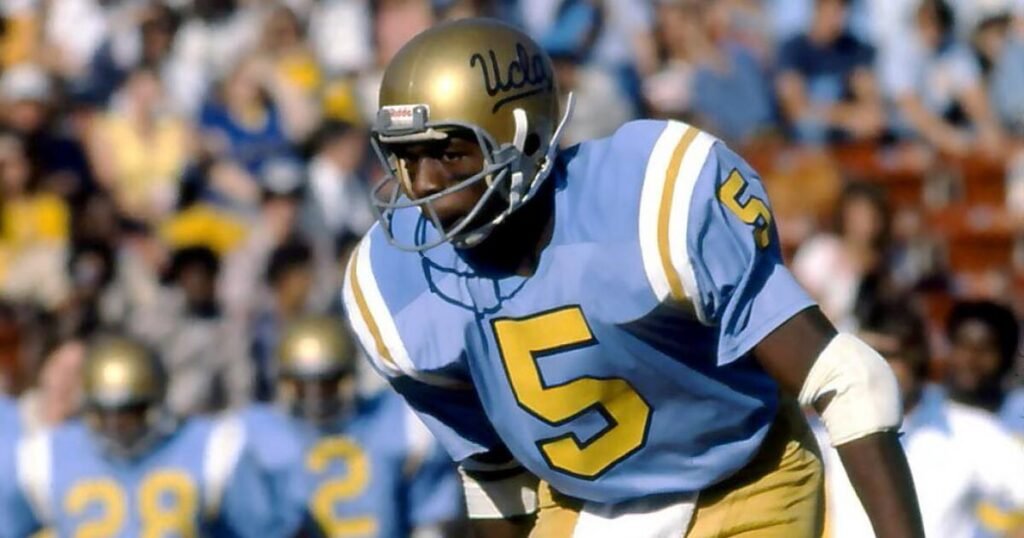
Easley’s impact went beyond individual accolades; he was instrumental in shaping the Seahawks’ identity during his time with the team. His leadership, toughness, and intense competitive spirit made him a role model for future generations. Recognized for his exceptional contributions to both college and professional football, Kenny Easley was enshrined in both the College and Pro Football Halls of Fame. In a remarkable acknowledgment of his achievements, UCLA retired his No. 5 jersey in 1991 and inducted him into their athletics Hall of Fame.
Conclusion: A Lasting Impact
Kenny Easley’s life may have ended unexpectedly at age 66, but his legacy in football continues to inspire players and fans alike. His journey from local fields in Chesapeake, Virginia, to becoming an All-American at UCLA and a Pro Bowler with the Seattle Seahawks reflects not just raw talent, but also an unwavering determination and competitive spirit. The tributes pouring in highlight the immense impact he had on the sport and the personal lives of those who knew him. With memories of "The Enforcer" etched in history, Kenny Easley’s spirit will forever resonate in the realms of college and professional football.
This article is based on reporting from www.latimes.com.
The original version of the story can be found on their website.
Original Source:
www.latimes.com
Image Credit: www.latimes.com ·
View image


