



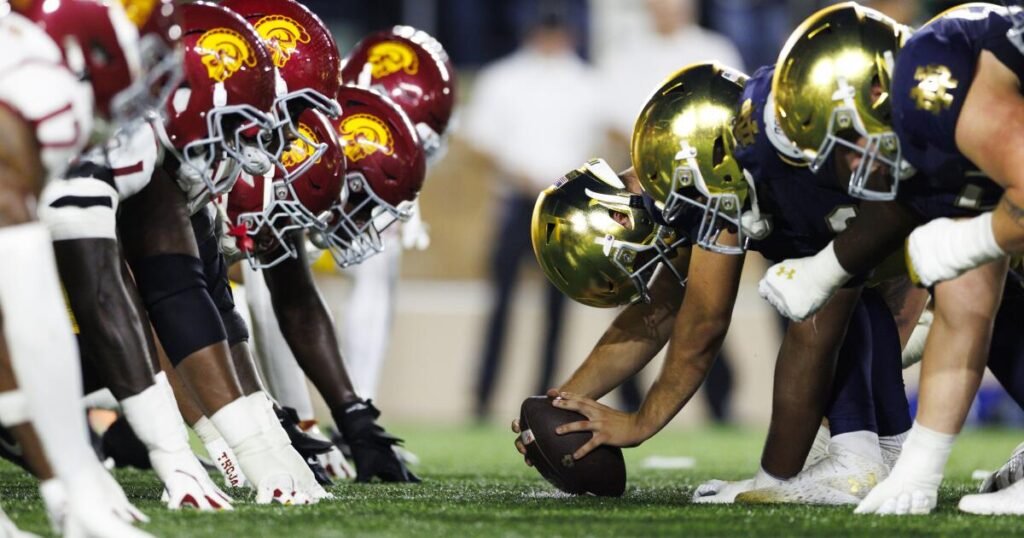
USC, Notre Dame Rivalry: Tradition vs. Modernity in College Football
When it comes to college football, a few rivalries stand out, and none are as storied as the one between USC and Notre Dame. Bill Plaschke argues that the primary goal for the Trojans should be reaching the College Football Playoff (CFP) instead of focusing solely on traditional victories against rivals like Notre Dame and UCLA. However, this perspective ignites a passionate debate among fans and alumni who see the rich history and traditions associated with these rivalries as essential to the USC identity. In this article, we explore the importance of nostalgia and tradition in college football, especially within the context of the USC-Notre Dame rivalry.
The essence of USC football lies not merely in reaching modern playoff milestones but in the deep-rooted traditions that define the program. For dedicated fans and alumni like myself, who graduated in 1965, the outcomes of games against UCLA and Notre Dame carry immense emotional weight. Beating these rival teams often feels like the culmination of a season’s efforts, affirming pride in the Trojan lineage. Sacrificing these time-honored traditions in pursuit of an elusive playoff berth seems misguided, suggesting a potential loss of identity and authenticity in the sport.
A national championship without a win over Notre Dame would always feel incomplete. It’s an undeniable truth that, for many fans, the thrill of victory is tied to the emotional connections built through decades of rivalry. No one remembers a championship that comes without acknowledging the meaningful struggles against historical foes. An undefeated season may be an accomplishment, but without the context of significant games, such as those against Notre Dame, it may feel empty—like a feast without dessert. The emotional resonance gained from defeating these rivals continues to be a critical component of what it means to be part of USC football culture.
Despite Notre Dame historically leading the series against the Trojans, some argue that recent trends suggest a dwindling competitiveness in the rivalry. Plaschke implied that Notre Dame might be avoiding matchups with USC for fear of losing their dominance. Critics, however, see this claim as absurd, pointing out that the Golden Domers continue to maintain their autonomy in college football. This autonomy allows them to craft favorable terms for their participation in conferences and bowl games, further enriching their reputation as one of college football’s elite programs. Such assertions only amplify the tension and intrigue surrounding the rivalry as fans grapple with their changing perceptions.
As former USC basketball coach Jim Healy once said, the narrative regarding the rivalry’s competitiveness should not be taken lightly. The recent history has tilted in Notre Dame’s favor, winning key matchups, which should only deepen the commitment of USC to reclaiming the trophy. By dismissing tradition for a purely future-focused playoff mentality, we risk undervaluing what makes college football unique: the heartbeat of tradition, history, and rivalry.
Furthermore, the debate underscores a growing concern about how the evolution of college football might dilute its charm. Should we consider the historical context in which these rivalries exist? Notre Dame’s unique stature, due to its independent status in college football, can be seen as a double-edged sword – generating prestige while also stoking discontent among rival fans eager to establish dominance. Any suggestion that the rivalry might fade due to scheduling changes is alarming. Dropping a crucial game against its historical rival like Navy would carry implications that would not only irritate their loyal fan base but also jeopardize the fabric of college football as it stands.
As we move forward, the ultimate question remains: can USC re-establish its former glory while remaining committed to the traditions that define it? A balance must be struck between the pursuit of modern achievements and the historical rivalries that shape legacies. For Trojan fans, the answer is clear: success is not just about playoff selection but also about preserving the invaluable experiences and emotions that accompany games against Notre Dame and UCLA. This enduring commitment to tradition could ultimately pave the way for USC’s resurgence as a dominant force in college football, ensuring that its rich history continues to be cherished in the years to come.
This article is based on reporting from www.latimes.com.
The original version of the story can be found on their website.
Original Source:
www.latimes.com
Image Credit: www.latimes.com ·
View image


