






The Evolution of the FIFA World Cup: From Humble Beginnings to a Global Spectacle
The upcoming summer FIFA World Cup will be a landmark event in sports history, marking the grand scale of 48 teams competing in 104 games across three nations. With an anticipated global television viewership nearing 5 billion and projected revenues between $10 billion and $14 billion, the event has evolved far beyond its modest beginnings. The staggering cost of lower-bowl tickets for matches, such as the Iran-New Zealand game at SoFi Stadium priced at nearly $700, reflects the commercial success and global significance the tournament now commands. This evolution, however, was not always guaranteed, especially in light of the first World Cup held in 1930, which was riddled with uncertainties.
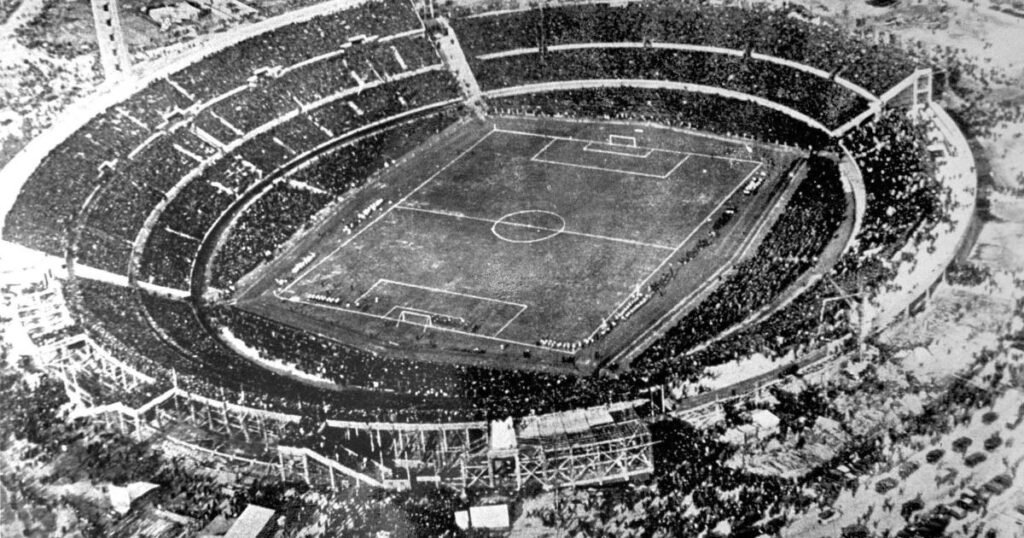
In 1930, the inaugural World Cup held in Uruguay brought forth an amateurish atmosphere, often compared to a school sports day by writer Jonathan Wilson. With only 13 countries participating—down from the expected 16 due to logistical and financial challenges—international interest was limited. Countries like Egypt missed their boat, while Japan and Siam (now Thailand) retracted due to cost concerns. England notably refused to participate, leading to a lack of coverage from the British press, with much of Europe sharing similar sentiments. Not surprisingly, the initial matches faced difficulties, including poor attendance and weather conditions, with one game drawing a mere 4,444 spectators and another fetching the smallest crowd in World Cup history—300 fans.
The amateurish nature of the tournament continued to showcase itself through questionable officiating and bizarre incidents. Romanian manager Constantin Radulescu not only coached his team but also served as a linesman. An instance where the penalty spots were marked incorrectly went unnoticed, further underlining the event’s disorganization. Despite these setbacks, the narrative of the 1930 World Cup underlines how its challenges have shaped its legacy. The tournament’s immediate aftermath seemed bleak, with skepticism surrounding its future. However, it symbolized the foundation upon which subsequent tournaments were built.
The inception of the World Cup lay in FIFA’s need to create a professional stage for international soccer, separate from Olympic competitions that were strictly amateur. Urged by mounting support for professional soccer, FIFA decided to hold the first tournament in Uruguay—the nation that had recently clinched Olympic gold. Initially, the prospect of participation among European teams appeared dim; however, as time progressed, several countries agreed to participate under heavy pressure from influential FIFA members. The journey, characterized by long boat trips aboard the SS Conte Verde, showcased the casual attitude many teams had towards the event, turning it into more of a grand adventure than a serious competition.
The tournament itself lacked decorum, with instances of sartorial oddity, such as the Bolivian team donning berets. Matches were filled with rough play, leading to significant injuries, including broken bones. The intensity of competition culminated in notorious acts of violence, most notably during the U.S. and Argentina’s semifinal, which devolved into a brawl. Surprisingly, the tournament concluded with Uruguay triumphing over Argentina in a tense final that exacerbated political tensions between the neighboring countries—a fittingly chaotic end to an unpredictable event.
Despite these challenges, the World Cup defied expectations and has remained resilient for nearly a century. Early predictions, such as those made by the Argentine magazine El Gráfico, suggested a grim outlook for the future of the tournament. Yet today, the World Cup stands as a celebration of international soccer, uniting fans from around the globe. Its transformation reflects a remarkable journey from the first tournament’s humble and chaotic origins, showcased by individual stories like that of Romanian player Alfred Eisenbeisser, whose near-death experience after contracting pneumonia ultimately led to his surprising return to soccer.
In summary, the FIFA World Cup has undergone a profound transformation since 1930. From its precarious beginning marked by logistical challenges and questionable officiating to its current status as the pinnacle of global sports entertainment, the tournament continues to be a significant cultural phenomenon and a testament to the enduring spirit of soccer. As we look forward to the upcoming event, one cannot help but appreciate the long and unpredictable journey that has led to the world’s most-watched sporting event—a testament to the passion and dedication of countless players, fans, and organizers.
This article is based on reporting from www.latimes.com.
The original version of the story can be found on their website.
Original Source:
www.latimes.com
Image Credit: www.latimes.com ·
View image


