

Understanding Ocean Swell Speed: A Simplified Guide for Surfers
Ocean swells, the undulating shapes that form in the deep sea, travel much faster than the waves we observe breaking on the shoreline. Understanding the speed of these swells can enhance your surfing experience and improve forecast accuracy. So, how fast do ocean swells actually move? Here’s an in-depth look at key factors influencing swell speed and a simple formula to help surfers gauge it.
The Wave Generation Process
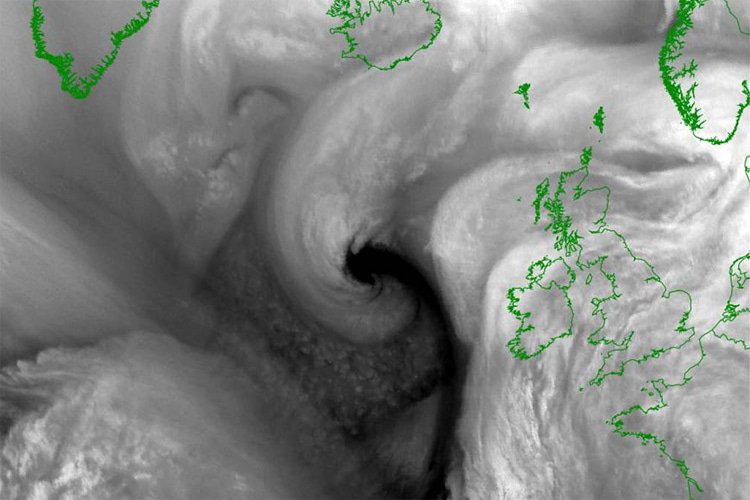
Waves are born in storm zones where wind disturbs the ocean surface, creating waves that eventually escape their windy origin, much like ripples on the water. This phenomenon occurs through a process known as “fetch,” where wind energy generates waves that disperse outwards. Initially, the waves lose energy steeply; as they travel further—around 15 to 20% for each doubling of distance—this energy decay continues, termed “swell decay.” Interestingly, while early waves lose energy rapidly, they can maintain considerable power over thousands of miles, which is crucial for generating larger waves when they reach the coast. Learn more about fetch and energy loss.
The Dynamics of Wave Speed
When considering how fast ocean swells travel, we must understand the relationship between wave energy and movement. Water within a wave moves in circular orbits, and these orbits grow with higher energy levels and longer wave periods. The phenomenon known as radial dispersion explains why long-period waves travel faster than short-period ones. If you live close to the storm, you’ll often experience a mix of short-period waves and cleaner, longer-period swells. Surfers appreciate the balance between wave decay and dispersion, as it leads to the “sweet spot”—a locality where the waves are clean and powerful.
Sets and Interference Patterns
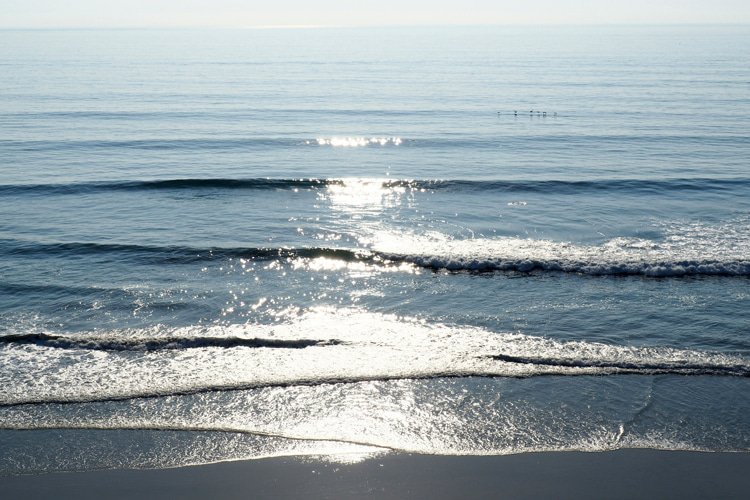
The behavior of groups of waves, or wave trains, is influenced by the combinations of different wavelengths. This interaction can lead to two types of interference: constructive, where waves combine to form larger crests, and destructive, where they cancel each other out. As swell travels and long-period waves outpace shorter ones, the rhythm of waves observed at the beach will change. In a wave group, individual waves have limited lifespans, fading and re-forming as the entire group moves forward. This complex interplay of waves contributes to the unique characteristics of your local surf conditions.
Simple Equations for Swell Speed
For surfers wanting to estimate swell speeds, a simple formula can help. The speed of a wave group in deep water can be approximated as follows:
- Speed in meters per second = 0.78 × Period in seconds
- In nautical terms, this simplifies to: Group Speed ≈ 1.5 × Period (in seconds).
Here’s a quick reference for different swell periods:
- A 10-second swell travels about 15 knots (17.2 mph/27.7 km/h),
- A 15-second swell travels around 22-23 knots (25.9 mph/41.7 km/h),
- A 20-second swell races at about 30 knots (34.5 mph/55.6 km/h).
Buoys positioned offshore provide valuable data that can predict when swells will hit the shore, making this formula essential for surfers. Check buoy data here.
Individual Waves vs. Wave Groups
It’s important to note that although group speeds are useful for forecasting, individual waves move nearly twice as fast as their group counterparts. A common guideline is that:
- Individual Wave Speed ≈ 3 × Period.
For example, a 20-second wave can reach speeds of around 60 knots. This dual-speed system often leads to confusion, especially for new surfers. Ultimately, the group speed helps gauge how soon waves will arrive, reflecting energy rather than surface water movement.
Factors Influencing Wave Size
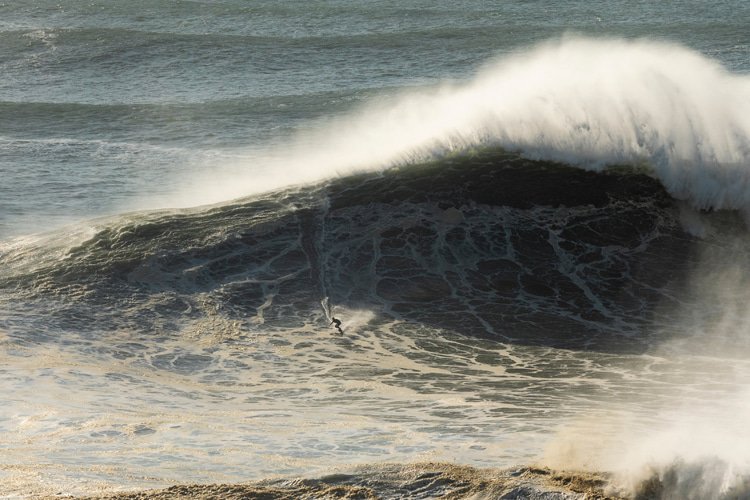
While wave speed is significant, it does not solely dictate wave size upon reaching shallow waters. Additional factors, such as the seafloor’s shape (or bathymetry), local wind conditions, and wave angle, can profoundly affect wave behavior. Long-period waves usually retain more energy as they travel longer distances, making them feel more substantial even when similar in height to shorter waves. Understanding these dynamics helps surfers know why some swells pack a more powerful punch than others.
Conclusion: Calculating Swell Arrival
Surfers can track approaching swells by observing period and distance from offshore buoys. Here’s how:
- Identify the offshore buoy in line with the swell direction.
- Check the recorded swell period.
- Multiply this period by 1.5 to get speed in knots.
- Divide the distance to your local break by the calculated speed.
For example, for a swell 400 miles away with a 30-second period, the speed would be around 30 knots. Thus, you can predict that this swell will arrive in about 13 hours.
Understanding ocean swell speed is crucial for any surfer wanting to improve their skills and enjoy every wave. An awareness of the science behind surf conditions can heighten your appreciation of the ocean’s dynamic nature. With a few calculations and insights into how swells behave, you’ll be riding the waves like a pro.
For more insights on surfing techniques and ocean dynamics, check out Surfer Today.
This article is based on reporting from www.surfertoday.com.
The original version of the story can be found on their website.
Original Source:
www.surfertoday.com
Image Credit: www.surfertoday.com ·
View image