Innovative Research to Clean Amsterdam’s Waterways: UvA and Surf Pill’s Joint Venture
The University of Amsterdam (UvA) is embarking on an innovative research project alongside Surf Pill, aiming to examine whether a floating surf installation equipped with integrated water purification can enhance the water quality in Amsterdam’s inner waterways. As urban centers across the globe grapple with similar issues, the outcomes of this initiative could hold significant implications for urban water management. Once the necessary permits are secured, the first lightweight prototype is slated for construction in Amsterdam-Noord. This project not only seeks to address local water quality challenges but also exemplifies how academic research can align with practical, community-oriented solutions.
The urgency of improving urban water bodies became glaringly evident during the Paris 2024 Olympic Games. Heavy rainfall quickly turned the Seine, once considered suitable for swimming, into a reservoir of elevated bacterial levels. Despite significant investments to make the river hygienic for swimmers, these water quality concerns persisted, prompting a surge in public attention towards the burgeoning Swimmable Cities movement. By mid-2025, this initiative aims to connect over 150 organizations across more than 80 cities in 30 countries that are committed to revitalizing urban waterways. Recent additions like London, alongside cities such as Paris, Budapest, and Rotterdam, highlight a global consensus on the need for improved water quality.
Amsterdam faces parallel challenges, particularly where stagnant waters linger behind bridges and quaysides, creating hotspots for bacterial proliferation. The municipal health service (GGD) frequently issues alerts about troubling E. coli concentrations in these areas. Given the substantial timeline required for large infrastructure projects like sewer renewals, the current research underscores the value of deploying small-scale interventions at critical localities to provide timely relief.
Dr. Petra Visser, an Associate Professor of Algal Ecophysiology at UvA, emphasizes the importance of addressing stagnant water conditions, noting their role in exacerbating bacterial rises. "In urban waters, stagnant areas are particularly problematic," she stated. The collaboration with Surf Pill will explore whether targeted interventions—such as filtration, aeration, and circulation—can disrupt negative patterns locally. This is especially significant for urban planners worldwide who are seeking efficient methods to enhance water quality. By showcasing how scientific research can contribute to creating livable urban environments, the project holds the promise of enabling better water experiences for residents.
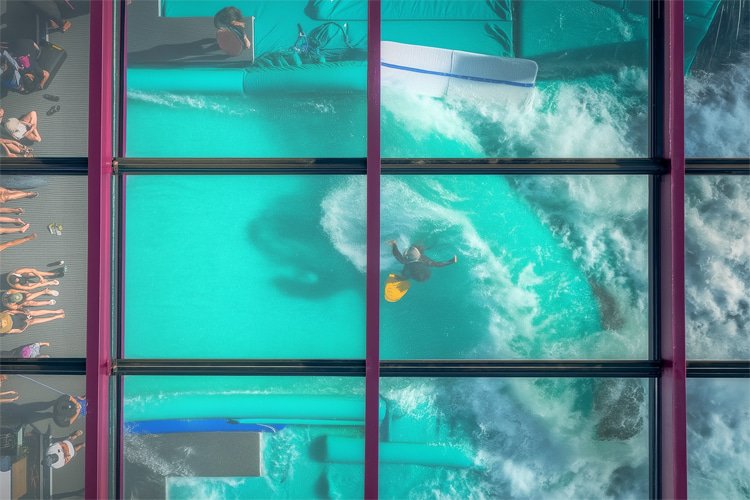
Central to this initiative is the Surf Pill, an innovative floating surf platform designed with integrated water purification for urban waterways. Founded by Frederik van Os, the concept garnered considerable public enthusiasm after being submitted to a participation program in Amsterdam. The proposed platform will feature a configuration measuring 15 by 30 meters and will employ a continuous surf wave to keep the canal water in perpetual motion. This movement will facilitate the passage of water through purification filters before it is reintroduced into the waterway in a cleaner state. In conjunction with this, aquatic plants positioned around the platform will further enhance purification by absorbing excess nutrients.
The collaboration, extending for at least twelve months, is set to be executed by students and researchers from the UvA’s Institute for Biodiversity and Ecosystem Dynamics (IBED). The research team aims to measure water quality at varying distances from the Surf Pill to assess the extent of its impact. Besides focusing on water quality, the study will evaluate ecological effects, including biodiversity and plant growth. Initial measurement results are anticipated after a full operational season, which will offer insights into seasonal variations and the impacts of weather on water quality.
This joint endeavor stands at the intersection of science and community outreach, aiming not just to improve water quality but to foster an environment where residents can safely enjoy their local waterways. If successful, the findings from this innovative approach could serve as a template for other urban areas facing similar challenges. As cities worldwide strive for sustainable water solutions, Amsterdam’s bold initiative could mark a pivotal step towards cleaner, swimmable urban waters.
For more details on the Swimmable Cities movement and how it seeks to revolutionize urban waterways, visit Swimmable Cities.
This article is based on reporting from www.surfertoday.com.
The original version of the story can be found on their website.
Original Source:
www.surfertoday.com
Image Credit: www.surfertoday.com ·
View image