





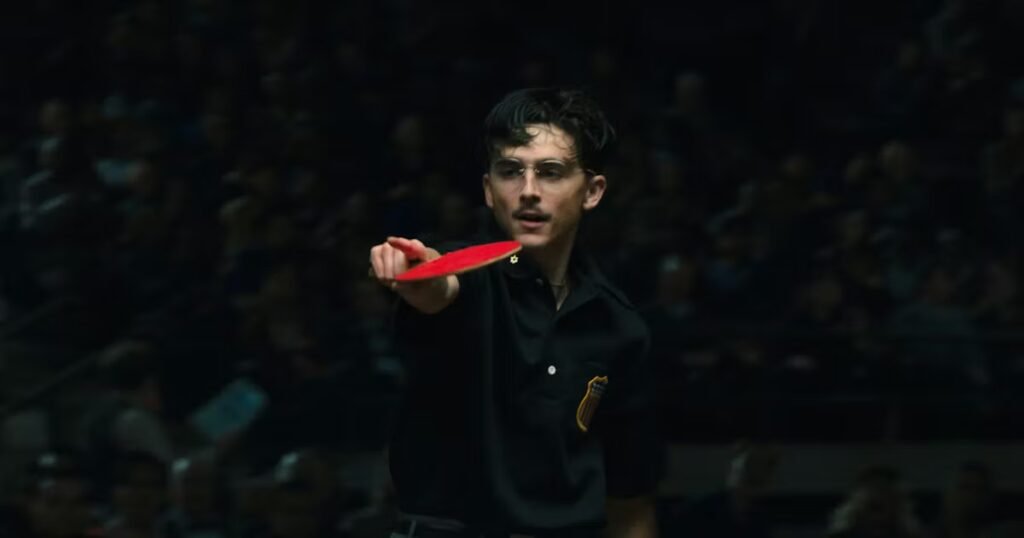
Title: Behind the Scenes of "Marty Supreme": A Deep Dive into Costume Design with Miyako Bellizzi
Set to premiere this Christmas, "Marty Supreme," the latest film directed by Josh Safdie, plunges viewers into a vibrant world of the 1940s, primarily in New York City and postwar Japan. With its action-driven narrative and an ensemble cast, the film demanded meticulous attention to detail, particularly in costume design. Miyako Bellizzi, the creative force behind the film’s wardrobe, immersed herself in this world for years, resulting in thousands of costumes crafted painstakingly from scratch.
The Art and Necessity of Custom Costumes
The film’s high-paced action dictates much of Bellizzi’s design process, a detail she describes as essential for capturing the film’s relentless energy. “In every scene, someone’s getting stabbed, someone’s running from something, there’s a car chase,” she elaborates. This constant motion compelled her to build custom wardrobes, especially for around 20 principal characters. Recognizable attire, like Harlem Globetrotters uniforms or 1940s table tennis outfits, didn’t simply exist in sufficient numbers for production; hence the necessity for Bellizzi’s team of 50 to innovate and create authentic-looking pieces from scratch.
To learn more about the unique challenges of film costume design, check out Costume Designers Guild.
Researching the 1940s Lower East Side
Recreating the underlying culture of the 1940s Lower East Side required thorough research and a keen eye for detail. Bellizzi and Safdie’s reference point was a crucial piece of footage shot by Ken Jacobs in 1955, which became the embodiment of their creative vision. Alongside still imagery from renowned photographers like Ruth Orkin and Robert Frank, Bellizzi faced the challenge of visualizing a color palette based on mostly black-and-white materials. “How do you envision this in color?” she notes, highlighting the innovative efforts required to make the era come to life visually.
Explore more historical insights on the Lower East Side in this New York Historical Society article.
Dressing Timothée Chalamet’s Character, Marty
Chalamet’s character, Marty, embodies aspiration and ambition, and his wardrobe was crafted to reflect both his personality and the era. Bellizzi drew inspiration from the bold styles of Zoot suits, embracing the boxy silhouettes and shoulder pads that defined fashion in that time. “Marty saw himself as an outsider,” Bellizzi explains, depicting how his cinematic journey conveyed a desire for more than the limitations of his surroundings. She mirrors this desire in the way Marty is dressed, tying his outfits to the vibrant cultural tapestry of New York City’s melting pot during that era.
For an ongoing discussion about fashion in movies, visit The Fashion Spot.
Crafting Gwyneth Paltrow’s Character, Kay Stone
In contrast to Marty’s vibrant and ambitious style, Gwyneth Paltrow’s character, Kay Stone, exemplifies the struggles of an actress seeking relevance in modern times. Influenced by figures like Marlene Dietrich and Grace Kelly, Bellizzi designed Paltrow’s wardrobe to project regal sophistication while deliberately maintaining a contrast to her iconic previous roles. Notably, Bellizzi injected personal elements into Kay’s attire, sharing that some pieces came directly from her closet. This solid approach helped Bellizzi narrate Kay’s emotional journey visually, showing her evolution through color-coded wardrobe changes.
For more about the evolution of female characters in film, explore Women in Film.
Blending Personal History with Costume Design
Bellizzi’s roots deeply influenced the authentic representation of the film’s Tokyo sequences. With her family’s history tied to Japanese internment camps during World War II, her personal archives provided a unique, intimate lens through which to design costumes for the film’s Japan scenes. Drawing from her family’s past not only shaped the authenticity of costumes but also added a layer of emotional weight to the film, enhancing the storytelling.
To learn more about the significance of cultural representation in film, check out The Museum of Modern Art.
Collaborations with Fashion Icons in the Cast
The cast of "Marty Supreme" features several fashion and cultural icons, which presented both thrilling opportunities and unique challenges for Bellizzi. The collaboration with Isaac Mizrahi, who plays Paltrow’s character’s agent, became a partnership where both designers contributed creatively. Similarly, dressing stars like Fran Drescher and Tyler Okonma (Tyler, the Creator) required balancing their public personas with the characters they portray. Their unique styles had to blend seamlessly with the film’s aesthetic, showcasing Bellizzi’s versatility and creativity.
To delve deeper into the world of costume design, check out Fashion Institute of Technology.
Through her detailed approach and collaboration with Safdie, Bellizzi has crafted a visually stunning world for "Marty Supreme" that connects with audiences on multiple levels. As the film approaches its opening day, the meticulous work behind its costume design promises not only to captivate viewers but also to enrich the greater narrative of the film. Experience the seamless blend of history, character, and fashion this holiday season.
This article is based on reporting from www.wmagazine.com.
The original version of the story can be found on their website.
Original Source:
www.wmagazine.com
Image Credit: www.wmagazine.com ·
View image