


The Enduring Influence of Milton Avery: A Master of American Abstract Painting
Milton Avery, an iconic figure in American art history, is often overlooked despite his profound impact on the world of painting. Active from 1885 until 1965, Avery’s innovative approach to American abstract painting earned him accolades and comparisons to Henri Matisse. His unique style is characterized by a masterful manipulation of color and form, creating a body of work that is both representational and evocative. This article delves into Avery’s artistic legacy, highlighting two significant exhibitions currently showcasing his work and the influence he continues to have on contemporary artists.
A Legacy of Innovation in Art
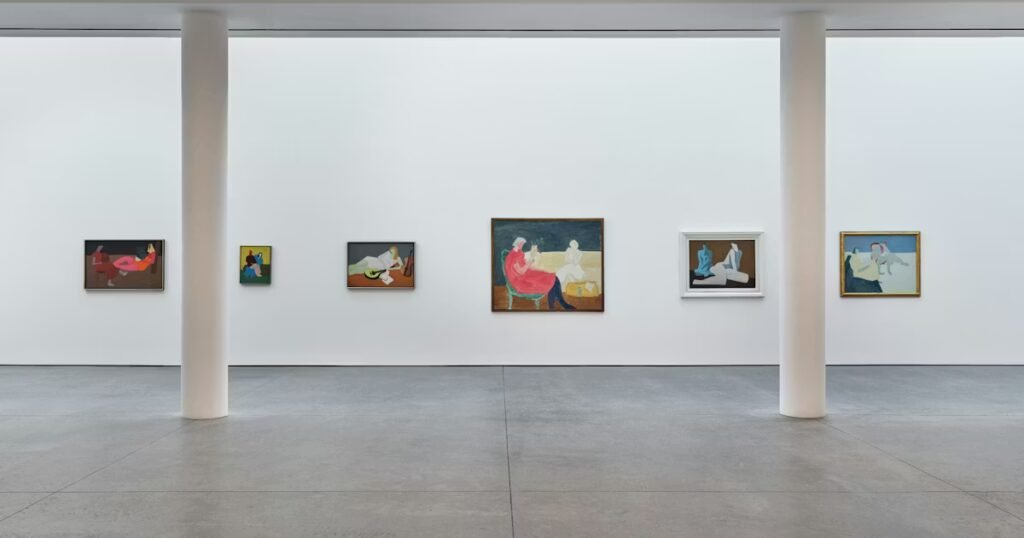
Avery’s journey began in Altmar, New York, before moving to New York City, where he lived with his wife, fellow artist Sally Michel Avery, and his daughter, March Avery, who has also made a name for herself in the art community. His work can be found in numerous prestigious institutions, including the Museum of Modern Art (MoMA) and The Metropolitan Museum of Art in New York City, as well as the National Gallery of Art in Washington, D.C. Currently, his pieces are celebrated in two major exhibitions: Milton Avery and His Enduring Influence on Contemporary Painting at Malta International Contemporary Arts Space, and Milton Avery: The Figure at Karma Gallery in Los Angeles. Both exhibitions explore the depth of Avery’s contributions to the art world, showcasing not only his work but also pieces by contemporary artists who draw inspiration from him.
Notable Works and Personal Reflections
Prominent artists have reflected on their favorite Avery works, revealing the emotional and technical resonance his art has with observers. For example, Mama’s Boy (1944) is described by artist Sanya Kantarovsky as evoking themes of parental struggle and emotional weight—"a reverse Pietà." His emotional insight into familial dynamics showcases Avery’s ability to blend humor and pathos. You can view Mama’s Boy here. Another notable piece, Interlude (1960), which captures a delicate balance between abstraction and representation, is praised by Gary Hume for its evocative and cerebral qualities. Hume emphasizes the piece’s ability to transport viewers into a meditative space, highlighting Avery’s unique manipulation of colors and forms.
The Universal Appeal of Avery’s Portraits
Avery’s The Typist (1952) captures the human experience in a transformative way. Katherine Bradford admires its universal appeal, noting how Avery skillfully captures the essence of the subject with minimal detail. He avoids explicit branding or overt specifics, allowing the viewer to connect with the painting on a deeper, more timeless level. Such narratives are a hallmark of Avery’s work, inviting audiences to derive personal meaning from seemingly simple scenes. You can learn more about this piece here.
A Whimsical Touch: Everyday Life in Art
In terms of daily life and shared experiences, Avery’s Bus Ride (1941) stands out as a playful yet poignant exploration of human connection. Andrew Cranston describes it as a “charismatic and charming” piece where the figures seem to dance with the bus itself, their interactions suggestive of remembered conversations among close companions. This seamless blend of humor and simplicity is what sets Avery apart, allowing his work to extend beyond the canvas and speak to the universal human experience.
The Horizon of Influence: Contemporary Artists Inspired by Avery
Avery’s influence transcends generations of artists. Henni Alftan regards Black Sea (1945) as a lodestar in her creative journey, inspired by its bold simplification of form, composition, and color. Similarly, Jonas Wood reflects on how Blue Sea, Red Sky (1958) resonates with his own work, revealing a shared exploration of abstraction and figuration that simplifies complex themes into cohesive elements. Avery’s ability to distill emotion and environment into visually arresting forms has inspired countless artists to seek a similar balance in their work.
Conclusion: Milton Avery’s Lasting Impact
Milton Avery’s artistic contributions are monumental, extending far beyond his lifetime. As evidenced by the current exhibitions and the voices of contemporary artists who cite him as a key inspiration, Avery’s legacy is alive and well, weaving itself into the fabric of modern art. From his innovative use of color to his ability to capture complex emotional landscapes, Avery remains a towering figure whose work continues to resonate. To explore more of Avery’s legacy and the exhibitions showcasing his art, visit Karma Gallery and Malta International Contemporary Arts Space. Dive deeper into the world of American abstract painting and join the conversation about how artists like Avery have changed the landscape of contemporary art.
This article is based on reporting from www.wmagazine.com.
The original version of the story can be found on their website.
Original Source:
www.wmagazine.com
Image Credit: www.wmagazine.com ·
View image