


Highlights of the Venice Biennale 2026: A Celebration Amid Controversy
The Venice Biennale of 2026 has been undeniably contentious, stirring excitement and debate. Despite the controversies surrounding this latest edition, artists have risen to the occasion with remarkable ingenuity and ambition. Here are six standout artists who have left their mark on this esteemed event, contributing to its narrative of creativity and reflection.
Sung Tieu: Unveiling Hidden Histories
Sung Tieu has fully embraced her moment at the Venice Biennale, transforming the German Pavilion into a profound statement. Her installation, titled "Ruin," employs a striking trompe l’œil façade created from thousands of tiles that replicate the decayed state of an important housing complex in Berlin, which housed Vietnamese contract workers. Tieu’s work serves as a poignant reflection on her childhood and the historically loaded legacy of the site. By using elements of decay and graffiti, she not only honors her heritage but also confronts the darker aspects of nationalism that the German Pavilion symbolizes. Tieu’s integration of personal symbolism, such as chocolate ladybugs, adds layers of understanding to her installation, making it both a visual feast and a meaningful engagement with history.
For more on Tieu’s work and the significance of her themes, visit W Magazine.
Gala Porras-Kim: Exploring Institutional Deterioration
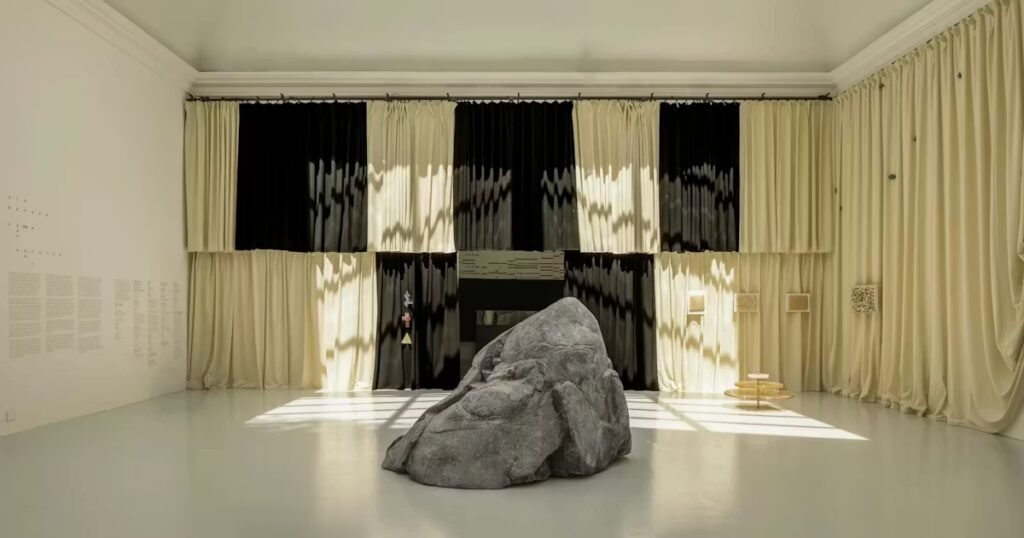
Gala Porras-Kim harnesses the spirit of decay in her exhibition at the Arsenale, focusing on “institutionally defined damage.” Her work investigates how objects within prestigious institutions, defined as damaged by conservators, reveal stories of resilience and reciprocity with their environments. Porras-Kim’s thoughtful examination of the relationship between deterioration and cultural significance invites audiences to reconsider their perceptions of value and preservation. This unique approach is strengthened by collaborations with the Victoria and Albert Museum, which enrich her exhibition with layers of past and present.
To delve deeper into Porras-Kim’s thought-provoking work, check out the Applied Arts Pavilion.
Lubaina Himid: A Dialogue Between Past and Present
This year’s British Pavilion, helmed by Lubaina Himid, boldly reveals the architectural narrative of the space itself. Eschewing her typical sculptural elements, Himid presents paintings that echo familiar yet unsettling motifs of contemporary life. Accompanied by a soundscape crafted with artist Magda Stawarska-Beavan, the installation immerses visitors in a sensory journey that explores themes of trade, colonization, and climate change—all intricately connected to the element of water.
Himid’s paintings, rich in symbolism and inquiry, provoke questions about perception and identity, especially as they relate to the social dynamics of dress and cultural representation. To explore more about Himid’s artistic vision, visit the British Council.
Sara Flores: Narratives of Indigenous Identity
Sara Flores has made history as the first Indigenous woman to represent Peru at the Venice Biennale, showcasing an immense kené painting alongside her film, Non Nete (A Flag for the Shipibo Nation). Kené is a deeply rooted visual language important to the Shipibo-Konibo people, representing interconnectedness and cultural heritage. Flores’s powerful engagement with her heritage manifests not only through her artwork but also via her film, which provides insight into the essence of her culture.
By immersing audiences in melodies and visual patterns that breathe life into her heritage, Flores emphasizes the importance of cultural fidelity amid global change. To learn more about this innovative artist, visit the Peru Pavilion.
Kandis Williams: Redefining Cultural Narratives
Kandis Williams’s contribution to the moving-image exhibition at Palazzo Nervi Scattolin draws connections between Black American experiences and global cultures, particularly in her exploration of K-pop. Williams confronts the complexities of representation and identity as a Black traveler, addressing the uncomfortable intersections of culture and commodification. Her work poses critical inquiries about ownership, visibility, and the nuances of cultural exchange, allowing for a broader understanding of these themes.
For more on Williams’s investigation into identity and culture, check out the If All Time Is Eternally Present.
Yto Barrada: A Multifaceted Exploration of History and Labor
The French Pavilion shines under Yto Barrada’s vision with her project, "Comme Saturne," which is both a literal and metaphorical unpacking of labor history and color theory. Barrada’s collaborative approach involved a return to France to work with local artisans, further grounding her work in the region’s social and cultural fabric. Each room of her exhibition opens new dialogues through innovative use of materials and thematic explorations, alluding to revolutionary discourses.
By pushing the boundaries of her established practice, Barrada’s exhibition becomes a reflective space where transformations are explored through labor and historical context. Discover more about her approach and contributions by visiting the Institut français.
Conclusion
In a time marked by heightened awareness of cultural narratives, the Venice Biennale 2026 has showcased artists who challenge conventions and inspire dialogue. From personal histories to broader themes of identity and representation, these six artists navigate complex terrains, leaving an indelible mark on this prestigious platform. As the Biennale continues to unfold, these installations will resonate long after the event concludes, ensuring that the conversations sparked here remain relevant in the unfolding tapestry of contemporary art.
This article is based on reporting from www.wmagazine.com.
The original version of the story can be found on their website.
Original Source:
www.wmagazine.com
Image Credit: www.wmagazine.com ·
View image