





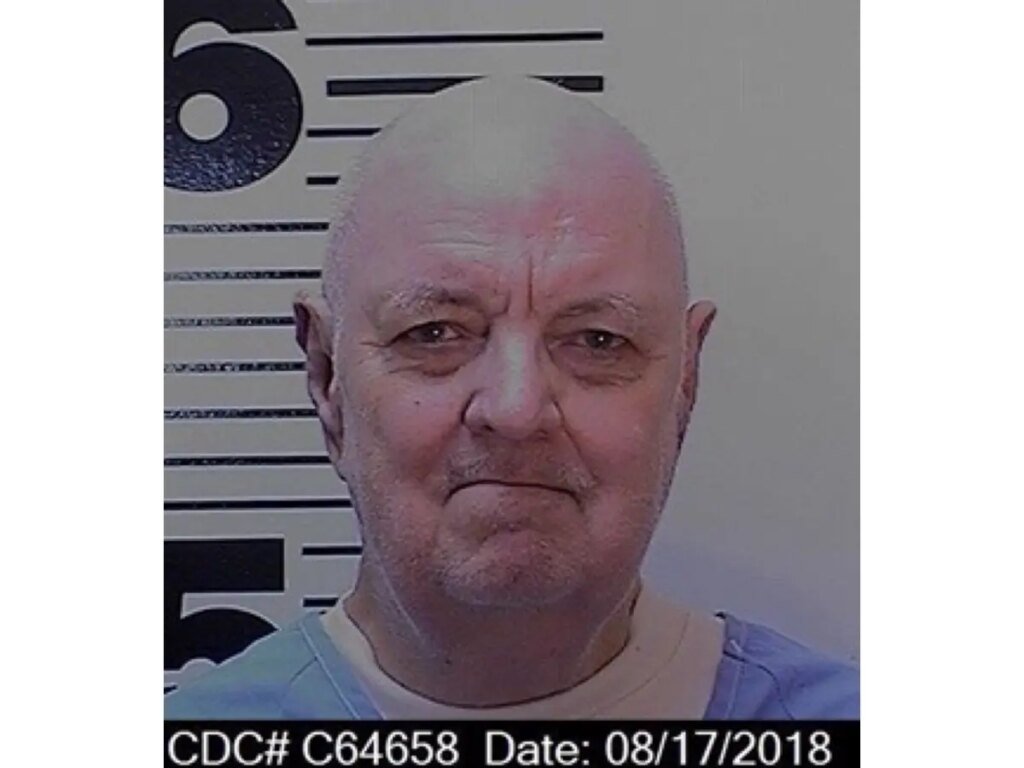
The Downfall of Stephen M. Redd: From Sheriff’s Deputy to Death Row Inmate
The tragic tale of Stephen M. Redd exemplifies a stark transformation—from a promising Los Angeles County Sheriff’s deputy to a notorious criminal, whose violent life ended in a California prison. Redd, 78, was pronounced dead in his cell at San Quentin Rehabilitation Center on Thursday. His death brings to a close the life of a man whose criminal history paints a disturbing portrait of decay and moral collapse, culminating in his infamous crime spree across Orange County.
Early Life and Career
Redd had once been a law enforcement officer, attending the Los Angeles County Sheriff’s Department Academy in 1967. Initially assigned to the Firestone Station, Redd’s career in law enforcement began with the potential for public service and community safety. However, personal issues, including a tumultuous separation from his wife, led him to resign from the sheriff’s department. This exit marked the start of a downward spiral that would ultimately manifest in his violent criminal deeds.
The Crime Spree
Redd’s transformation into a violent criminal was marked by a series of robberies, one of the most notorious being the February 28, 1997, murder of an Orange County supermarket supervisor, Timothy McVeigh. On that fateful night, Redd entered an Alpha Beta market wearing a woman’s wig and approached cashier Brenda Rambo under the pretense of purchasing a pack of gum. When Rambo opened the cash register, Redd turned to violence, pulling a handgun and seizing cash from the drawer without any apparent signs of nervousness.
Witnesses would later testify that Redd displayed a calm demeanor throughout the ordeal. When Rambo’s supervisor intervened, a struggle ensued that abruptly escalated when Redd shot McVeigh. The tragic encounter concluded with Redd fleeing the scene with a mere $156 in cash, leaving chaos and emotional trauma behind.
Arrest and Conviction
Redd’s life of crime came to a halt on March 6, 1995, when he was arrested during a routine traffic stop in San Francisco. When approached by the officer, Redd was uncooperative, and a subsequent search revealed not only his driver’s license but also firearms, including a semiautomatic pistol and an AR-15 rifle, along with wigs—the very items that linked him to his series of violent robberies. His earlier anonymity as a sheriff’s deputy and his criminal alter ego collided when Redd was identified as a suspect in the murder and robbery case.
Convicted in 1997 of first-degree murder, multiple counts of robbery, and additional felonies, Redd’s criminal history reflected a pattern of escalating violence. Given his past, the jurors recognized the need for severe punishment, ultimately sentencing him to death. Yet, his time on death row was prolonged, as California placed a moratorium on capital punishment in 2019.
The Legacy of Violence
Redd’s criminal activities highlight the complexities of human behavior and the thin line between lawfulness and lawlessness. It is unsettling to think how a person trained to uphold the law could devolve into a figure of terror. His story serves as a grim reminder of the potential for violence within individuals, regardless of their backgrounds or professions.
Furthermore, Redd’s criminal actions had lasting repercussions not only for his immediate victims but also for their families and the community. The emotional scars inflicted by such violent crimes often linger for generations, affecting how communities perceive safety and trust. The psychological impact on survivors and witnesses, like Brenda Rambo, who witnessed the tragic shooting, cannot be overstated.
Conclusion: A Life Cut Short
The circumstances surrounding Stephen M. Redd’s life and death evoke a myriad of questions about morality, redemption, and the complex nature of human behavior. His story is a chilling testament to how a person can lose their way, transforming from protector to predator. As we reflect on his life and choices, we are reminded of the importance of mental health support, community vigilance, and the need for systemic changes that could prevent similar tragic stories in the future.
In his passing, Redd leaves behind a legacy marked by violence, and his story serves as a cautionary tale about the fragility of human potential. The tragedy unfolds into a narrative of how the paths we choose can lead to dramatically different destinies, and challenges us to consider what can be done to guide individuals towards constructive and peaceful lives rather than paths of destruction.
This article is based on reporting from patch.com.
The original version of the story can be found on their website.
Original Source:
patch.com
Image Credit: patch.com ·
View image