


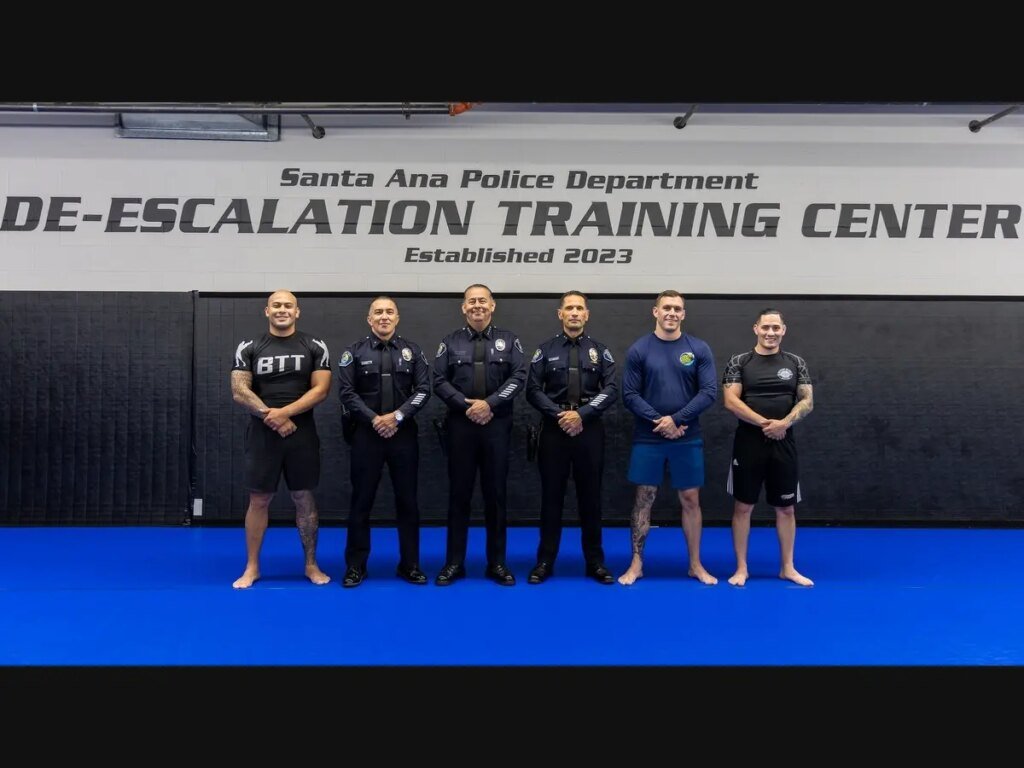
Enhancing Policing Through De-Escalation Training: A New Approach in Santa Ana
Understanding the De-Escalation Training Center
In a unique initiative, the Santa Ana Police Department has opened its De-Escalation Training Center, redefining traditional law enforcement training. Unlike typical combat training facilities, this center combines traditional self-defense techniques with critical classroom learning, aiming to enhance officers’ capabilities for handling tense situations. The facility offers a grappling mat area for physical practice, a boxing ring, and a digital classroom equipped with the latest technology for conducting presentations and discussions on de-escalation tactics.
The Philosophy Behind De-Escalation Training
The primary objective of this training center is to provide law enforcement officers with advanced skills to manage — and ideally avoid — potential physical altercations. Assistant Chief Sergio Enriquez emphasizes the importance of the classroom component, stating that when officers understand de-escalation techniques, they are better prepared to handle situations verbally and peacefully. The initiative is part of a broader movement in law enforcement that embraces the need for more thoughtful engagement strategies alongside physical readiness.
Trends and Importance of De-Escalation Training
De-escalation has become a widely discussed topic in policing over the past decade, garnering support from officials across the political spectrum. Various studies show that effective de-escalation training can significantly reduce injuries among both civilians and police officers. Programs like the Integrating Communications, Assessment, and Tactics (ICAT) have demonstrated substantial decreases in use-of-force incidents and injuries, underscoring the importance of adopting such approaches in law enforcement training.
Balancing Physical Skills with De-Escalation Techniques
While verbal communication is crucial, the Santa Ana Training Center also recognizes the importance of physical self-defense skills. Officers are trained in martial arts disciplines such as jiu-jitsu, which focuses on grappling and neutralizing threats without resorting to excessive force. This emphasis on technique over brute strength allows officers to handle potentially violent situations more effectively and minimizes the chances of injury for both law enforcement and subjects involved.
The Broader Impact of Martial Arts in Policing
The ongoing integration of martial arts in police training has led to notable changes in how officers respond to confrontations. By adopting these methods, departments hope to reduce the overall use of force and create a more harmonious environment between police and the communities they serve. The case of the Marietta Police Department illustrates this trend — after an incident involving excessive force, the department implemented mandatory jiu-jitsu training, highlighting the growing recognition of martial arts as an essential tool in modern policing.
Towards a New Vision for Law Enforcement
Ultimately, the Santa Ana Police Department’s De-Escalation Training Center represents a forward-thinking approach to policing. By offering both physical self-defense training and vital classroom education, the training center aims to strengthen officers’ skills, reduce the likelihood of conflict, and promote safer interactions within the community. The vision extends beyond simply combat training, incorporating wellness programs and workshops, making it a comprehensive resource for officer development and community safety.
As policing continues to evolve, initiatives like the one in Santa Ana serve as a critical example of how law enforcement can embrace progressive practices to enhance safety, reduce unnecessary violence, and build stronger community relationships.
This article is based on reporting from patch.com.
The original version of the story can be found on their website.
Original Source:
patch.com
Image Credit: patch.com ·
View image