


Lake Forest’s Political Future: A Battle Over Term Limits
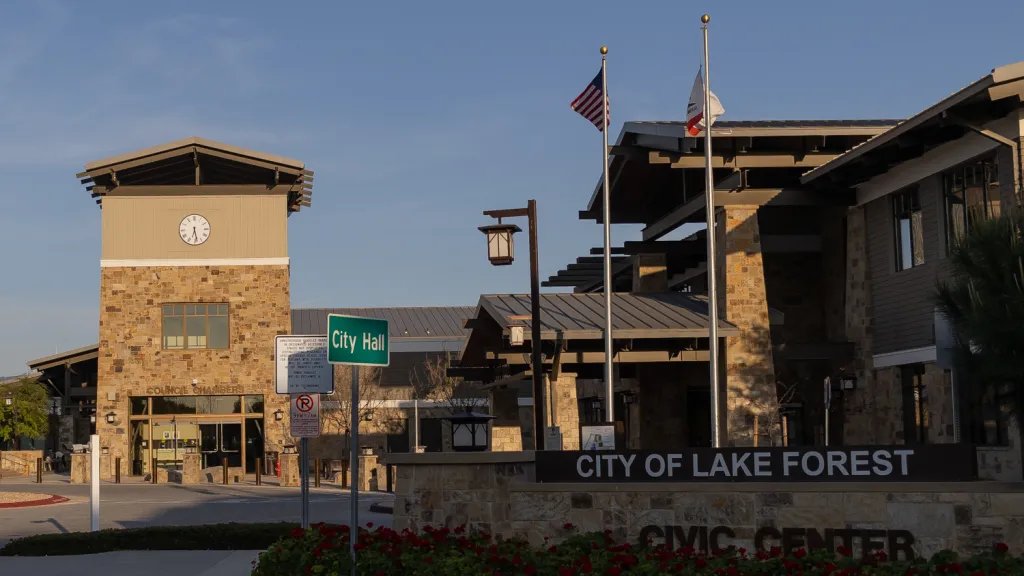
As the sun begins to set over Lake Forest’s Civic Center, casting a warm golden hue over the council chambers, the air buzzes with anticipation and uncertainty. Residents gather, voices rising and falling, each vying for their chance to influence a pivotal moment in the city’s governance. On the agenda: the contentious issue of term limits for city council members. The atmosphere is electric as Councilmember Mark Tettemer shares his vision of a cooling-off period—a concept that has ignited fierce debate among citizens and leaders alike.
The Cooling-Off Debate
In a unanimous decision on January 20, the Lake Forest City Council directed staff to draft language for a potential ballot measure that would allow termed-out council members to make a comeback after a four-year hiatus. This proposal, which could be voted on this November, seeks to introduce a “cooling-off” period for those who have served two consecutive four-year terms.
“It’s the lifetime ban that I struggle with the most,” remarked Tettemer during the meeting. “Let somebody sit out for four years, and if they want to come back, more choice for the people. I think that would be welcomed.” His words resonate with a demographic eager for options, yet they simultaneously unsettle others who argue for generational turnover in politics.
The Argument for Change
Tettemer’s initiative stems from personal experience; after taking a break from public office, he secured his reelection in 2018 and again in 2022. Mayor Robert Pequeño echoed Tettemer’s sentiments, emphasizing that a cooling-off period offers voters increased choice. “This should be voted on in November with everything else,” he added, hinting at a growing consensus.
However, beneath this chorus for reform lies a deep-seated tension within the community. Lake Forest has witnessed an increasing interest in political participation, as evidenced by a 2018 measure that limited council members to two consecutive terms—a change passed with overwhelming public support.
- Support for Term Limits: In Lake Forest, 82.5% of voters agreed on the necessity of term limits.
- Generational Turnover: Advocates argue that limiting terms opens the door for fresh perspectives and diverse voices in local governance.
- Political Influence: Detractors of extended terms caution against fostering political entrenchment, which can stifle community engagement over time.
Dr. Elaine Whitmore, a political scientist at Orange County University, highlights the delicate balance of power. “Voter fatigue can emerge from seeing the same faces in politics year after year,” she explains. “Allowing a cooling-off period can reinvigorate the political landscape, encourage new candidates, and stimulate voter engagement.”
A Counter-Perspective: The Push for Extended Terms
Not all members of the council are in favor of merely cooling-off. The proposal for a simple hiatus emerged from a more controversial initial proposal from Councilmember Scott Voigts, who sought to increase term limits, allowing council members to serve three consecutive four-year terms. His rationale? Expertise in local governance can only be cultivated over time, and a longer tenure could benefit the city.
“Two terms hurts the impact and influence of future city council members and the city of Lake Forest,” Voigts argued, making a case for continuity in leadership. Yet, this perspective faced intense scrutiny from both council members and constituents, with Mayor Pequeño stating that the notion effectively suggested that “nobody else in this city can do this job.”
A History of Change
The pushback from the public was palpable. Many residents recalled the overwhelming support for the term limits enacted in 2018. Lindsay Buck, a vocal opponent of extending terms, asserted that “no one in any branch of government should hold an elected position for more than eight years.” Her emphasis on turnover is echoed in various studies highlighting the benefits of fresh leadership in local government. A hypothetical study conducted by the Civic Engagement Institute found that cities with enforced term limits experienced a 30% increase in voter turnout during election cycles.
Lessons from La Palma
The juxtaposition of Lake Forest’s struggle with La Palma’s recent decision to extend term limits adds further complexity to the debate. In La Palma, voters approved allowing council members to serve three consecutive four-year terms, a decision sparked by local dynamics and political idiosyncrasies. This decision to reset the clock for existing council members became a cautionary tale for Lake Forest.
The implications of La Palma’s choice reverberate across Orange County, presenting Lake Forest’s council with a stark reminder of the delicate balance between retaining experienced leaders and refreshing political representation.
As the city gears up for a potential ballot measure, the question hangs heavy in the air: Will Lake Forest voters embrace a cooling-off period for their political leaders, or will they echo the sentiments of change that brought term limits to fruition just a few short years ago? The answer remains uncertain, layered in the complex fabric of local governance where tradition meets innovation.
In this fervent discourse on term limits and political representation, Lake Forest not only reflects a broader trend in governance across the United States but also stands at a crossroads. The communal pulse beats stronger with every debate, every meeting, every vote, attesting to the vibrancy and resilience of civic engagement.