


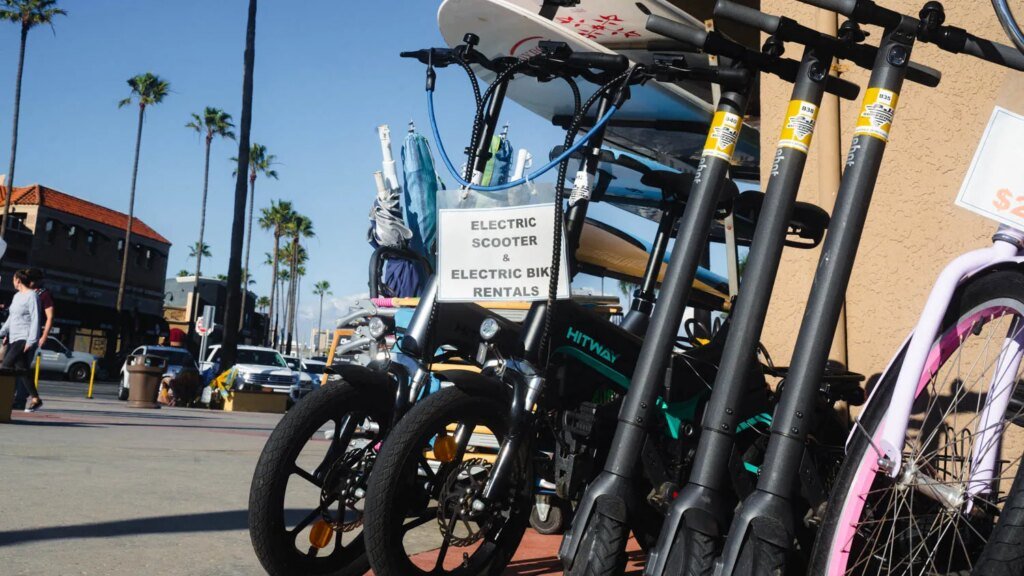
A Ban on E-Bikes for Young Students: Navigating Safety and Access in South Orange County
On a sunny morning in South Orange County, the sound of wheels gliding over pavement mingles with the distant chatter of elementary students. Among these are children riding e-bikes on their way to school, a sight that has increasingly raised eyebrows among parents and school officials alike. As schools across the region grapple with safety concerns and the rising popularity of electric bicycles, the Newport-Mesa Unified School District is considering a controversial ban that would restrict e-bike usage for students from kindergarten to eighth grade.
The Proposal: Far-Reaching Restrictions
The proposed policy aims to prohibit elementary and middle school students from riding e-bikes, while classifying bicycles differently based on motor assistance. Specifically, students in second grade and younger would be barred from riding any bicycle to school, while students in third to eighth grade could only ride traditional pedal bikes after completing a bike-safety training program with parental consent. High school students would have a slightly more lenient approach, allowing Class 1 e-bikes with parental permission, but banning Class 3 e-bikes, motorized vehicles, and e-scooters entirely.
- Kindergarten to 2nd Grade: No bicycles allowed.
- 3rd to 8th Grade: Bans on e-bikes; traditional bikes allowed after training.
- High School: Class 1 e-bikes permitted with parental consent.
The board’s deliberations have been marked by passionate discussions. On initial proposal dates, a growing chorus of parents voiced concerns, describing the e-bike as a vital mode of transportation for children. “We must reconsider this ban,” urged Chris Johnston, a resident with two daughters enrolled at Kaiser Elementary. “These bikes foster community and teach our children the importance of navigating safe roads.”
The Growing Concern Over Safety
As the popularity of e-bikes has surged—sales reportedly increased by 135% in the past year—the conversation surrounding their safety has intensified among educational authorities. According to Dr. Lisa Markwell, a sociologist specializing in youth transportation behavior, “While e-bikes offer an eco-friendly and efficient means of commuting, the potential risks cannot be dismissed. Striking a balance between accessibility and safety remains vital.” A 2023 study published in the Journal of Cycling Safety found that children between the ages of 6 and 12 are statistically more prone to accidents involving e-bikes than adults.
Adding to the complexity, local regulations are evolving. For instance, Newport Beach implemented a municipal code effective January 2026, which stipulates strict penalties for misuse, including citations and confiscation of e-bikes. “As we navigate this new terrain, it is critical that we implement educational programs for both students and parents about safe riding practices,” stated Officer Rick Martinez from the Newport Beach Police Department, who has seen an uptick in e-bike-related incidents in the area.
Community Divided
Amid concerns, many parents have rallied for the right to allow their children to bike to school, emphasizing the city’s investment in safer streets and bike lanes. Corey Hass, a parent and local activist, remarked, “It feels disconcerting that as our city focuses on improving biking infrastructure, the school district considers bans that could reverse those positive changes. We need to educate, not penalize.”
Some residents have pointed out that age restrictions overlook the more dangerous vehicles—like e-motorcycles—that pose a far greater risk. David Martinez, a bicycle policy expert, cautioned, “We should be targeting e-motorcycles, which can exceed 28 mph and are far more dangerous. The current proposal is misguided.”
What’s Next?
The Newport-Mesa Unified School District Board is expected to revisit the e-bike policy, contemplating how to better distinguish between traditional and motorized bikes and recalibrating age restrictions. With the upcoming meeting, board members seek input from law enforcement to refine their regulations, as others call for more comprehensive programs to educate the community on safe biking and riding practices.
As bikes share the roads with cars and pedestrians, the aftermath of this policy could reshape how students travel to school in South Orange County. Will safety initiatives win out over convenience, or can a middle ground be struck that ensures both community access and child safety? As schools globally grapple with similar issues, the Newport-Mesa community stands at a crossroads, eager for clarity as they pedal towards the future.