


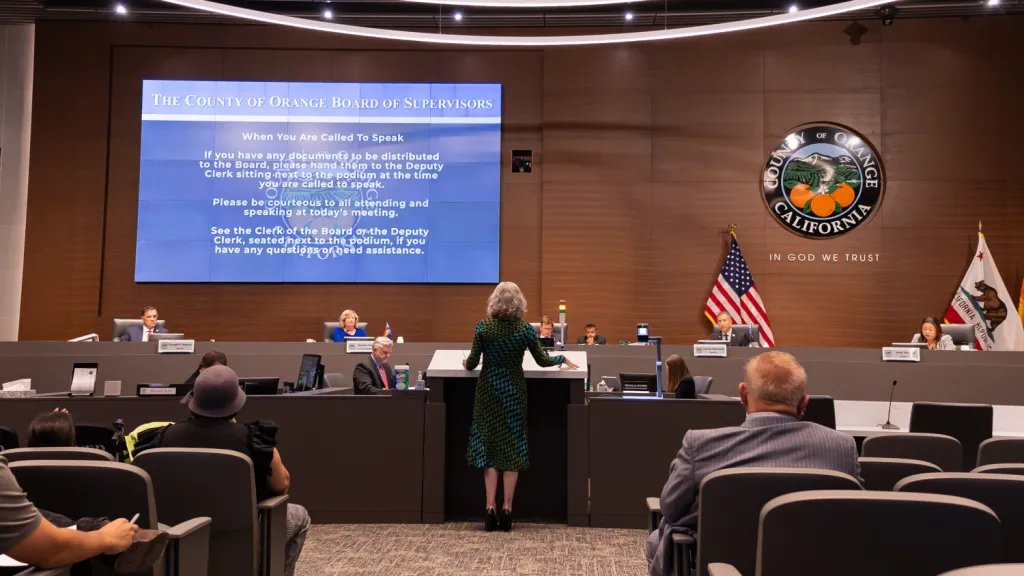
In a boardroom fraught with tension, Orange County officials faced public backlash as they addressed the contentious issue of salary raises. At the May 20, 2025 meeting, a woman stepped forward to voice her feelings of betrayal, encapsulating the frustration many locals felt. Her words echoed through the room: “We elected you to serve our interests, not to line your pockets.” The atmosphere was charged, charged not just with anger, but with a deep sense of disillusionment.
Orange County Supervisors and the Transparency Crisis
The Raise and Its Aftermath
Last year, the Orange County Board of Supervisors approved a controversial 25% pay raise for themselves, igniting a firestorm of criticism. Critics attentively scrutinized the Board’s motives, urging a reflection on ethics and fiscal responsibility. In a scathing report released in December by the Orange County Grand Jury, supervisors were lambasted for their lack of transparency regarding the increase, a move seen as both tone-deaf and disconnected from their public duties.
“This decision was not only tone-deaf—it reflected a deeper disconnect from the Board’s duty to serve the public with transparency and fiscal responsibility,” read the report. It articulated a vision of ethical governance: one that should involve humility, fiscal integrity, and, crucially, a commitment to engage the public. Yet, the Board’s 3-1-1 vote to ignore the grand jury’s recommendations revealed a troubling narrative of governance devoid of accountability.
Public Sentiment and Supervisor Reactions
Supervisor Katrina Foley was visibly uneasy during the discussions. “I voted against this last year because I knew it was wrong,” she stated during the meeting. Foley was the lone voice of dissent last year, but her warnings fell on deaf ears. Meanwhile, Supervisor Vicente Sarmiento voiced regret about his earlier vote. “We learned that state law significantly limits the board’s ability to reduce compensation once it’s been approved,” he stated, illustrating a perpetual cycle of bureaucratic entanglements that often shield public officials from accountability.
This debate exemplifies a broader concern resonating throughout governance today: the delicate balance between legality and ethics. While state law creates barriers to rescinding salary increases, the ongoing fallout raises cogent questions about local leaders’ moral imperatives.
The Broader Implications
The situation exemplifies a disconnect between governmental actions and public expectations, a relationship fraught with complexities. According to political analyst Dr. Emily Weiss at the University of Southern California, “When elected officials fail to align their actions with public sentiment, they risk long-term erosion of trust.” She cites a recent study indicating that public trust is significantly affected when leaders make unilateral decisions without engaging constituents. “It’s a vicious cycle that feeds into further disengagement from political processes,” she cautions.
- Lack of Transparency: The grand jury’s findings indicate a failure to maintain an open dialogue with the public.
- Legal Challenges: State laws complicating salary adjustments hinder accountability.
- Public Trust: Erosion of public trust can have long-term ramifications for governance.
The Cost of Disengagement
In Orange County, the potential fallout is palpable. Local residents expressed their anger not just regarding the pay raise but also about broader issues of governance. “We need leaders who are accountable and transparent. Instead, we have a board that seems more interested in its own comfort,” lamented local business owner Mark Williams. This sentiment has galvanized community members to become increasingly vocal, pushing for reforms that prioritize both transparency and active engagement.
The Board’s response, dismissing most of the grand jury’s findings while confirming the procedural steps leading to their salary increase, underscores an important point about governance. Transparency isn’t just a legal obligation; it’s a moral one that underpins successful interactions between the public and their representatives. As Supervisors Chaffee, Wagner, and Nguyen voted to approve the dismissal of the grand jury’s stinging criticism without much debate, many in the room couldn’t help but see a disregard for accountability.
Board attorney Leon Page explained, “While we could prospectively adjust salaries, the complexity of current terms poses significant legal challenges.” His assertion reflects a broader issue in public governance: the struggle to reconcile legal rote with ethical transparency. The unresolved conflict leads to an uncomfortable question: how do elected officials recalibrate their priorities when under scrutiny?
Path Forward: Rebuilding Trust
As the board retains its decision to uphold the pay raise against the grand jury’s recommendations, the need for systemic reform becomes increasingly evident. Suggestions have surfaced for establishing independent compensation reviews and clearer public notices regarding salary adjustments. These changes could help in minimizing distrust among constituents.
Supervisor Sarmiento hinted at the possibility of enhancing transparency measures. “I’d like our CEO to propose some recommendations to ensure clearer communication moving forward,” he said, acknowledging that the Board’s current strategy lacks the public engagement necessary for building trust. This awareness is a step in the right direction, yet many residents remain skeptical about whether true change will manifest.
Ultimately, the Orange County Board finds itself at a crossroads: Either they begin to earnestly engage with their constituents and address their grievances, or they risk sinking deeper into a quagmire of public distrust. As the community watches closely, the burden of rebuilding trust weighs heavy on the shoulders of its leaders. The question remains—can they redefine their roles from self-interested decision-makers to genuinely accountable public servants?