


Self-Checkout Controversy Looms in Anaheim: Balancing Efficiency and Employment
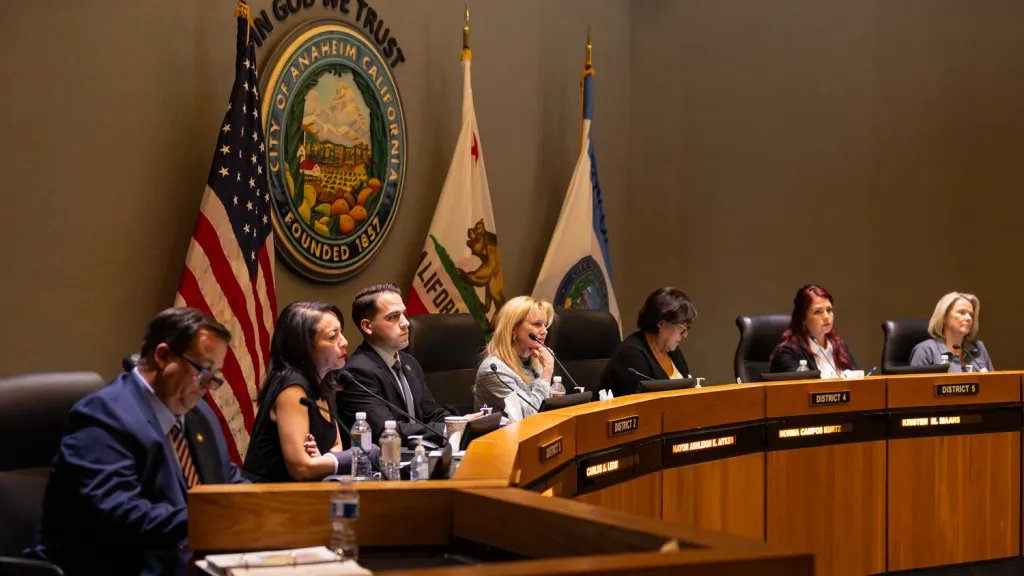
At the bustling crossroads of consumerism and automation, a pivotal decision looms for Anaheim’s City Council. With the rise of self-checkout kiosks, the city is grappling with a dilemma that affects not only local businesses but the livelihoods of their employees. A recent city council meeting featured discussions around a proposed ordinance aimed at regulating the operation of these self-service stations, a move that has attracted support and opposition alike.
The Push for Regulation
On a typical Tuesday evening, city council chambers buzz with the chatter of concerned citizenry and the soft tapping of keyboards. As the meeting began, Mayor Ashleigh Aitken took the floor, advocating for an initiative that calls for increased staffing at self-checkout stations in supermarkets and drug stores. “We must ensure that we address not only the theft concerns but also support our workers who are stretched thin,” she asserted, encapsulating the dilemma many face in a rapidly changing retail landscape.
The Rising Concern of Theft
The facilitation of self-checkout technology has sparked fears regarding shoplifting. According to a 2025 National Retail Security Report, retail theft has escalated 25% over the past year, with self-service checkouts being a focal point for losses. Retail analyst Dr. Philip Sanders emphasizes, “The anonymity of self-checkouts allows for impulsive thefts, which in turn impact the profitability of local businesses.” This alarming trend has prompted cities like Anaheim, Long Beach, and Costa Mesa to consider regulations to mitigate these risks.
Balancing Costs and Worker Safety
However, the proposed regulations are not without their detractors. Nate Rose, a representative of the California Grocers Association, raised concerns over additional operational expenses such mandates may impose. “Labor is the highest cost in running grocery stores,” he stated. Implementing staffing ratios could lead to increased prices for consumers, an outcome that could further strain already burdened households. “If we don’t start engaging in genuine dialogue with store operators, we risk missing the mark on finding a balanced solution,” Rose cautioned.
- Economics: Any staffing requirement increases operational costs.
- Employment: More support for workers may improve job satisfaction and customer service.
- Security: Staffing regulations aim to deter theft effectively.
Worker Perspectives
On the other side of the debate, the United Food and Commercial Workers Local 324 union speaks in favor of the initiative. Spokesperson Jenna Thompson argues that the ordinance would alleviate the pressures on employees operating self-checkouts. “It’s not uncommon for a single worker to manage multiple customer transactions, assist with special items, and address additional store needs simultaneously,” she explained. Contrary to concerns that increased staffing means higher costs, she posits that promoting better service could enhance customer retention.
A Tale of Two Cities
Costa Mesa has already adopted its own self-checkout regulations, mandating one dedicated employee for every three self-service stations, alongside restrictions on item types—like a cap of 15 items per transaction and the exclusion of alcohol and tobacco products. The success or complications arising from Costa Mesa’s decision will provide valuable insights for Anaheim as it contemplates following suit. Experts suggest that this case may be a bellwether for how similar legislations evolve across California. “It’s vital to pay attention to the outcomes in neighboring municipalities,” remarked Dr. Helena Parker, a sociologist specializing in retail dynamics.
The State Response
Outside local governance, the California state legislature is also deliberating on a bill that addresses the self-checkout anomaly. SB 442 aims to establish regulations on self-service stations but avoids setting rigid staffing ratios. “This approach might provide a more flexible framework that balances needs without imposing burdensome costs,” argued Assemblymember Steven Tran during a recent press conference. The potential passage of such a law could result in significant changes to retail operations statewide.
Looking Ahead
As Anaheim deliberates the future of self-checkout kiosks, a balancing act between innovation, job security, and community safety emerges. For residents, this ordinance could translate into enhanced shopping experiences, while employees may find themselves standing at the crossroads of increased job security and rising retail prices. Ultimately, the decisions made in city council chambers could ripple through California and beyond, serving as a case study in managing the twin challenges of modernization and employment.