





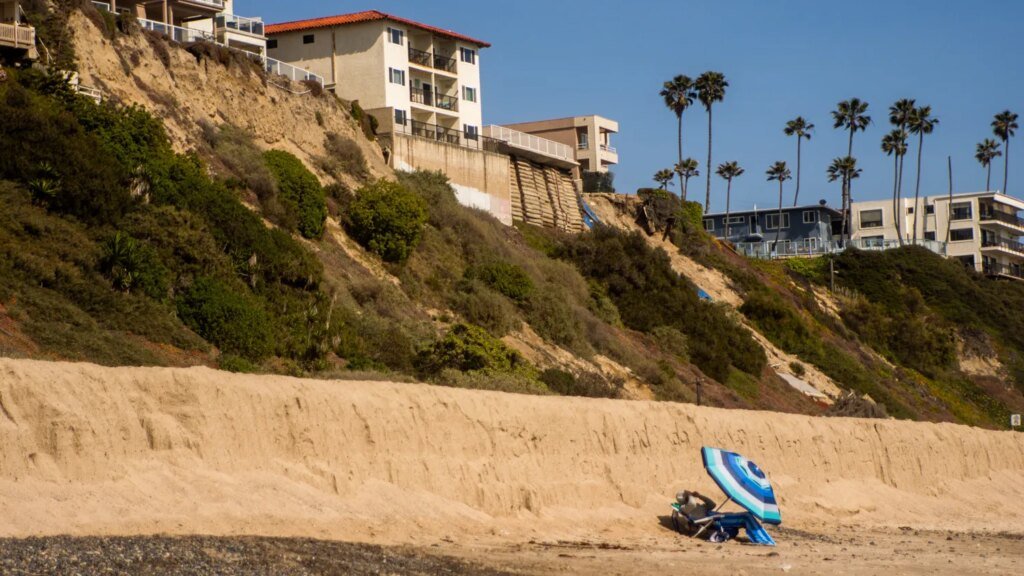
San Clemente Residents Vote on Tax to Restore Disappearing Beaches
As the sun sets over San Clemente, casting a warm glow on the dwindling sands, residents are grappling with the reality of climate change and its far-reaching consequences. An idyllic California town known for its picturesque beach walks and surfable waves is finding itself at the forefront of a battle not only for its shoreline but also for its very identity. The citizens have rallied to place a measure on November’s ballot that proposes a 1% sales tax increase—a move that would require residents to dig deeper into their pockets to fund beach restoration and wildfire prevention. This paradoxical decision resonates uniquely given that tax increases typically rank among the most unpopular actions among voters.
The Measure: A Community-Centric Initiative
The upcoming ballot will feature a citizen-initiated measure aiming to raise the city’s sales tax from 7.75% to 8.75%, generating an estimated $15 million annually. This funding is intended to restore the rapidly eroding beaches and invest in crucial wildfire prevention efforts—a dual approach to protect both the shoreline and residents’ homes. Councilmember Cameron Cosgrove, who spearheaded the initiative, emphasized, “We’re putting our money where our mouth is. We need our residents to realize that without this measure, our coastline is at significant risk.”
- 1% Sales Tax Increase: Each dollar spent in San Clemente would incur an additional cent.
- Projected Revenue: Approximately $15 million annually, with funds split equally between beach restoration and wildfire prevention.
- Historical Context: This is not the first attempt; a similar measure failed last November by less than 3%.
Local Support and Opposition
The city council unanimously certified the measure for this November’s ballot, underscoring the urgency felt by local leaders. While most council members have publicly supported the initiative, Councilmember Zhen Wu was designated to draft an opposing argument—not as a reflected view of the entire council but rather as a personal stance. This tug-of-war illustrates the deep divide among residents, many of whom are hesitant to embrace the tax increase.
Mike Kay, a local resident active in community initiatives, shared, “It’s essential the community understands what’s at stake. Our beaches aren’t just tourist attractions; they are a crucial part of our ecosystem and culture. But they won’t last without our support.” Conversely, some critics express concern over the financial implications, arguing that rising taxes could deter potential residents and businesses from settling in the area.
Beaches Need Sand, Officials Need Funding
The issue of beach erosion is not new to the residents of San Clemente. As part of Orange County, this coastal city has suffered a greater decline in its shoreline compared to its neighboring towns. While others have prioritized sand nourishment projects for decades, San Clemente has lagged behind—an oversight now catching up with dire consequences. In 2024 alone, the city spent approximately $2 million to truck in just 40,000 cubic yards of sand, which many experts deem insufficient.
“To restore the beaches to their optimal width of 250 feet, we estimate needing between two to nine million cubic yards of sand,” stated Leslea Meyerhoff, the city’s coastal administrator. This staggering figure underscores the chasm between available resources and actual need—one that the proposed tax increase aims to bridge.
Revenue Streams and Long-term Goals
If approved, half of the tax revenue would approach long-term solutions such as:
- Sustained sand placement projects.
- Collaboration with the U.S. Army Corps of Engineers, expected to yield two million cubic yards of sand over the next fifty years.
- Funding to cover 50% of the project’s costs, approximately $15 million every five to six years.
City Manager Andy Hall explained, “While we continue to apply for state grants, the current economic climate complicates our fiscal strategy. Therefore, finding reliable revenue sources is crucial.” With the federal government sharing costs, local funding becomes more important than ever.
Take Two: Residents Previously Rejected Tax Increase
Interesting to note is that this proposal emerges on the heels of a narrowly failed tax increase in November 2024 that required a two-thirds majority to pass but garnered only 64.62% approval. This previous attempt highlighted the precarious balance between community sentiment and the pragmatic need for funding. Unlike this latest initiative, which only requires a simple majority, that change in threshold could prove pivotal for the upcoming election.
Wildfire Prevention: An Unexpected Symbiosis
Interestingly, the focus is not solely on beach restoration; wildfire prevention is a key component of the proposed measure. This dual-focus strategy is poised to tackle not only the immediate concerns of erosion but also looming threats from climate change and excessive vegetation. “The need for comprehensive fire management is paramount,” Kay added. “Without tackling both of these issues, we risk losing even more than just our beaches.”
This broadening of purpose has led to discussions around implementing measures such as extending the city’s goat grazing program—an eco-friendly initiative already in place to manage invasive vegetation. Kay stated, “It’s a crucial decision that fundamentally shapes the character and safety of our town.”
As San Clemente readies for what may become a historic voting moment, the chorus of voices—from passionate advocates to skeptical residents—merges into a singular desire for sustainability and safety. With November looming, the community stands at a crossroads, wrestling with both financial burdens and a future wrapped in uncertainty.