


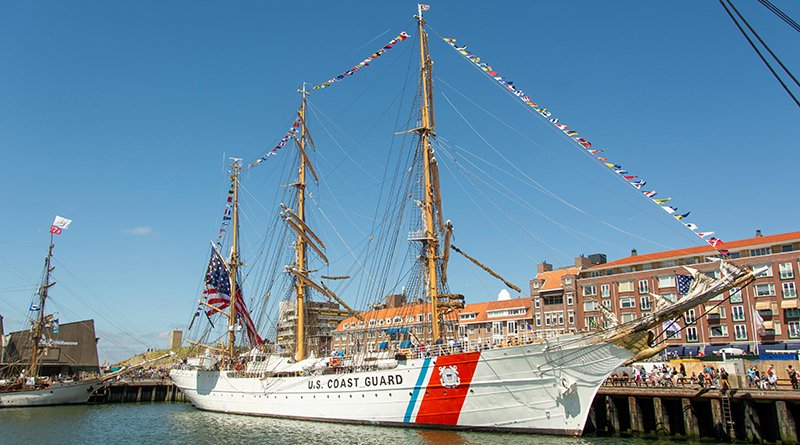
USCG Cutter Eagle: A Legacy Reborn from War
The USCG Cutter Eagle, a crucial maritime asset of the United States Coast Guard, is steeped in a rich and tumultuous history that begins in the post-World War II era. Initially commissioned as the Horst Wessel, a training vessel for the Nazi German Navy, this ship transitioned from a symbol of the Third Reich to an emblem of American resilience and maritime tradition. This alteration highlights the intricate relationship between history, maritime legacy, and the themes of redemption and rebirth prevalent in global naval affairs.
The Shattered Landscape of Bremerhaven
As Commander Gordon McGowan arrived in Bremerhaven, Germany, he encountered a city scarred by war; the landscape remained a testament to its significance during World War II. Once a vital hub for the Kriegsmarine, Bremerhaven’s shipyards were instrumental in the construction of U-boats and naval vessels used by the Nazis. However, relentless Allied bombings left the city in ruins—its infrastructure decimated and its vibrant past hauntingly diminished. The air was thick with the scent of saltwater and ash, setting the tone for McGowan’s first moments exploring his new command, a ship before him that had seen better days.
The Legacy of the Horst Wessel
Originally launched as part of the Gorch Fock class, the Horst Wessel epitomized the ideals of the Nazi regime. Named after a martyr of the party, it was one of five vessels designed to educate future naval officers steeped in military discipline and nationalist fervor. Yet, by May 1945, as the war neared its end, the Horst Wessel found itself caught between allegiances. The ship attempted to flee westward with its crew, ultimately surfacing as a symbol of transition once it was captured by British forces. Its future now lay in the hands of the Allied forces, marking a pivotal shift from a naval asset for tyranny to one of potential for good.
Transitioning from War to Peace
After the war, the newly captured Horst Wessel became an object of interest for the United States Coast Guard as negotiations regarding the German fleet commenced in Berlin. Although versions of the ship were initially dismissed by American naval interests, the Coast Guard’s enthusiasm ultimately led to its acquisition. Commander McGowan’s journey was poised to begin as he assessed the immense challenges that lay ahead—transforming the barque from its dilapidated state into a seaworthy vessel. This monumental task encompassed addressing logistical hurdles and harnessing the potential for collaboration between American and German sailors to revitalize the ship.
Preparing the Ship for a New Era
Stepping aboard for the first time, Commander McGowan found the ship in a state of significant disrepair. From the rusted hull to the frayed rigging, every aspect of the vessel required meticulous attention. The rigging replacement presented an invaluable opportunity for the American crew to learn from their German counterparts, fostering a spirit of cooperation that would be essential for the upcoming transatlantic voyage. McGowan’s strategy of blending crews, despite underlying tensions from recent history, demonstrated a commitment to teamwork that prioritized survival and success over lingering animosity.
Commissioning the USCGC Eagle
As spring approached, preparations for the Horst Wessel’s commissioning into the US Coast Guard intensified. On May 15, the day arrived to officially rename the vessel as USCGC Eagle. The ceremony was a poignant reminder of how history can be reshaped. With both American and German crews standing side by side, the event captured a moment of transformation—where a vessel once symbolic of oppression became a beacon of maritime tradition and cooperation. Commander McGowan’s leadership skills shone through as he unified the crew, paving the way for their collective journey toward healing.
Facing the Uncertainty of the Sea
The transition from land to sea posed new challenges for the Eagle’s crew. Trust would be tested as they set sail together, navigating not only the unpredictable seas but also the emotional currents of past grievances. As they prepared for the voyage, the crew found common ground and developed an understanding of their interdependence—a necessity in overcoming the remnants of war. McGowan’s journey reinforcing the philosophy of mutual reliance highlights the broader theme of reconciliation that resonates in post-war narratives.
The story of the USCG Cutter Eagle is not merely one of a ship’s rebirth; it firmly establishes a testament to the power of cooperation and shared experiences. For more on the enduring importance of maritime legacy and transformation in post-war contexts, visit US Coast Guard History. The Eagle continues to serve not just as a vessel but as a powerful reminder of resilience, cooperation, and the hope for a united future in maritime history.
This article is based on reporting from thelog.com.
The original version of the story can be found on their website.
Original Source:
thelog.com
Image Credit: thelog.com ·
View image