





United Front Against Offshore Oil Drilling in California
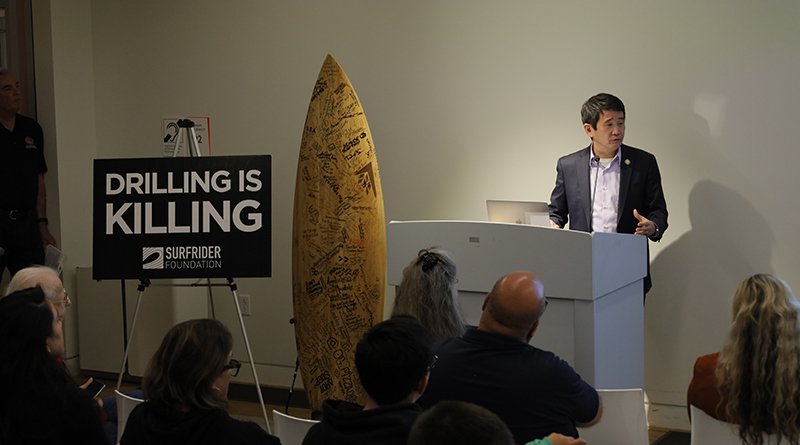
A diverse coalition of Tribal leaders, elected officials, business owners, environmental advocates, fishers, and coastal residents convened in Costa Mesa recently to vehemently oppose the federal government’s proposal to expand offshore oil and gas drilling along California’s coastline. The gathering, highlighted in a news release from Orange County Coastkeeper, saw over 100 attendees participate in a community "people’s hearing," organized by Coastkeeper, the Surfrider Foundation, and Oceana. This event served as an urgent call to safeguard Southern California’s waters, fisheries, beaches, and economies from the hazards posed by new offshore drilling initiatives.
The meeting commenced with a comprehensive presentation about the U.S. Department of the Interior’s plan to permit oil and gas leasing over vast expanses of federal waters. The proposal targets not only California’s coastline but also stretches into the Gulf of Mexico, Alaska, and the Arctic. Organizers provided attendees with essential details on how to submit official public comments to the Bureau of Ocean Energy Management, with the deadline set for January 23, 2026. This aspect of the meeting emphasized the importance of public engagement in shaping policies that impact coastal communities.
The presence of Indigenous leaders notably enriched the discourse, as they articulated their profound cultural, spiritual, and ecological connections to Southern California’s coastal waters. Shannon Wingfield, Tribal Secretary for the Juaneño Band of Mission Indians, pointed out that offshore drilling jeopardizes both cultural heritage and endangered marine species. She warned that the expansion plan negligently disregards Tribal sovereignty and insists it poses threats including catastrophic spills—an alarming risk for communities that have relied on these waters for thousands of years.
Echoing Wingfield’s concerns, Tina Calderon of the Sacred Places Institute for Indigenous Peoples described the ocean as “a sacred being that must be protected at all costs.” She highlighted the historical significance of previous oil spills in Southern California, referencing serious incidents like the Huntington Beach oil spill in 2021, which caused considerable ecological damage. Underlining the urgency of the situation, Calderon urged Californians to utilize their voices and votes to oppose the federal initiative, noting that the repercussions from oil spills can have lasting, oftentimes irreversible impacts on both wildlife and coastal economies.
Many speakers reflected on firsthand experiences with oil contamination, notably the detrimental aftermath of the 2021 pipeline spill, which devastated fisheries, closed local beaches, and disrupted tourism. Michaela Coats, Regional Manager for the Surfrider Foundation, remarked that Orange County residents "understand exactly what’s at stake" because they have witnessed the consequences of oil spills firsthand. Surfrider’s network is committed to employing every possible avenue to halt new drilling initiatives, reinforcing the shared sense of urgency in the room.
The speakers raised serious concerns about whether there is any justification for expanding offshore drilling operations at all. Ray Hiemstra from Orange County Coastkeeper reminded attendees of the state’s significant efforts over the last decade to responsibly retire aging offshore rigs, asserting that major oil companies are moving away from such practices. He pointed out that the supposed benefits of offshore drilling are minimal for Californians, all while placing coastal ecosystems and economies in jeopardy. As Oceana’s California Field Representative Lisa Gilfillan stated, opposition to offshore drilling in California is historically bipartisan, with shared concerns spanning political affiliations.
The profound message resonated strongly throughout the evening: offshore drilling poses a credible threat to the long-term health of Southern California’s waters and coastal lifestyle. As disruptions to essential ecosystems could capitalize on profits but devastate communities, speakers encouraged residents to engage in the federal comment process, emphasizing that public involvement is crucial in countering these drilling lease proposals.
In a time when the federal government is moving ahead with plans perceived as neglectful of community input, the people’s hearing in Costa Mesa represented a unified effort to voice significant opposition. With the January 23 deadline on the horizon, attendees hope their strong turnout will inspire more Californians to actively contribute to shaping the future of the state’s coastline and protect it for generations to come. The coordinated efforts of diverse groups—Indigenous peoples, local businesses, and environmental advocates—underscore the growing resistance against offshore drilling, affirming that the protection of California’s coastal waters is a paramount concern for its residents.
This article is based on reporting from thelog.com.
The original version of the story can be found on their website.
Original Source:
thelog.com
Image Credit: thelog.com ·
View image