


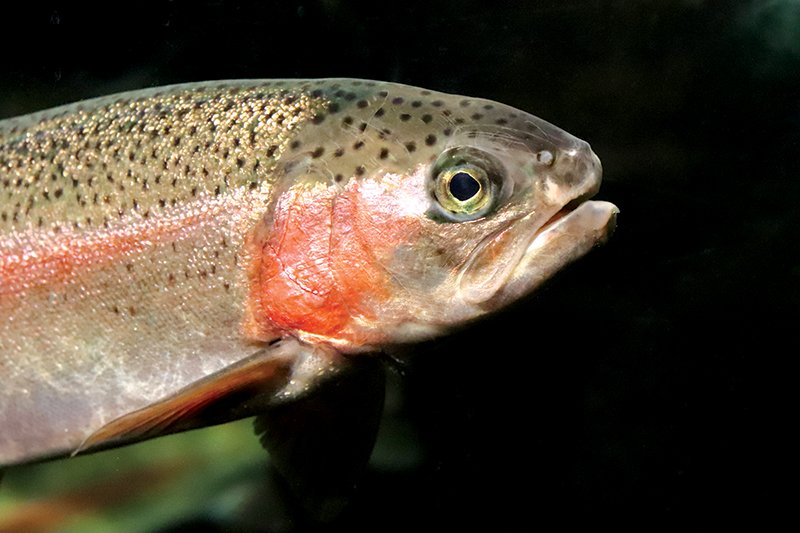
Edison High School: A Lifeline for Endangered Southern California Steelhead Trout
In an unexpected yet promising initiative at Edison High School in Huntington Beach, Southern California’s endangered steelhead trout have found a crucial sanctuary. This newly established emergency holding facility, situated within the school’s Innovation Lab, provides vital support for these fish during environmental emergencies such as wildfires, floods, and droughts. By serving as a temporary refuge, the facility equips the rescued trout with a better chance of surviving until their natural habitats can recover.
A Sanctuary for Endangered Species
Equipped with two 500-gallon tanks, the Edison High School facility is capable of sheltering up to 650 steelhead trout. This collaborative project has brought together educators, students, conservation scientists, and officials from state wildlife agencies, exemplifying a collective commitment to preserving California’s native species. As wild habitats face increasing threats from climate change and human interference, the need for a reliable holding location has become urgent.
The dire condition of steelhead trout populations in Southern California has been escalating for decades, necessitating immediate action. With environmental disasters damaging crucial habitats, the precarious nature of the trout’s existence has led wildlife agencies to implement emergency rescue operations. Unfortunately, the lack of suitable holding locations has posed significant challenges, often forcing rescued fish to be relocated far from their native waters.
The Role of Conservation Partnerships
Education and conservation have seamlessly merged at Edison High School. The facility not only aims to protect endangered steelhead trout but also offers students hands-on experience in aquatic ecosystems. Within this innovative learning environment, students gain practical knowledge of marine biology, water chemistry, and environmental monitoring—skills essential for careers in science and resource management. For more on educational initiatives focusing on conservation, visit California Fish and Wildlife.
Despite significant habitat restoration efforts, conservation scientists have observed stagnating steelhead populations since tracking began in 2015. A series of major wildfires has caused further declines, underscoring the necessity of a dedicated holding solution. Edison High School emerged as an optimal site due to its longstanding aquaculture program and its strategic location between Los Angeles and San Diego counties, aligning perfectly with community and environmental needs.
A Dual Learning Experience
The facility serves a dual purpose: to safeguard the endangered fish while providing educational opportunities for students. By maintaining the aquatic systems and observing fish behavior, students gain insights into the stressors facing aquatic species. This immersive experience empowers them to grapple with real-world environmental challenges, bridging classroom learning with tangible conservation efforts.
In addition, the steelhead trout’s adaptability to changing climates makes its precarious situation particularly alarming. Unlike other salmonids, Southern California steelhead can tolerate warmer water temperatures and exhibit flexible life histories. Some may remain in freshwater for their entire lives, while others migrate to the ocean and return multiple times to spawn, enhancing their reproductive potential. Conservationists have dubbed them a "fish of the future," owing to their unique survival strategies in a rapidly changing world.
Importance of Genetic Diversity
The Edison High School facility is a crucial tool in a comprehensive conservation strategy aimed at boosting steelhead populations. By creating a secure environment during emergencies, conservation agencies can ensure that the fish can return to their original watershed or be placed in another suitable habitat once conditions improve. This process is vital for maintaining genetic diversity and bolstering regional populations.
Edison High has a track record of working alongside state and research partners for species recovery. Past efforts have successfully included raising and releasing other species, such as white sea bass and trout, in collaboration with wildlife agencies. These initiatives have laid the groundwork for expanding the program to encompass emergency steelhead rescue, further solidifying the school’s commitment to conservation.
A Model for Future Conservation Efforts
As climate-triggered disasters become increasingly common, partnerships like the one at Edison High School illustrate the importance of education, conservation, and community engagement. This innovative approach not only offers hope for the Southern California steelhead trout but also serves as a model for future conservation efforts across the region.
For the survival of steelhead trout, effective restoration of habitats combined with creative solutions that unify science, education, and stewardship are critical. In the heart of Huntington Beach, Edison High School has transformed into a vital lifeline for a species increasingly threatened by environmental change.
The journey toward recovery for Southern California’s steelhead trout is far from over, but through such collaborative efforts, the future becomes a bit brighter. More information about conservation initiatives can be found on the Santa Monica Mountains Resource Conservation District website, where dedicated professionals continue to advocate for the protection of local ecosystems.
By fostering connections between students and local environmental challenges, this initiative not only enhances academic rigor but also cultivates a generation of environmentally conscious citizens poised to make a difference. The unique integration of education and conservation at Edison High School stands as a promising beacon of hope in an era of environmental uncertainty.
This article is based on reporting from thelog.com.
The original version of the story can be found on their website.
Original Source:
thelog.com
Image Credit: thelog.com ·
View image