





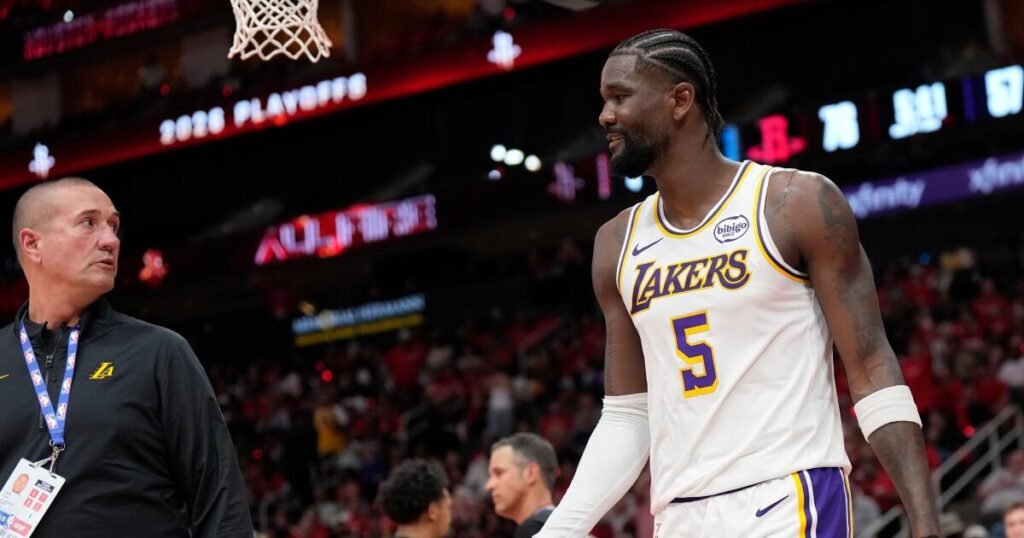
Deandre Ayton’s Ejection: A Lesson in Composure and Growth
In a pivotal Game 4 matchup against the Houston Rockets, Lakers center Deandre Ayton found himself at the center of controversy after receiving his first career ejection due to an accidental elbow to Alperen Sengun’s head. With 5:41 left in the third quarter, a flagrant foul 2 was called, leading to Ayton’s exit from the game, which ended in a 115-96 loss for the Lakers. Despite the intensity of the moment, Ayton calmly explained that the incident was not malicious, noting, "We’re both sweaty guys," and he merely braced for contact, causing his arm to slip and inadvertently strike Sengun.
Following the game, players from both teams voiced their opinions on the ejection. Sengun himself described the call as "soft," expressing surprise at Ayton’s ejection. Lakers’ guard Marcus Smart praised Ayton for maintaining his composure during the ordeal, highlighting how such incidents are opportunities for growth in a player’s career. This response reflects not only Ayton’s character but also his evolving role within the Lakers organization.
Ayton’s Performance: A Glimmer of Hope
Despite the ejection, Deandre Ayton had a solid performance prior to leaving the game, scoring 19 points and grabbing 10 rebounds. This level of contribution was crucial for a Lakers team that struggled offensively, converting only 31.3% of their shots during the first three quarters. Veterans such as LeBron James and Marcus Smart were under considerable pressure, managing to keep the team afloat despite their fatigue. Ayton’s scoring was particularly vital, indicating that, when utilized correctly, he can deliver under pressure, showcasing his potential impact during pivotal moments in the playoffs.
Lakers coach JJ Redick has often advocated for Ayton to increase his physical aggression on the court—a development that could lead to more consistent performance in high-stakes games. General Manager Rob Pelinka has even gone so far as to create custom shirts to encourage Ayton to embody the fierce spirit of a lion. The call for a more aggressive persona aligns with the ethos of playoff basketball, which often emphasizes physicality and control in high-pressure situations.
Team Dynamics Amidst Adversity
As the game progressed, the Lakers faced mounting frustrations leading up to Ayton’s ejection and the subsequent ejection of teammate Adou Thiero and Rockets guard Aaron Holiday. Their skirmish came just as Thiero made a memorable playoff debut, scoring his first basketball postseason points with an emphatic dunk. However, this moment was overshadowed by the technical fouls being assessed, which left an enduring impression on the game’s atmosphere.
LeBron James criticized the officiating, calling Thiero’s ejection “uncalled for,” showing his support for younger teammates trying to make their mark. Such moments of camaraderie speak to the Lakers’ overall team dynamics, reinforcing the importance of unity amidst challenges. Maintaining a strong locker room culture is essential, particularly for younger players who might be affected by the pressure of high-stakes situations.
The Intensity of Playoff Basketball
The physicality of the playoff game showcased the fierce competition between the Lakers and Rockets. The match featured a total of five technical fouls, resulting in a tense atmosphere on the court. Players were observed exchanging heated words, depicting the heated rivalry and the stakes involved in a playoff series. This tangible intensity is characteristic of playoff basketball, wherein the fine margins can decide the fate of a season.
Lakers’ head coach Redick aptly noted the chaotic scenes at midcourt post-game, where players from both teams engaged in verbal exchanges. Such moments illustrate the emotional investment players have in the game, as well as the pressure they endure during crucial matches.
Learning from Experiences
Deandre Ayton’s ejection serves as a pivotal experience for his growth as a player. With eight years of experience in the NBA, this incident marks a significant moment in his career where he must navigate the complexities of being an integral part of a playoff team. The support he received from teammates and coaches highlights the importance of resilience and adaptation in competitive sports.
As he reflects on the incident, Ayton has a chance to embrace this opportunity for improvement, both mentally and physically. Understanding the implications of his actions on the court is necessary for mitigating future situations and enhancing his overall contribution to the Lakers. Continued emphasis on personal growth and development can only benefit Ayton and solidify his standing within the team.
Conclusion: Composure Amidst Chaos
In conclusion, Deandre Ayton’s ejection and the events of Game 4 reflect both the challenges and invaluable lessons inherent in professional basketball. From recognizing the need for greater on-court intensity to cultivating a positive mindset in the face of adversity, Ayton and his teammates are continually evolving. This experience can serve as a pivotal turning point for Ayton, marking the start of a new chapter in his professional journey.
As the series progresses into Game 5, the Lakers need to harness their collective resilience and concentrate on their game strategy, using the lessons learned to improve performance. With the support of both teammates and coaching staff, Ayton has the chance to transform this setback into a stepping stone toward greater success in the playoffs.
This article is based on reporting from www.latimes.com.
The original version of the story can be found on their website.
Original Source:
www.latimes.com
Image Credit: www.latimes.com ·
View image