


Essential Tips for Buying a Used Jet Ski: Inspection Guide
Purchasing a used jet ski can be an exhilarating yet daunting experience. With the average annual usage being around 30 hours, knowing what to prioritize during your search is essential. Characteristics such as wear and tear largely depend on engine hours, but a comprehensive understanding of the model’s maintenance history is equally important. This guide offers a streamlined approach to inspecting a used jet ski while ensuring you make an informed purchase.
Understanding Engine Hours and Maintenance
When buying a used jet ski, it’s crucial to go beyond just the engine hours displayed on the gauge. While traditional wisdom suggests that 300 hours is a threshold for high mileage, advancements in technology mean that modern four-stroke engines can last well beyond this mark—up to 1,000 hours with proper maintenance. Thus, a 10-year-old jet ski with 300 hours typically indicates it has been under-used rather than overstrained.
Maintenance records also play a vital role. A jet ski with higher hours but consistent documentation of servicing often performs better than lower-hour models that may have been neglected. Checking physical conditions for signs of care—like a clean engine bay—offers valuable insights into how well the ski has been maintained. To better understand the importance of maintenance, you can explore this article on jet ski upkeep.
Focus on Four-Stroke Models
When considering jet ski options, it’s advisable to steer clear of two-stroke models. Manufacturers phased these out years ago, meaning parts are increasingly scarce and maintenance troublesome. Instead, opt for four-stroke models made by leading brands like Yamaha, Sea-Doo, and Kawasaki, as they remain in production with reliable support.
Newer models, specifically those from 2017 and onward, come with enhanced components that improve reliability. It’s equally important to assess how the ski was stored and used. For instance, saltwater exposure accelerates wear and tear compared to freshwater use. If possible, inquire into the ski’s storage condition to ensure longevity.
Conducting Physical and Mechanical Inspections
The first step in your physical inspection should focus on the hull. Examine the bottom surface for cracks or soft spots, which could indicate structural damage. A smooth gel coat without chipping is ideal, and pay attention to the seams where hull sections join—gaps might suggest water intrusion.
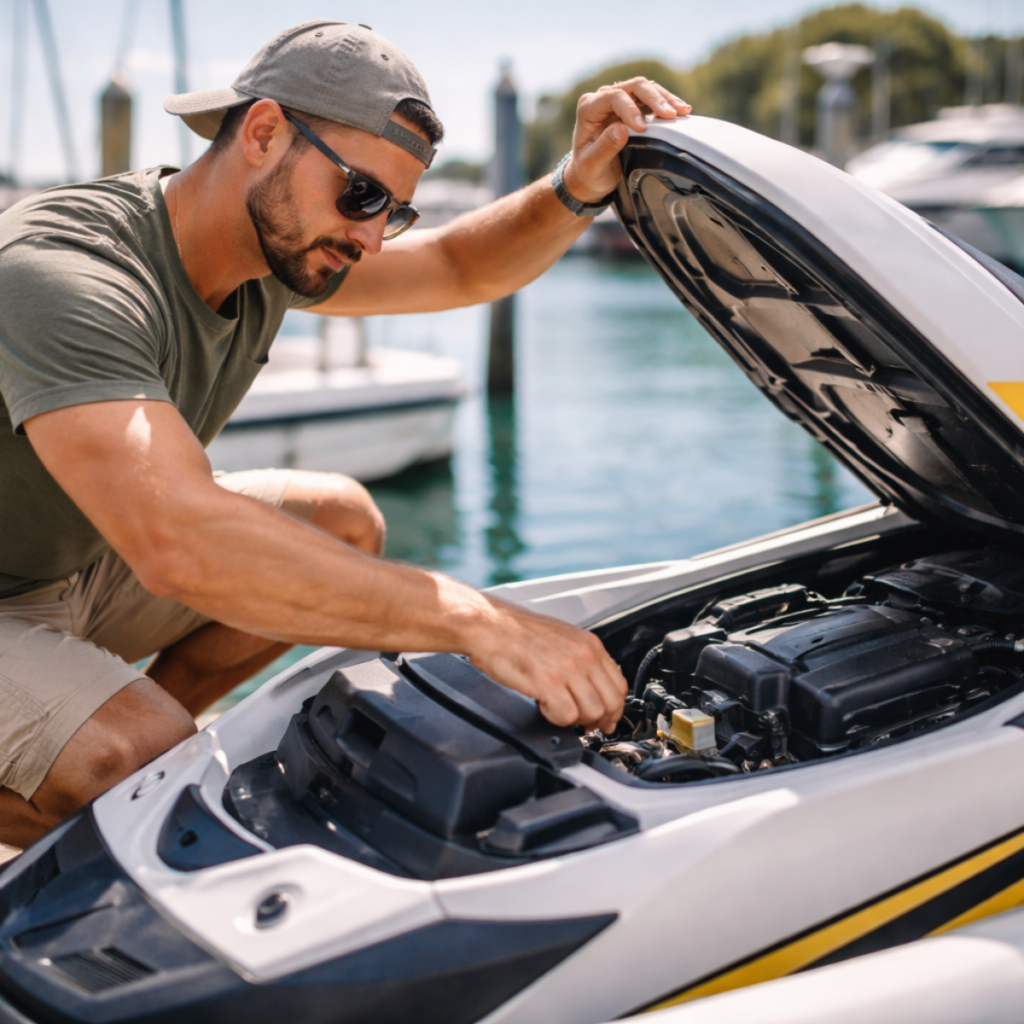
Open the seat to check the engine compartment. Look for signs of corrosion, leaks, or loose components, as these can all signal deeper maintenance issues. A foul smell might indicate stagnant water or neglect—both red flags for potential buyers. Pay attention to the battery terminals for corrosion and ensure connections are secure.
Another significant aspect is inspecting the impeller. Remove the intake grate to assess its condition. Look for any nicks or bends in the blades, and measure the clearance between the impeller and the wear ring, which should be around 0.014 inches. Wider gaps could mean diminished performance, indicating that a replacement of the wear ring may soon be necessary.
Engine Functionality and Final Checks
Starting the engine is a crucial step in your inspection. A smooth idle is what you want; sputtering or rough responses are problems waiting to happen. Test steering, throttle, and reverse functions to ensure everything operates without hesitation. RPM should ideally reach around 7,000 when the throttle is fully engaged; any deviations may hint at performance issues.
Water testing is critical and cannot be overlooked. Acceleration should be smooth without any stutters. Steering responsiveness should remain consistent at various speeds. Listen for any unusual noises, which could indicate jet pump issues.
Documentation is key to a stress-free purchase. Ensure that the seller provides a clear title and registration to affirm ownership, and verify that there are no liens against the watercraft. The Hull Identification Number (HIN) should match the provided documentation. For detailed insights on ownership transfer, consider checking resources like ConsumerShield, which offers helpful guides and forms compliant with state laws.
Understanding Ownership Costs and Maintenance
Beyond the purchase price, there are ongoing ownership costs to consider. Expect annual insurance expenses to range from $200 to $500, safety gear costs around $100, and maintenance can add another $200 to $500 to your yearly budget. Depreciation is also a factor; the value declines by about 22 percent in the first year alone, and then drops approximately 8 percent annually thereafter.
Opting for models that are less than five years old or sporting fewer than 100 hours can provide a more reliable purchase. Reviewing the service history will ensure you’re investing in a maintained jet ski rather than one that’s likely to face issues shortly after purchase.
Conclusion
Buying a used jet ski can be a rewarding experience if you approach it with a well-informed inspection regimen. Focus less on mere engine hours and more on maintenance records, physical condition, and the overall history of the jet ski. Prioritize water testing and ensure all documentation is in order before finalizing the purchase. Avoid two-stroke models completely to dodge costly repairs. By following this guide, you’ll equip yourself to confidently navigate the used jet ski market, making a purchase that delights rather than disappoints. For further guidance on jet ski maintenance and purchasing, check out additional resources like Jet Ski Experts.
This article is based on reporting from swellmagnet.com.
The original version of the story can be found on their website.
Original Source:
swellmagnet.com
Image Credit: swellmagnet.com ·
View image