


The Architectural Splendor of Milan: A Glimpse into Fashion and History
Milan, often referred to as the fashion capital of the world, is not just defined by its runway shows and luxury houses but also by its rich architectural heritage. The city is a vibrant canvas of historical and contemporary design, showcasing stunning structures that speak volumes about its deep-rooted cultural history. Renowned architect Rem Koolhaas’s Fondazione Prada and Tadao Ando’s Armani/Silos exemplify just a fraction of Milan’s architectural significance in the fashion world. As fashion evolves, so too do the spaces that serve as its backdrop, creating a dynamic interplay between style and structure.

In recent years, contemporary fashion entrepreneurs have emerged, making their mark within this architectural landscape. One such figure is Elisabetta Franchi, who launched her eponymous brand in 2012. Franchi’s new location, the historic Palazzo Acerbi, illustrates her commitment to marrying fashion with tradition. This 17th-century Lombard Baroque palace, also known locally as the Devil’s House, features a breathtaking fresco-lined staircase and an intriguing history, previously serving as the showroom for the likes of Valentino and Krizia. Learn more about Palazzo Acerbi.
Elisabetta Franchi’s designs have quickly become synonymous with Milan’s social scene, particularly her sleek cocktail dresses characterized by strategically positioned cutouts. These pieces have practically become the unofficial uniform of events, mirroring the high spirits of Ludovico Acerbi’s extravagant parties during the Italian Plague of 1629-1631. Interestingly, it is said that none of his guests fell ill during those gatherings, adding an element of mystique to the already captivating allure of the palace.
For her Fall 2026 collection, Franchi draws inspiration from another intriguing period in the palazzo’s past—the First Italian War of Independence in 1848. A cannonball once struck the facade of this historical building, creating a dramatic mark that Franchi embraced in her latest designs, infusing a witchy-Victorian mood into her eveningwear. The outcome was a striking mix of elegance and drama, with bustier dresses that featured exaggerated waist-to-hip ratios, giving an almost surreal visual effect, reminiscent of a bygone era yet distinctly modern.
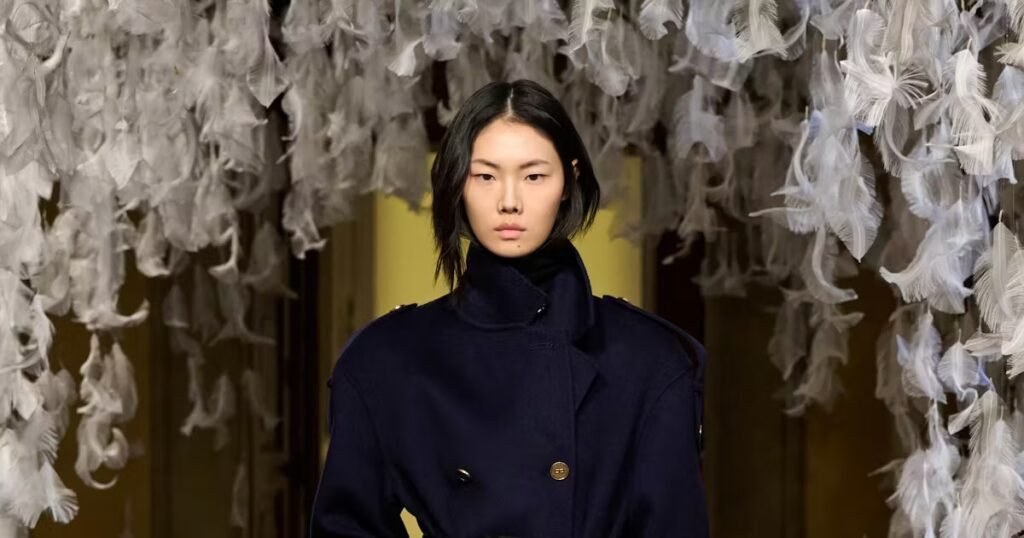
In Franchi’s collection, the high-fashion silhouettes of the 19th century made a noteworthy appearance. Structured bodices emerged from finely tailored wool coats and jackets, while glossy wide belts accentuated the waistlines. Accessories such as pointy pumps and over-the-knee boots, styled like stays, became essential elements of this theatrical collection. Additionally, model walkways were adorned with ruffled blouses and tiered maxiskirts that danced softly with each step, conveying a sense of whimsy amid the evening’s dramatic flair.
Notably, feathers played an integral role this season, appearing throughout the presentation—from delicate strands hanging gracefully from the ceiling to tufted mini-crinis and shimmering golden brooches. Franchi encapsulated the duality of beauty and darkness with the statement “The devil before was an angel," suggesting a transformation rooted in both history and fashion.
In conclusion, Milan’s architectural magnificence provides not just a physical space for fashion but also inspires the narratives woven into modern designs. Creators like Elisabetta Franchi are revitalizing these historic spaces, infusing them with contemporary elegance and historical significance. With the backdrop of the Palazzo Acerbi, Franchi’s work is a testament to the seamless blend of past and present, emphasizing the city’s role as a continued epicenter of creativity. For more on Milan’s architectural landmarks and their influence on fashion, check out resources like The Architectural Digest.
This article is based on reporting from www.wmagazine.com.
The original version of the story can be found on their website.
Original Source:
www.wmagazine.com
Image Credit: www.wmagazine.com ·
View image