


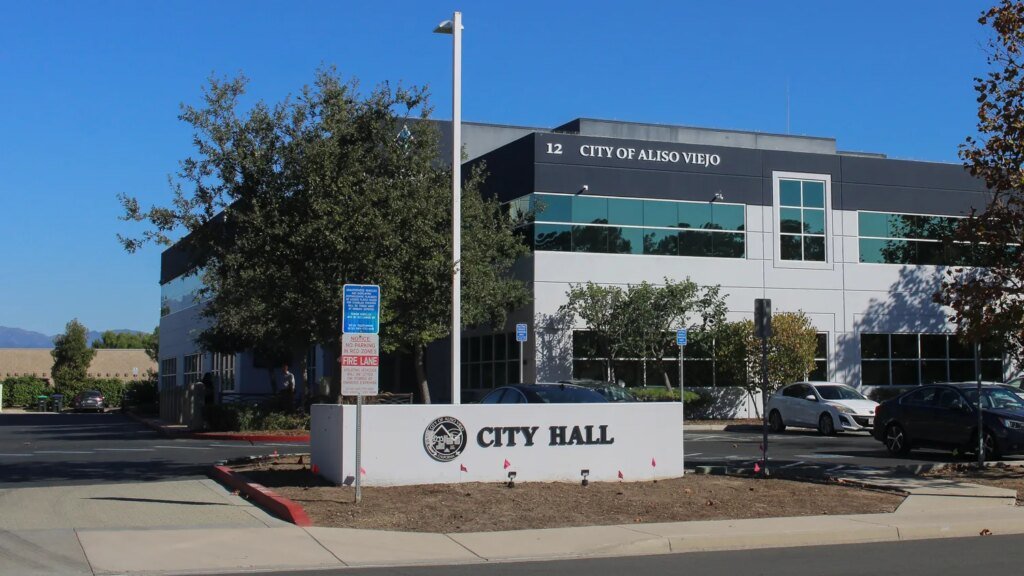
Candidates Running for City Council in Aliso Viejo Can Now Accept Thousands More in Contributions
In a quiet city council meeting on December 3, residents of Aliso Viejo witnessed a significant shift in the political landscape, one that could alter the dynamics of local governance for years to come. As the clock struck 6 PM, city officials voted to raise the campaign contribution limit for city council candidates, opening the floodgates for donations that could dramatically reshape the electoral process.

A Shift in the Contribution Landscape
Previously capped at $1,000 per donor per election, council candidates are now allowed to accept contributions of up to $5,900, the same limit set by California state law. The decision was made with little discussion, quietly tucked into the city’s consent calendar—items considered routine business. Mayor Tiffany Ackley, the sole dissenting voice, expressed her concern that such an increase could compromise the integrity of local politics, emphasizing that “local politics is meant to stay local.”
This vote represents a marked change from a resolution passed just two years prior, where the council had instituted the $1,000 limit to keep large contributions at bay. According to a 2021 study by the California Institute for Political Reform, cities with lower contribution limits have reported greater transparency and more diverse candidate pools, effectively fostering a healthier democratic environment. Yet, the council’s recent decision seems to contradict these findings, as it allows wealthier donors to exert their influence in local races.
The Voices Behind the Decision
Councilmember Mike Munzing championed the increase, arguing that the original limit placed undue disadvantage on candidates facing opponents backed by substantial independent expenditures. “When I’m limited to $1,000 and $80,000 comes in on their favor,” he noted, “the only fair thing to do is to get us back to the state limit.” Munzing’s appeal to fairness has struck a chord among those who believe that financial backing is crucial in competitive races.
- Munzing: Advocates for increased limits due to competitive disadvantages.
- Ackley: Warns that greater contributions could overshadow local voices.
- Duncan: Supports Munzing, stating existing independent expenditures create an uneven playing field.
Max Duncan, who is set to become mayor in 2026, reinforced Munzing’s viewpoint, emphasizing that the existing limits rendered candidates vulnerable against the backdrop of significant financial assaults. This perspective is supported by a 2022 study published in the Journal of Political Finance, which found that candidates with access to larger contributions were able to outspend their opponents, subsequently increasing their chances of electoral success.
Community Perspectives
Public reaction to the decision has been mixed. During the meeting, resident Julie Colombero voiced her concerns, highlighting that increased contributions could lead to a scenario where only the affluent candidates thrive, effectively “drowning the voices of those who do not have deep pockets.” Her sentiments echo the thoughts of many residents who fear that community priorities may be overshadowed by financial interests.
Mayor Ackley’s resistance to the contribution increase has resonated with some community members. She argued that it is “insincere” to advocate for less stringent limits given the city’s previous stance, questioning why Aliso Viejo might wish to abandon its regulatory framework while neighboring cities like Irvine and Laguna Niguel maintain more stringent limits. “Not one local city has campaign contributions at that higher level,” she asserted, further supporting her claim with facts about regional trends.
Comparative Landscape of Campaign Contributions
The discourse surrounding campaign finance is evolving not only in Aliso Viejo but also across multiple cities in California. In a parallel sentiment, Cypress is contemplating significantly lowering its limit from $5,900 to just $500, likely reflecting a growing desire for more localized governance devoid of overwhelming financial influence. Additionally, the nearby municipality of Orange has reinstated bans on transferring funds between candidate committees, suggesting a clear trend toward tightening financial controls.
The Implications of Increased Contributions
The ramifications of Aliso Viejo’s new policy may go beyond the immediate electoral cycle. As more cities engage in discussions on campaign finance, the volume of money in politics might become a hotbed for future conflicts and contentions.
The potential influence of financial backers raises questions about accountability and transparency, essential tenets of a functioning democracy.
As the campaign season approaches, candidates will need to navigate a complex web of regulations and relationships shaped by these financial dynamics. Local advocacy organizations, like the Community Coalition for Fair Elections, are expected to ramp up efforts to educate residents on the significance of campaign contributions, urging them to participate actively in the electoral process.
In this increasingly commercialized political climate, the battle for hearts and minds may well become a contest of dollars and cents. Residents of Aliso Viejo now face a pivotal moment that could define the future of their local governance. Will this increased financial influence lead to a richer, more competitive political arena, or will it inevitably drown out the diverse voices that form the fabric of this community? Only time will tell.