


Garden Grove’s Crackdown on Whippets: A Response to Rising Concerns
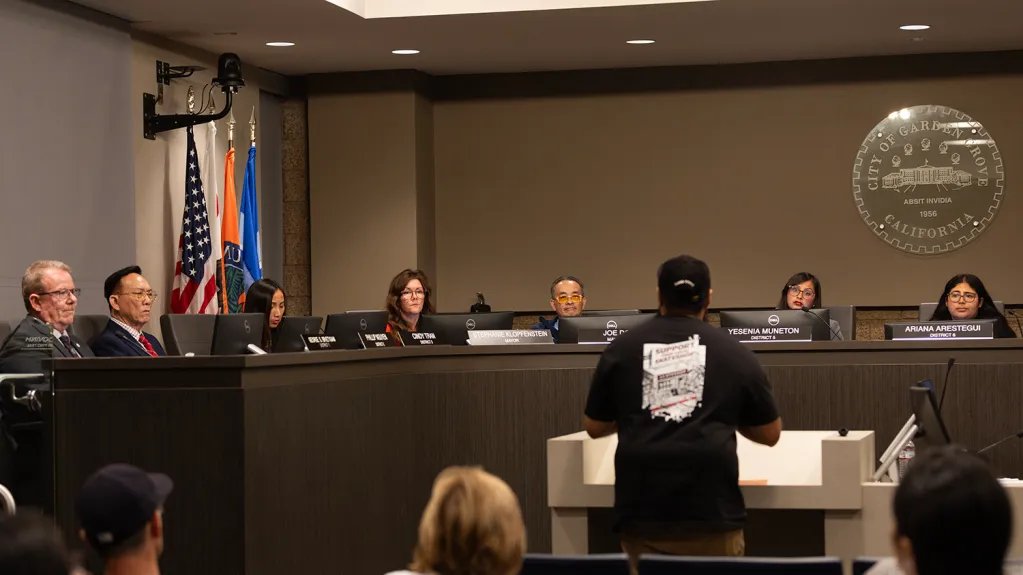
As the sun dipped below the horizon in Garden Grove, California, a critical discussion was heating up in the city council chambers. Residents and officials mingled anxiously as the council voted unanimously to advance a ban on nitrous oxide, commonly known as “whippets” or “galaxy gas.” This inhalant, once relegated to the shadows of society, has surged in popularity among youth—its sweetly flavored versions often marketed directly to the young. City officials are now grappling with the ramifications of widespread nitrous oxide abuse that has left a wake of health crises and increased traffic accidents.

Rising Concerns About Whippet Use
The historical context of nitrous oxide’s recreational use is marked by alarming statistics. The Yale School of Medicine categorizes the potential consequences of nitrous oxide abuse as severe—ranging from neurological damage to psychosis. According to Dr. Ava Chen, a local addiction specialist, “The playful image of whippets belies a deeper truth. Prolonged abuse can lead to irreversible damage, including nerve degeneration. It’s a public health crisis waiting to explode.”
In response to its popularity, especially among teenagers, Garden Grove council members welcomed the chance to step into action, evident in the recent vote. The mayor, ever-conscious of public safety, noted, “We cannot ignore how these products are marketed towards kids. Flavored nitrous oxide can easily be mistaken for candy, and that is simply not acceptable.”
Health and Safety Risks
The health risks associated with nitrous oxide usage are increasingly troubling. An alarming study recently published by the National Institute on Substance Abuse reported a 45% rise in ER visits related to nitrous oxide use over the last two years. This phenomenon is not isolated to any particular demographic. According to John Blackwood, a researcher at UC Irvine, “What’s troubling is that many users perceive nitrous oxide as relatively harmless. Yet the data suggests that youth recreational use leads to significant adverse health outcomes.”
Complications Include:
- Nerve damage due to vitamin B12 depletion
- Severe psychological changes, including anxiety and psychosis
- Potential for addiction and dependency
- Increased risk of accidents, particularly in automotive contexts
The call for regulation has gained momentum in adjacent cities, like Fullerton and Santa Ana, which have enacted similar measures. Fullerton noticed a staggering 328% increase in related arrests and a 700% spike in traffic accidents involving nitrous oxide in the past year. “This isn’t merely a local issue,” asserted Councilmember George Brietigam, suggesting the city needs to go further, potentially banning nitrous oxide in automotive applications. “We owe it to our community to act decisively.”
A Complex Landscape of Legislation
Despite the widespread recognition of the dangers posed by nitrous oxide, enacting legislation isn’t straightforward. The gas is also widely used in the culinary and medical fields, complicating regulatory measures. In a recent city meeting, City Attorney Omar Sandoval elucidated, “We found nitrous oxide products marketed with flavors like grape and strawberry, likely aimed at younger demographics. This makes it even more concerning.”
Discussions around kratom—a substance gaining notoriety for its opioid-like effects—were also tabled for future deliberation. Experts suggest that just as municipalities are stepping up to battle nitrous oxide abuse, they must also consider the implications of unregulated substances like kratom. “The varied effects of kratom depend heavily on dosage and form,” commented Matthew Lowe, executive director of the Global Kratom Coalition. “Consumers often have little understanding of what they’re actually taking.”
Policy Implications and Future Directions
As the city council navigates the regulatory landscape of recreational nitrous oxide and kratom, the conversation extends beyond local governance. With heightened pressures from public health advocates and mounting evidence of health risks, municipalities must carefully balance their approaches. In regions like Orange County, differing strategies are emerging:
- Fullerton implemented an outright ban following alarming crime statistics.
- Santa Ana moved forward with more stringent regulations, citing public safety.
- Irvine has opted to rely on state-level guidelines, avoiding a local ban.
The disparate measures reflect a patchwork regulatory structure, compelling local governments to confront the ever-evolving landscape of substance use and public health. “We’re at a crucial juncture,” stated Dr. Emily Tran, a public health officer with the Orange County Health Agency. “If we’re not proactive in tackling these issues, we risk exacerbating an already complex crisis. The public deserves clarity and care.”
Garden Grove’s intent to curb nitrous oxide use is but one chapter in the larger narrative of substance regulation in America. As the city navigates its policies with an eye on enforcing health and safety measures, its approach could serve as a critical blueprint for other municipalities grappling with similar challenges. The stakes have never been higher, and the community’s future hinges on collective action.