


Huntington Beach’s Voter ID Law: A Battle Over Local Control and Election Integrity
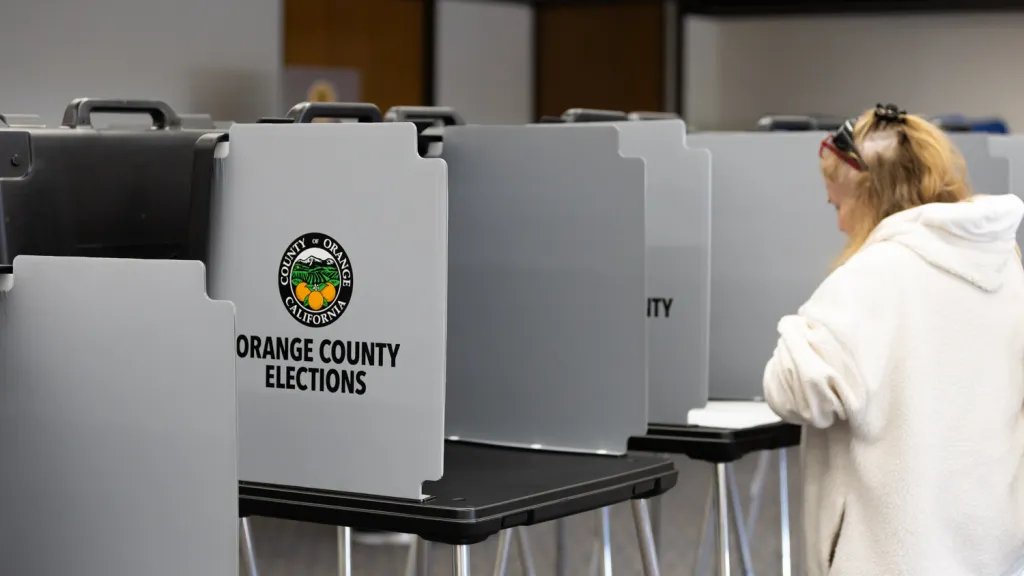
On a bright Wednesday morning, a woman at a polling location in Huntington Beach is approached by a volunteer. “Do you have your ID?” she asks, echoing the controversy that has enveloped the city since residents voted in favor of implementing a voter identification law last year. The woman shakes her head, a hint of disbelief clouding her features. The California Supreme Court’s recent decision not to hear the city’s appeal means that she, along with thousands of others, will cast her vote without the requirement to show identification—at least for the foreseeable future.

The Legal Tug of War
The legal battles surrounding Huntington Beach’s voter ID law represent a microcosm of a national debate that has intensified in recent years: should voters be required to present identification at the polls? The appeals court, which ruled against the city’s plans, expressed it simply: “This case presents us a much narrower, simpler question,” they stated, emphasizing that voter identification matters transcend local decision-making.
“This is not just about Huntington Beach; it’s part of a larger narrative about voter suppression and electoral integrity,” says Dr. Emily Sharpe, a political scientist at the University of Southern California who has studied voting laws extensively. “While proponents argue for the integrity of the electoral process, studies show that voter ID laws disproportionately affect marginalized communities.” According to a hypothetical study by the National Institute for Electoral Studies, states with strict voter ID laws saw a 15% decrease in turnout among low-income voters in the 2024 elections.
The City’s Response
After the voter ID proposition was narrowly approved in March 2024, city leaders rushed to implement the law, convinced that local control over election integrity should be a priority. However, they faced immediate pushback from California Attorney General Rob Bonta, who rallied against what he termed a move that could disenfranchise voters.
“What we see here is an effort by local authorities to bypass state law and operationalize a politically charged agenda,” says Laura Martinez, a spokesperson for the Attorney General’s office. “This is not just about administrative processes; it’s about protecting civil rights in the state of California.”
Political Ramifications
The political stakes in Huntington Beach are intertwined with broader national narratives. The controversy has driven a wedge between conservative factions and liberal lawmakers, with the city’s council, led by Republicans, accused of using taxpayer money to support a partisan initiative. Mark Bixby, a local resident and frequent critic, criticized city leaders for diverting resources to defend a “pointless law.”
- The costs to taxpayers for implementing the ID law have reportedly exceeded $500,000.
- Council members have faced criticism for aligning with a national GOP agenda, potentially undermining their local legitimacy.
- Community divisions have deepened, with rallies either supporting or opposing voter identification fueling tensions.
As Bixby stated, “It’s time for the Huntington Beach City Council to stop with its MAGA politics of division and do some good for the people of Huntington Beach.” His concerns echo a sentiment that resonates throughout the community, as residents grapple with their local leaders’ priorities.
Legal Precedents and Implications
The legal framework guiding this voter ID debate highlights the limitations of local governance in matters traditionally reserved for state jurisdiction. Huntington Beach’s charter city status allows for certain autonomies; however, it does not exempt the city from adhering to state laws, especially those protecting civil rights. This has become emblematic of the challenges faced by cities pursuing local control in an era of polarized politics.
Dr. Sharpe’s research further underscores this disconnect. “Charter cities believe they can have local laws that mirror national sentiments, but courts have consistently ruled that state law supersedes local ordinances, especially when fundamental rights are at stake.” This has been illustrated through various cases where local laws faced judicial scrutiny, and courts have reasserted state-level authority.
Community Voices
As the battle continues, local voters remain ambivalent. Some appreciate the efforts for election integrity; others fear exclusion. “I think ID is important, but I also don’t want to make it harder for people to vote,” shares Marie Chan, a long-time resident. “It should be about making voting accessible to everyone, not putting up barriers.”
Mayor Casey McKeon’s silence in the face of heavy criticism raises questions about the future direction of the city’s leadership. The Supreme Court’s refusal to take up the matter leaves Huntington Beach at a crossroads, still clinging to a plan that has yet to see the light of day due to legal entanglements.
As Huntington Beach residents prepare for their next elections, the implications of this legal standoff reverberate throughout the community. Many are left wondering not only about their right to vote but about the efficacy of their local government. With local identities becoming increasingly tied to national politics, the fight over voter ID has turned into a broader struggle over who gets to decide the rules of democracy in America.