


Huntington Beach’s Housing Dilemma: A Legal Tug-of-War
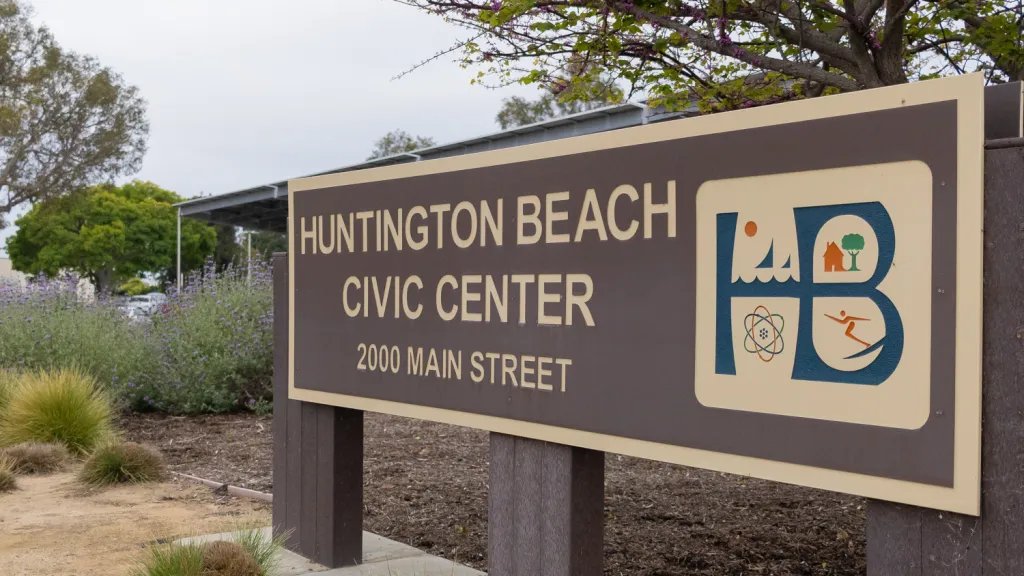
On a sun-kissed afternoon in Huntington Beach, the smell of the ocean wafts through the Civic Center plaza, where a sign boldly declares the city’s commitment to local governance. Yet, beneath the surface of this picturesque Southern California locale lies a brewing storm—one that pits local leaders against state mandates, and their constituents against an ever-growing housing crisis. This clash reached a new crescendo recently when the United States Supreme Court declined to hear Huntington Beach’s argument against state-imposed housing regulations, momentarily extinguishing the city’s hopes of outsized autonomy.

The Legal Landscape: A Confrontation of Governance
Since March 2023, Huntington Beach has unearthed a legal quagmire, embroiled in a battle over housing rights that fundamentally challenges the notion of local governance. The city’s charter leaders have repeatedly contended that a charter city should not be compelled to comply with state housing laws—a claim that Governor Gavin Newsom and Attorney General Rob Bonta have adamantly opposed. As Bonta remarked, “Huntington Beach’s legal escapades are a waste of both taxpayer dollars and time.”
Despite several lawsuits and subsequent court judgments, the city has stalled on developing a required housing plan, leaving an essential piece of California’s housing puzzle unsolved. The California Supreme Court’s refusal to take the case last year has spurred action at the state level, culminating in an order from San Diego Superior Court Judge Katherine Bacal requiring the city to produce a housing strategy by Spring 2025.
The Implications of Inaction
The ramifications of Huntington Beach’s continued refusal to comply with state mandates are significant:
- Residents face escalating rents and a dwindling supply of affordable housing.
- The city risks losing state funding for infrastructure projects vital to community welfare.
- Failure to create a housing plan could lead to stricter regulatory oversight from state agencies.
In an era where California’s housing shortage has reached crisis levels, the inaction from Huntington Beach’s city council has drawn ire from state officials and local advocates alike. “The housing crisis isn’t just a state problem; it’s a community problem that affects every resident, and we cannot afford to turn a blind eye,” asserted Dr. Lila Tran, a housing policy expert at UCLA. “When cities resist compliance, they exacerbate the very issues they claim to address.”
Local Sentiments and Political Ramifications
The city’s leadership, however, remains staunchly defensive of their position. Mayor Casey McKeon reacted to the Supreme Court’s decision by stating, “The voters of Huntington Beach elected us to defend our local control over municipal affairs, especially housing.” This sentiment resonates with a significant portion of residents who feel that they should have the ultimate say in how their community develops. A recent survey conducted by the Orange County Policy Institute revealed that 62% of Huntington Beach residents prioritize local decision-making in housing policies over state oversight.
Amidst this backdrop of legal battles, local voices also echo the urgency of a housing strategy. “Continuing to fight the state is a fool’s errand,” said community organizer Rita Mendoza. “What we need now is collaboration, not conflict. We deserve housing that suits the needs of all our residents, not just a select few.”
The Broader Context: Housing in California
The struggle in Huntington Beach is not an isolated incident. Across California, cities grapple with similar conflicts as the state amplifies its agenda to alleviate the housing crisis. The Regional Housing Needs Allocation (RHNA) process imposes specific housing goals based on projected growth and socio-economic needs, compelling cities to act. As research from the California Housing Partnership has shown, compliance with state housing laws is crucial for increasing the supply of affordable units—an issue of growing urgency as the population swells and housing prices surge.
Yet, the underlying issues extend beyond mere compliance. “When cities like Huntington Beach resist state laws, they inadvertently open the door to years of legal disputes and political strife that can paralyze local governance,” explains Professor Alan Redding, a legal scholar specializing in urban governance. “It creates an environment where progressive housing solutions are not only delayed but also diminished.”
The Path Forward for Huntington Beach
The aftermath of the Supreme Court’s dismissal leaves Huntington Beach at a crossroads. The city can either accept the dictates of state law or continue down its current path of resistance—an avenue fraught with legal implications and community pushback. As the Council huddles in private sessions, the public watches anxiously, hoping they won’t miss yet another opportunity to address a pressing need: housing.
As the sun sets over the pacific horizon, illuminating the Civic Center’s facade, it is clear that Huntington Beach is at a pivotal moment in its history. Leaders must navigate the turbulent waters of governance with foresight and responsibility—after all, the lives and futures of their residents hang in the balance, waiting for a comprehensive and inclusive housing plan to surface.