


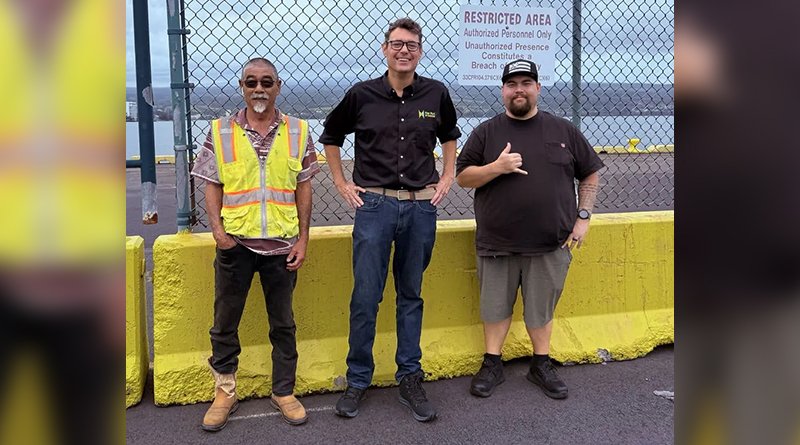
Exploring Synergies Between the Port of Hueneme and the Port of Hilo: A Path to Sustainable Development

In a recent collaborative visit on January 26, 2026, Jason Hodge, President of the Harbor Commission for the Port of Hueneme, highlighted the remarkable similarities between two geographically distant ports—the Port of Hueneme in California and the Port of Hilo in Hawaii. The meetings, aimed at enhancing cargo movement efficiency, strengthening environmental initiatives, and promoting community engagement, revealed a wealth of operational challenges and shared priorities that they both navigate despite their different locales. “Ports like Hueneme and Hilo prove that size doesn’t limit impact,” Hodge noted, emphasizing the substantial influence of smaller ports on global trade and sustainability efforts.
Common Challenges, Unique Solutions
Both the Port of Hilo and the Port of Hueneme face the dual challenge of efficiently moving goods within constrained environments. Cargo velocity—the measure of how quickly and effectively goods can be transported—is critical for sustaining economic viability in these ports. During the tour led by Guy Serikaku, Operations Manager for Hawaii Stevedores Incorporated, the discussion focused on the effective coordination required for a smaller port with limited berthing capacity. The need for operational efficiency resonated with Hueneme’s own challenges.
Environmentally Conscious Operations
Environmental sustainability formed a cornerstone of the discussions. Ikaika "KK" Nacua, Marine Cargo Specialist at the Port of Hilo, shared ongoing efforts to electrify wharf operations and modernize infrastructure while pursuing grant funding for sustainability improvements. The Port of Hueneme’s recognized leadership in port electrification serves as a practical example to Hilo, providing a framework for what can be achieved in similar circumstances. “We are focused on modernizing our facilities to align operational needs with environmental responsibility,” Nacua stated, underscoring the growing importance of sustainable practices.
Community Engagement and Safety Practices
Engagement with the community and ensuring port safety are additional areas where both ports see mutual benefits. The conversations included essential topics such as shipboard firefighting and disaster preparedness, emphasizing that strong relationships with local stakeholders are vital for operational resilience. Hodge articulated a broader truth: “Climate leadership at ports is no longer optional—it’s essential,” pointing to Hueneme’s successful balancing of environmental initiatives with strong economic performance as a model for others.
The Value of Knowledge Exchange
The exchanges during this visit were not merely theoretical; they laid the groundwork for ongoing collaboration. Both ports expressed their commitment to sharing insights related to electrification, sustainability, and operational efficiency. This partnership highlights a significant trend in the maritime industry: ports facing shared constraints can gain substantial advantages from cooperation. The learnings from Hueneme’s experiences could accelerate Hilo’s own sustainability initiatives, ultimately benefiting both communities.
A Collaborative Future
In conclusion, the visit between the Port of Hueneme and the Port of Hilo stands as a testament to the power of collaboration in addressing contemporary challenges in the maritime sector. Both ports recognized that by working together, they could create more efficient, environmentally responsible, and community-focused operations. As the global maritime landscape continues to evolve, partnerships like this will play a vital role in achieving sustainable development goals. For further insights on how ports can lead the charge in environmental sustainability, visit the Environmental Protection Agency’s (EPA) website and explore their resources dedicated to port operations.
By fostering open dialogue and mutual learning, the Port of Hueneme and the Port of Hilo are not only shaping their own futures but also contributing significantly to a greener, more connected world. Both ports exemplify that impactful solutions often come from those who embrace collaboration over competition, and their commitment to shared learning will undoubtedly pave the way for progress in the maritime industry.
This article is based on reporting from thelog.com.
The original version of the story can be found on their website.
Original Source:
thelog.com
Image Credit: thelog.com ·
View image