


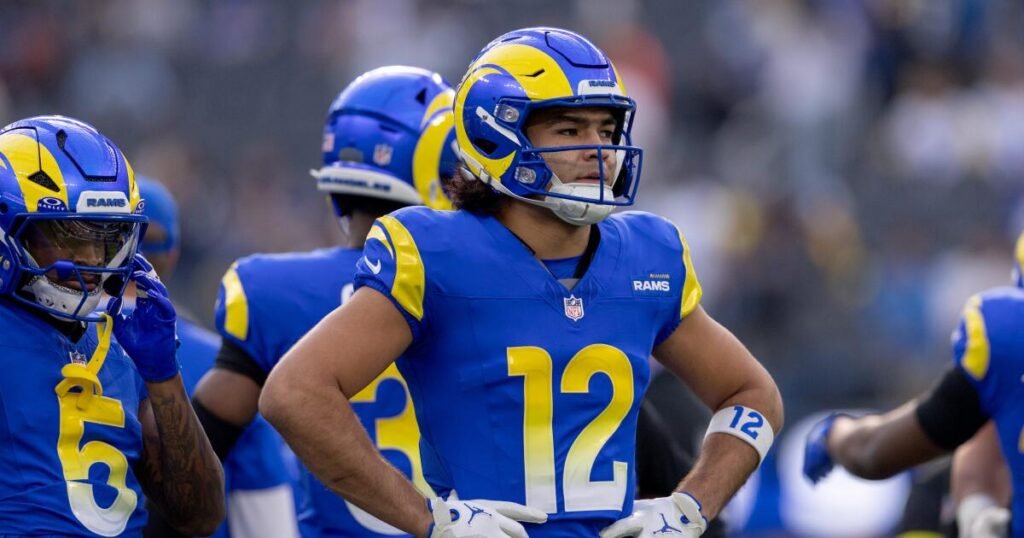
Puka Nacua’s Apology: Addressing Antisemitism in Professional Sports
In a recent incident that drew significant media attention, Los Angeles Rams wide receiver Puka Nacua issued a public apology following a livestream where he performed a gesture deemed "antisemitic in nature." Nacua emphasized that he was unaware of the implications of his actions and did not intend to perpetuate harmful stereotypes against Jewish individuals. In his heartfelt Instagram post, he expressed: “I deeply apologize to anyone who was offended by my actions as I do not stand for any form of racism, bigotry, or hate of another group of people.” This incident has reignited discussions about discrimination and the responsibility athletes have in their public representations.

Nacua’s gesture occurred during a livestream with popular personalities Adin Ross and N3on, where they suggested that he could use the gesture for future touchdown celebrations. This seemingly lighthearted suggestion quickly turned serious as it sparked backlash, highlighting the impact that public figures can have on cultural sensitivities. Nacua’s apology reflects a broader understanding that even unintentional actions can result in significant harm and reinforce negative stereotypes, particularly those that have historically oppressed marginalized communities.
In response to the controversy, the Los Angeles Rams issued a statement reinforcing their commitment to combating antisemitism and all forms of prejudice. They stated, “There is no place in this world for antisemitism as well as other forms of prejudice or hostility towards the Jewish people and people of any religion, ethnicity, or race.” This strong stance indicates that the organization values inclusivity and diversity within both its team and its fanbase, aiming to foster a safe environment for all.
The NFL also responded to the incident, with officials emphasizing that hatred, including antisemitism, has no place in sports or society at large. The league’s statement read: “The NFL strongly condemns all forms of discrimination and derogatory behavior directed towards any group or individual. The continuing rise of antisemitism must be addressed across the world, and the NFL will continue to stand with our partners in this fight.” This commitment reflects growing awareness within major sports organizations about their social responsibility.
This incident occurred alongside Nacua’s critique of NFL referees during the same livestream, where he referred to them as “the worst” and suggested that they might derive pleasure from making controversial calls during games. This criticism, though not related to the antisemitic gesture, underscores the pressure athletes face and the stressful environment in high-stakes professional sports. Such moments can lead to emotional reactions, but they also serve as a reminder of the platform athletes hold and the impact of their words and actions.
Ultimately, Puka Nacua’s experience is a reminder of the growing importance of cultural sensitivity in sports and the necessity for public figures to be aware of their influence. As fans and followers expect athletes to be role models, it becomes crucial that they understand the implications of their actions, even in casual settings. The swift backlash to Nacua’s gesture serves as a reminder that education and accountability are vital in the fight against discrimination, ensuring that all individuals feel respected and valued within the sporting community.
This article is based on reporting from www.latimes.com.
The original version of the story can be found on their website.
Original Source:
www.latimes.com
Image Credit: www.latimes.com ·
View image