


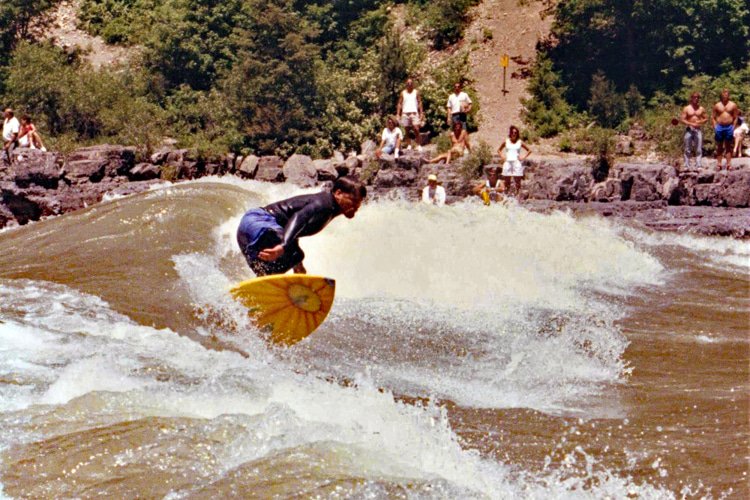
The Rise of He’e Pu’e Wai: Rediscovering the Roots of River Surfing in Hawaii
River surfing, known as he’e pu’e wai in Hawaiian, beautifully captures the essence of this unique sport. The term "he’e" means to slide, "pu’e" describes turbulence, and "wai" refers to fresh water. With its intriguing name rooted in Hawaiian culture, he’e pu’e wai embodies the thrilling experience of surfing stationary waves formed at various river mouths. This ancient practice has evolved alongside its ocean counterpart, he’e nalu, which was popularized by Duke Kahanamoku over a century ago.

The Cultural Significance of Surfing in Hawaiian History
Since Western contact with Hawaii began in 1778, surfing transitioned from a revered Hawaiian tradition to a symbol of counterculture and eventually became an internationally recognized sport. Preserving the origins of he’e pu’e wai is crucial, as numerous ancestral chants and oral histories emphasize its significance within Hawaiian culture. Notably, tales from "The Epic Tale of Hi’iakaikapoliopele," translated by M. Puakea Nogelmeier, highlight references to river surfing in Hilo and the women who surfed river channels. Such historical narratives underscore the importance of honoring Native Hawaiian contributions to the sport.
Documented History and Revival of He’e Pu’e Wai
Research conducted by John Clark in his 2011 book, "Hawaiian Surfing: Traditions from the Past," suggests that he’e pu’e wai was practiced across multiple islands, including O’ahu and Kaua’i. Historical documents, such as a journal entry by missionary William Ellis from 1822, offer insights into the thriving culture of river surfing among Native Hawaiians. Interestingly, as societal modernization progressed, the popularity of surfing diminished, with figures like Hiram Bingham noting the decline due to increased modesty and religious considerations.
However, notable figures like Eddie Aikau, a legendary Hawaiian surfer and lifesaver, played a pivotal role in reviving he’e pu’e wai. Surfing on O’ahu’s Waimea River in the late 20th century, Aikau and his contemporaries kept the tradition alive. Their stories of using anything at hand – from traditional surfboards to wooden paipo boards – reaffirm the resilience of this unique water sport.
The European and North American River Surfing Scene
Globally, river surfing narratives often credit Germany as the birthplace of this activity. Brettlrutschn, an early form of board-riding using wooden boards, emerged in the late 1960s. Pioneers like Arthur Pauli brought river surfing to the forefront in Europe. Simultaneously, North America saw the emergence of river surfing on the Snake River in Wyoming, with significant developments in the 1980s. The involvement of brands like Body Glove International in promoting surfing on these unique river waves helped establish a vibrant community of river surfers across the continent.
The Future of He’e Pu’e Wai in Hawaii
Currently, the Waimea Valley on O’ahu is the last intact ahupua’a able to produce surfable waves. With an increase in river surfing, enthusiasts of he’e pu’e wai face various challenges, including debris, health risks, and hydraulic traps. Lifeguards actively monitor these hazards to ensure safety for surfers. Simultaneously, innovative solutions, such as stationary wave pools, offer a safer alternative for enthusiasts.
In February 2023, the world’s largest stationary wave pool opened at Wai Kai in Ewa Beach, sparking discussions about commercialism and the preservation of Hawaiian cultural practices. The facility incorporates Native Hawaiian stories into its narratives, recognizing the ancestral origins of he’e pu’e wai while creating inclusive spaces for surfing. By hosting competitions, Wai Kai fosters connections between Hawaiian surfers and the broader community.
Conclusion: Embracing Tradition in a Modern Context
The revival of he’e pu’e wai represents a significant cultural renaissance in Hawaii. With initiatives like the Wai Kai Surf League, Hawaiian surfers are rediscovering their roots while showcasing their skills in a modern competitive setting. The blending of historical traditions with contemporary practices exemplifies the adaptive nature of Hawaiian surfing culture.
As the world continues to embrace river surfing, recognizing its rich cultural heritage, safeguarding its traditions, and creating inclusive opportunities for local surfers will be vital for the future growth of he’e pu’e wai. Through honoring the past, the sport can thrive, enriching the lives of those who ride the waves of Hawaii’s rivers for generations to come.
For more information on he’e pu’e wai and its significance, you can explore Centuries of River Surfing History in Hawai’i – Resetting the Global Narrative.
This article is based on reporting from www.surfertoday.com.
The original version of the story can be found on their website.
Original Source:
www.surfertoday.com
Image Credit: www.surfertoday.com ·
View image