


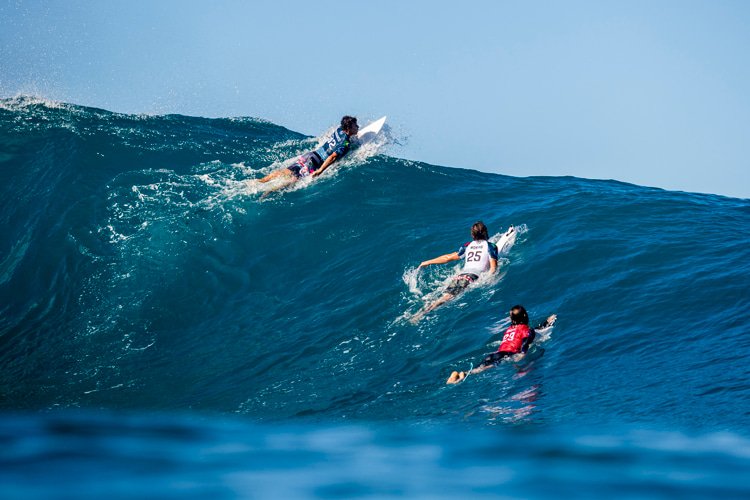
The Intersection of Surfing and Mining: Unveiling the Science of Sprint Paddling
Surfing and mining, at first glance, may seem worlds apart, but both endeavors share a fundamental similarity: the hunt for treasure, be it waves or precious minerals. Much like mining involves extensive physical work and exploration, surfing demands not only skill but also a remarkable amount of paddling. According to the Sports Performance Research Institute New Zealand (2012), surfers spend merely 8% of their time riding waves; a staggering 54% is spent paddling back to the lineup or maneuvering for the next wave. This insight serves as a backdrop for a surprising study conducted by Griffith University in Queensland, which aims to dissect the intricacies of paddling techniques among elite and sub-elite surfers.

The Foundation of Research
Understanding the nuances of paddling is crucial, as a powerful sprint can make the difference between catching a wave or watching it pass by. Researchers delved into this phenomenon in collaboration with the Surfing Australia High Performance Program. The study focused on the effectiveness of paddling among national-level (elite) surfers versus state-level (sub-elite) surfers. Results confirmed what seasoned coaches had long suspected: faster paddling significantly correlates with better surfing performance. But how do elite paddlers achieve this speed? The study aimed to uncover the secrets behind their exceptional sprint paddling techniques.
The Science Behind Sprint Paddling
To delve deeper into the mechanics of sprint paddling, researchers equipped participants with cutting-edge technology. Thirteen elite and nine sub-elite surfers, both male and female, participated in a 15-meter sprint test while wearing small waterproof motion sensors, known as inertial measurement units (IMUs). These devices captured critical data on the surfers’ movements, ensuring an unprecedented level of detail in the analysis. Each surfer’s performance was tracked in real-time, recording the number of strokes taken, speed, and variations in their paddling techniques. This scientific approach provided invaluable insights into the athletes’ body mechanics.
Elite vs. Sub-Elite: Who Comes Out on Top?
Unsurprisingly, the findings revealed that elite surfers were significantly faster than their sub-elite counterparts. Elite male surfers completed the 15-meter sprint in an average of 8.5 seconds, while sub-elite males clocked in at around 8.9 seconds. Similarly, elite women averaged 9.6 seconds, proving to be quicker than sub-elite women, who took about 10.5 seconds. Beyond the raw speed, the data also illuminated critical differences in paddling techniques, specifically around body movement and stroke efficiency.
Unlocking the Secrets of the Stroke
The crux of effective sprint paddling is rooted in body mechanics, particularly trunk rotation, which differentiates the elite from their sub-elite peers. The data revealed that top surfers executed more powerful rotations, achieving an average twist of 40-45° with each stroke, compared to the 30-40° rotation exhibited by sub-elites. This added rotation translates into longer, more effective strokes. Interestingly, elite surfers maintained stability in their boards during this powerful rotation, aligning with the concept of optimal sprint-paddling technique. This dual ability to maximize reach while maintaining control on the board significantly boosts a surfer’s propulsion, enhancing their wave-catching potential.
Gender Differences in Paddling Technique
The study also identified distinct differences in paddling styles between male and female surfers. Male participants exhibited a greater range of trunk rotation, allowing them to paddle with a flatter board angle. Female athletes, on the other hand, demonstrated increased board wobble, which suggests that they might benefit from focused training on core stability and board control. The findings advocate for tailored coaching strategies based on these sex-specific movement profiles, ensuring that each athlete can hone their unique skills effectively.
Practical Applications and Takeaways
So, how can surfers at all levels enhance their paddling techniques based upon this research? Coaches are encouraged to incorporate individualized training protocols focusing on trunk rotation, board stability, and posture. Specific recommendations include integrating exercises targeting the erector spinae and latissimus dorsi muscles, emphasizing spinal rotation, and maintaining a lower chest position during paddling. Moreover, utilizing wearable IMUs and video analysis can offer real-time feedback on paddling techniques, enabling surfers to optimize their performance.
In conclusion, insights from the Griffith University study not only enhance our understanding of paddling dynamics but also hold valuable implications for training methodologies in surfing. As surfers continue to chase both waves and records, harnessing the science behind paddling can be the key to unlocking their full potential. For further exploration on similar topics, check out articles on Surfing Australia and other platforms focusing on sports performance research.
This article is based on reporting from www.surfertoday.com.
The original version of the story can be found on their website.
Original Source:
www.surfertoday.com
Image Credit: www.surfertoday.com ·
View image