





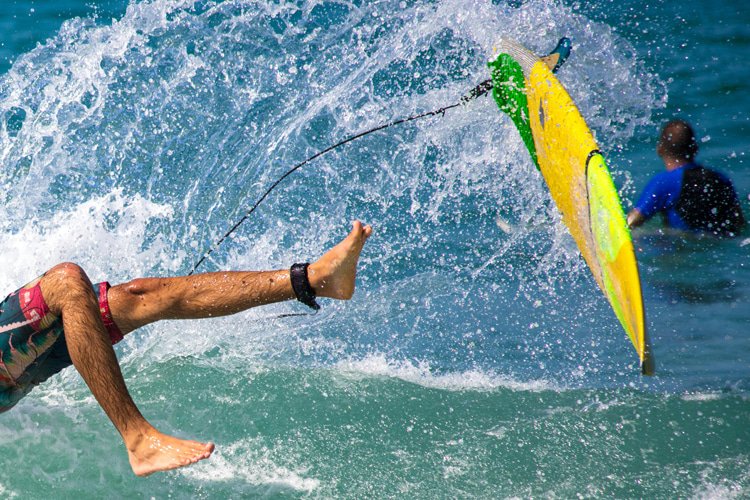
Enhancing Surf Safety: Minimizing Fin Injuries in the Water
Surfing at renowned spots like Supertubos offers exhilarating waves but also poses significant dangers, especially from surfboard fins. Accidents can occur in an instant, transforming a thrilling ride into a potential trip to the hospital. Recently, an Italian surfer endured a harrowing experience, spending six days with a fin lodged in his face after a wipeout. Tragically, another surfer lost his life in 2023 when a fin severed his femoral artery. These incidents highlight a crucial aspect of surfing that is often underestimated—fin injuries can happen even in the smallest surf conditions. To address these risks, it’s essential for surfers and manufacturers to consider proactive measures to enhance safety on the waves.
Surfer Awareness and Mindful Practices
One of the most effective ways to reduce fin-related injuries is for surfers to remain aware of their surroundings while in the water. Many accidents occur during wipeouts when surfers lose sight of their boards. Cultivating the habit of tracking one’s board—even in chaotic conditions—can significantly lower the risk of injury. Additionally, learning to fall with control is another vital practice. By covering their head with their arms and turning slightly away from the board, surfers can minimize the likelihood of a direct hit during a fall. While these precautions can’t guarantee safety, they can significantly mitigate the risks associated with wipeouts.
Another critical strategy involves managing the timing and technique of duck diving under large waves. Incorrect timing can cause the board to snap back toward the surfer. To counter this, maintaining a tight grip on the rails and angling the board slightly downward helps push it deep into the water, minimizing the chances of a backward whip. Understanding leash dynamics is also important; a shorter leash can exacerbate the recoil effect that drives fins toward the surfer. Choosing the right leash length and positioning your body strategically can significantly reduce these risks.
Handling Boards Safely in Crowded Areas
Injuries are not solely confined to waves; many occur in shallow waters or crowded lineups. To mitigate these risks, surfers should hold their boards by the nose with fins trailing behind, keeping sharp edges away from themselves and others. This simple habit creates a safer environment for everyone in the immediate vicinity and plays a vital role in reducing accidents.
Innovations in Fin Design for Enhanced Safety
The inherent sharpness of surfboard fins serves an essential purpose—they are designed to slice through water efficiently. However, manufacturers can consider design alterations that maintain performance while enhancing safety. Subtle changes, such as rounding the leading edges or applying a micro-bevel on the outer rim, can soften the impact during a collision without affecting the fin’s aquatic performance. Furthermore, experimenting with flexible materials that can absorb force upon impact could shift the paradigm for fin safety.
Another emerging trend involves detachable or breakaway fins that are designed to pop off during high-impact situations, similar to the bindings used in skiing or wakeboarding. Such innovations can potentially prevent fins from becoming lodged in a surfer’s body following an impact. Striking a balance between fin security during normal surfing and safe release during excessive force is crucial. With advancements in design, floating fins could become a viable solution for the future of surfing safety.
Protective Measures: A Closer Look
While protective add-ons exist, they are often overlooked by seasoned surfers. Fins with rubber edges, for example, can prevent cuts but are seldom used among experienced athletes due to performance concerns. However, there is room for improvement in this area. Developing a thinner, hydrodynamic guard that focuses on the most dangerous edges could make safety equipment more appealing to a broader audience. Additionally, introducing brightly colored fins could provide surfers with visual cues underwater, offering crucial reaction time during wipeouts. In the unpredictable environment of surfing, small innovations can yield significant safety benefits.
Conclusion: A Call to Action for Surfers and Manufacturers
The responsibility for improving surf safety lies with both surfers and manufacturers. Surfers must adapt their techniques and maintain awareness in the water, while manufacturers should prioritize the design of safer fins that do not sacrifice performance. By implementing small changes and innovations, the surfing community can collectively aim to reduce the incidence of fin injuries and make the sport safer for everyone. For more information on surfing safety and techniques, visit SurferToday.com.
Through a combination of awareness, careful handling, and innovative design, we can create a safer surfing environment that minimizes accidents and keeps the excitement alive without jeopardizing lives.
This article is based on reporting from www.surfertoday.com.
The original version of the story can be found on their website.
Original Source:
www.surfertoday.com
Image Credit: www.surfertoday.com ·
View image