


The Impact of Coastal Data Information Program’s Wave Buoys on Ocean Monitoring
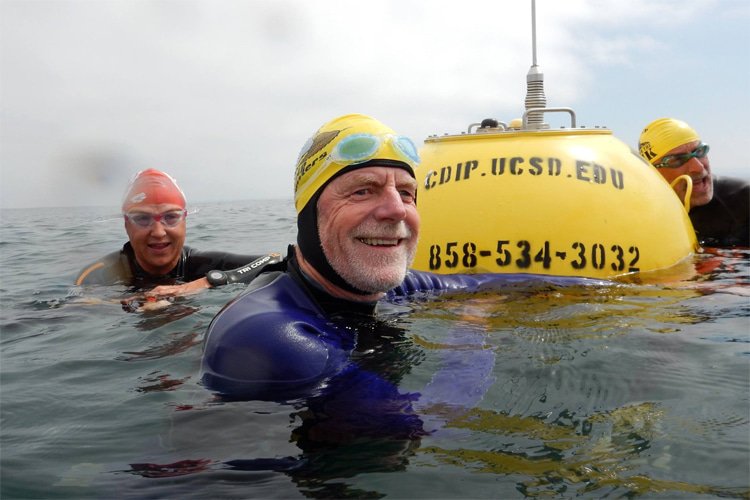
On sunny days along the California coast, you might spot bright yellow dots bobbing in the waves—these are the wave buoys of the Coastal Data Information Program (CDIP). Trusted by surfers, sailors, scientists, and lifeguards, these buoys provide crucial wave data that influences ocean activities and coastal management. Originating from the Scripps Institution of Oceanography in 1975, CDIP has revolutionized how coastal data are collected and utilized, contributing to the safety and enjoyment of numerous coastal activities.

The Genesis of CDIP
The inception of CDIP traces back to ocean engineer Richard J. Seymour’s vision in 1975. At that time, reliable wave data was scarce, leaving many coastal engineers without essential information to design and manage coastal structures and infrastructures. With funding from the California Sea Grant Program, Seymour and his team set out to create a system that could efficiently collect and transmit wave data. This innovative initiative began with a single wave station at Imperial Beach. With additional support from the California Division of Boating and Waterways, the CDIP program officially took shape, marking the beginning of a new era in coastal data collection.
Expanding the Wave Monitoring Network
CDIP witnessed substantial growth shortly after its launch, particularly following the partnership with the U.S. Army Corps of Engineers in 1977. This collaboration significantly enhanced CDIP’s ability to gather long-term wave records vital for managing the nation’s coastal infrastructure. Initially, the data collected relied on pressure sensors located on the seafloor; however, the introduction of floating buoys in 1978 marked a significant advancement. While these early models measured wave height, they did not capture wave direction. Despite this limitation, they provided a more comprehensive understanding of wave dynamics, setting the stage for the program’s expansion.
Advancements in Technology
The 1990s heralded a transformative period for CDIP with the introduction of directional buoys capable of providing more detailed measurements. These buoys tracked not only wave height but also wave direction, sea surface temperature, and wave energy, presenting a more nuanced picture of ocean conditions. Equipped with advanced sensors, these cutting-edge buoys allowed researchers to map wave movements with higher precision. By combining data on wave dynamics and environmental factors, CDIP positioned itself at the forefront of coastal data collection, contributing significantly to oceanography research.
Real-Time Data Accessibility
The late 1990s marked another pivotal advancement for CDIP—the transition to real-time data collection. In 1996, CDIP made its wave data available online, granting surfers, mariners, and forecasters immediate access to live ocean conditions. This real-time data influx empowered a wide array of stakeholders, from surfers checking for the best waves to engineers monitoring the integrity of coastal infrastructure. With CDIP managing 271 wave stations across the western hemisphere by 2017, its influence and reach expanded, all while evolving under capable leadership, from Seymour to the current principal investigator, Eric Terrill.
State-of-the-Art Devices
Today’s wave buoys, particularly the latest Datawell Waverider 4 models, represent the pinnacle of technology in ocean observation. These advanced buoys sample data at a significantly faster rate and measure wave height with remarkable accuracy—within half a percent. Additionally, they can assess surface currents using integrated acoustic sensors. Ongoing maintenance is crucial to ensure these instruments yield consistent data over time, and CDIP staff routinely inspect and swap buoys to keep the data streams flowing seamlessly.
Innovative Collaboration and Future Outlook
Today, thousands of users access CDIP data hourly through their website and partnerships with agencies such as NOAA. This wealth of information benefits a diverse group—from harbor masters and lifeguards to engineers, surfers, and boaters—who all rely on accurate wave and ocean data for their safety and activities. The bright yellow buoys that dot the ocean are more than just markers; they are a bridge between ocean dynamics and human interaction with coastal environments. As technology continues to evolve, CDIP remains committed to enhancing its monitoring capabilities, ensuring that California’s coast remains safe and navigable for future generations.
For those interested in real-time data from CDIP, you can find more information on their official website here. This program stands out as a testament to the importance of integrating science and technology to better understand and manage our coastal ecosystems.
This article is based on reporting from www.surfertoday.com.
The original version of the story can be found on their website.
Original Source:
www.surfertoday.com
Image Credit: www.surfertoday.com ·
View image