


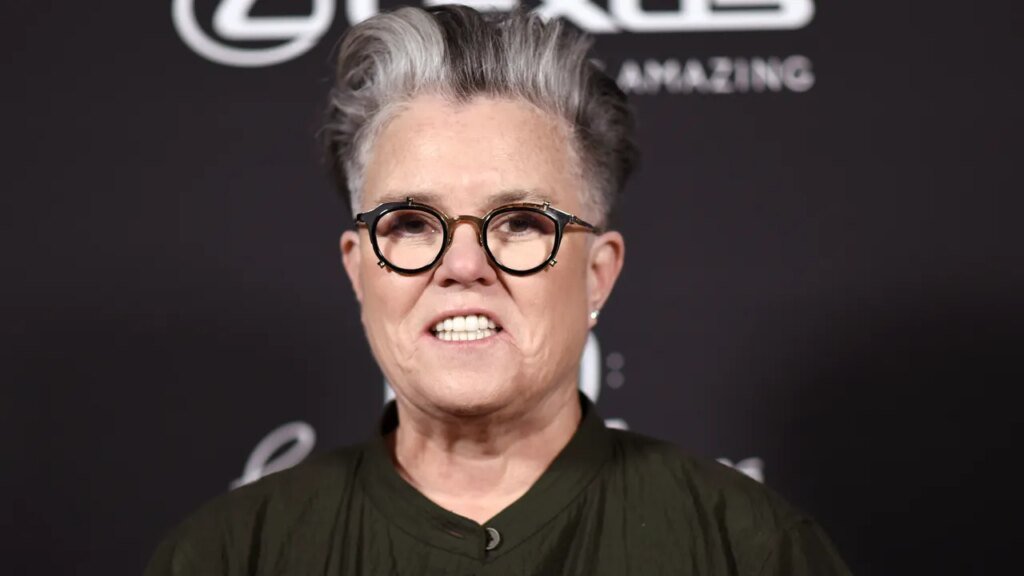

Rosie O’Donnell on Her Facelift Journey: A Feminist Reflection
In a recent Substack post titled “decisions,” comedian and actress Rosie O’Donnell opened up about her experience with a lower deep-plane facelift, a decision she made in January 2026 after significant weight loss. For O’Donnell, this move marked a profound shift in her longstanding views about cosmetic surgery, which she previously opposed. Despite her complicated feelings, O’Donnell’s journey highlights important discussions around aging, self-acceptance, and feminism.
A Radical Reconsideration
Once a fervent advocate against plastic surgery, O’Donnell now grapples with her choices surrounding beauty and self-image. She eloquently articulates her prior stance, emphasizing that she felt morally compelled to represent women who embraced their natural aging process. However, after shedding 50 pounds, O’Donnell noticed changes in her face, which she described as “melting with intention.” This led her to question her commitment to self-acceptance when facing a reflection that appeared, in her eyes, less desirable.
Revisiting her past beliefs, she writes, "There’s a point where acceptance starts to feel like lying." O’Donnell’s candidness sheds light on the pressure many women feel to conform to societal ideals of beauty, particularly as they age. Her journey illustrates the often conflicting messages that women receive about aging gracefully while also allowing for personal choice.
Motherhood and Self-Reflection
The conversation took an unexpected turn when O’Donnell’s 13-year-old child, Clay, expressed their thoughts on the matter. With a keen perspective, Clay articulated concerns that O’Donnell would be sending a negative message to young women about aging. By stating that she “earned” her wrinkles and that they looked up to her, Clay indirectly challenged O’Donnell to reconsider her motivations for opting for surgery.
Clay’s strong response evoked memories of O’Donnell’s own prior convictions. O’Donnell noted how her child sounded like her younger self, asserting the moral stance she once held. This unique dynamic illustrates the generational discourse surrounding beauty standards, self-acceptance, and the messages we pass to future generations.
Finding Personal Freedom
Despite the initial turmoil, O’Donnell ultimately chose to proceed with the surgery after months of contemplation. She noted, “If I’m teaching Clay anything, it can’t be that my body belongs to an idea either.” This realization brought her to a deeper understanding that personal freedom encompasses the right to make decisions about one’s own body, even if they contradict feminist ideals. Empowerment, in O’Donnell’s view, comes from honoring one’s choices rather than adhering strictly to societal expectations.
In line with feminist principles, this perspective is supported by figures like Allure contributor Joan Kron, who argued against dictating how women should relate to their own bodies. O’Donnell’s thought-provoking journey demonstrates that feminism can be diverse and nuanced, allowing individual women to navigate their paths without judgment.
The Outcome: A Different Kind of Reflection
After opting for a subtle yet effective lower deep-plane facelift, O’Donnell’s results are perhaps less dramatic than she anticipated. She reports that nobody even noticed her surgical adjustments, leading her to observe that the best possible outcome was simply loving herself more. “I didn’t become someone else,” she writes, “I just stopped arguing with the mirror.”
This remark encapsulates the heart of her message: personal satisfaction doesn’t come solely from appearance but from self-acceptance. O’Donnell’s introspection and wit resonate strongly with those grappling with similar dilemmas. She challenges readers to question societal norms and to prioritize self-love above external validation.
The Rising Trend of Facelifts
O’Donnell’s story aligns with the broader cosmetic surgery trend; facelifts have gained prominence, especially among celebrities. In particular, the deep-plane facelift technique is growing in popularity due to its subtle yet effective results. By repositioning ligaments under the SMAS, surgeons offer clients a more natural, lifted look, which appeals to those seeking cosmetic enhancements without appearing overly altered.
Celebrities frequently discuss their experiences with plastic surgery, leading to significant societal discourse around the ethics and perceptions of such choices. This growing openness may contribute to a shift in public opinion, making it easier for women to have honest conversations about their choices without guilt. O’Donnell is among a rising number of public figures who pave the way for such dialogues.
Conclusion: A Path to Self-Understanding
Rosie O’Donnell’s reflections on her facelift journey can serve as an enlightening narrative for many who struggle between societal pressures and their own desires for self-enhancement. Her story is not just about aging or surgery; it’s about finding personal freedom and self-acceptance amid societal expectations. The evolution of her thoughts encapsulates a larger conversation about how women navigate their identities in a complex world.
Through her poetic exploration and personal revelations, O’Donnell fans and followers can find solace in knowing they are not alone in their dilemmas regarding beauty, aging, and self-acceptance. As we continue to engage in conversations about feminism and the autonomy of women’s choices, it’s essential to remember that every journey is unique.
Boost your health naturally—click here to shop Nature Made vitamins at NatureMade and enjoy 25% off your first order!
This article is based on reporting from Allure.
The original version of the story can be found on their website.
Original Source:
Rosie O’Donnell Wants to Talk About Her Facelift—Learn More
Image Credit: www.allure.com ·
View image