



Celebrating Uruguay: A Soccer Culture Through the Ages
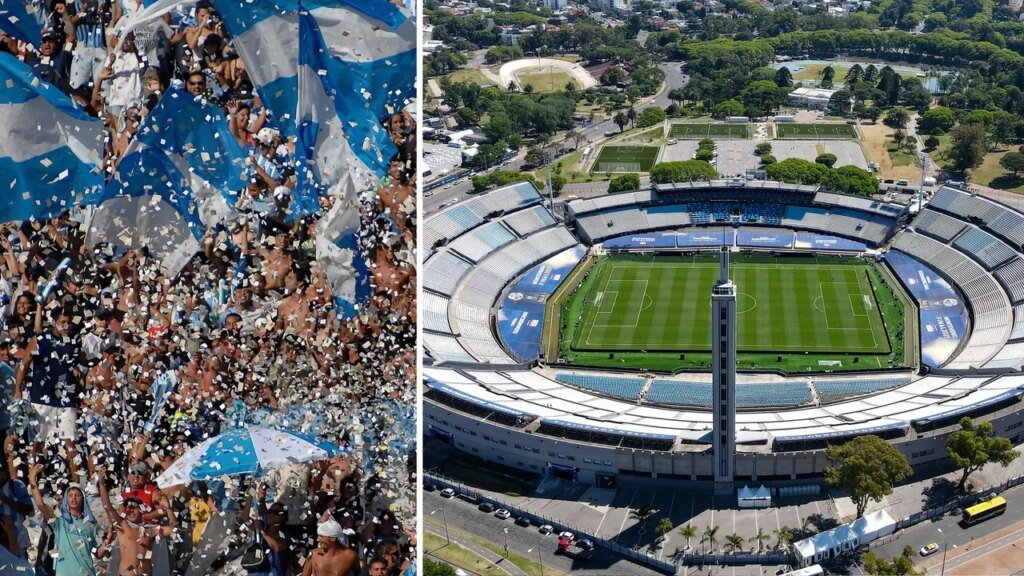
On July 18, 1930, Juan Antonio Scasso, a 38-year-old public-works director, was racing against the clock to complete the Estadio Centenario in Montevideo, Uruguay. With FIFA’s looming deadline, Scasso worked diligently but missed the mark by just five days. His efforts were crucial, as the Centenario would host the inaugural matches of the first-ever FIFA World Cup—a tournament that would set the stage for soccer as a global phenomenon. Despite the initial setbacks, the stadium opened in time for the semifinals and the final, where Uruguay triumphed over Argentina 4–2, marking a defining moment in World Cup history.
Uruguay’s passion for soccer was evident long before the World Cup even began. The nation had already claimed Olympic gold medals in Paris in 1924 and Amsterdam in 1928, establishing itself as a formidable footballing force. FIFA, only 25 years old and still in search of a tournament to crown its mission, found a partner in Uruguay. To entice teams from around the world, the country offered to cover travel and accommodation expenses, ensuring a wide array of international participation.
Perched between the football giants of Argentina and Brazil, Uruguay is oftentimes overlooked in global soccer discussions. Yet, this small nation of just 3.5 million people has a rich footballing history, having won two World Cups and an impressive 15 Copa América titles. The capital city, Montevideo, is particularly passionate about the sport, boasting 13 first-division clubs despite its modest population. This fervor is so pronounced that classrooms often see students pouring out to play football, and when the national team takes to the field, an entire nation rallies behind them, with businesses temporarily closing and streets emptying in anticipation.
As the world gears up for the 2026 FIFA World Cup, Uruguay finds itself drawn into a competitive Group H alongside Spain, Cape Verde, and Saudi Arabia. The question arises: how has this tiny nation managed to perform on the global stage for over a century?
The Estadio Centenario remains a lasting symbol of Uruguay’s soccer legacy, proudly standing as the only stadium in the world recognized by FIFA as a "Historical Monument of World Football." The structure itself is a testament to the nation’s devotion to the sport and serves as a pilgrimage site for soccer fans worldwide. This iconic venue has witnessed not only World Cup matches but also countless local rivalries and celebrated domestic competitions that have cemented its importance in Uruguayan culture.
In summary, soccer in Uruguay isn’t just a game; it is an integral part of the social fabric that unites its people. This small country has consistently punched above its weight, finding ways to compete at the highest level despite its size and resources. As the upcoming World Cup approaches, all eyes will be on Uruguay to see if it can once again weave a tale of triumph and passion into the beautiful game’s rich tapestry. For more on soccer culture and the upcoming 2026 World Cup, be sure to check the official FIFA website.
For further insights, explore the evolution of soccer in different countries here. Embrace this journey through soccer cultures that highlights the emotional connections, community spirit, and historical moments that have shaped the beautiful game we cherish today.
This article is based on reporting from www.cntraveler.com.
The original version of the story can be found on their website.
Original Source:
www.cntraveler.com
Image Credit: www.cntraveler.com ·
View image